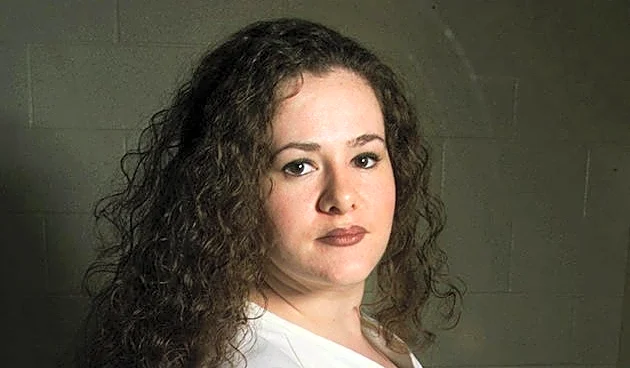









This state of Tennessee has set Sept. 30, as the day on which Christa Pike will be killed.
In 1996 Pike was convicted of an especially gruesome murder and was sentenced to death. If this state killing proceeds as planned, she will be the first woman executed in a very long time. This uniqueness may, at least for a moment, jar us into reflection of just how questionable capital punishment is. It may awaken us from a moral slumber in our state and country, out of a time in which the state-led killing of prisoners has been mostly normalized.
We read the newspaper reports and watch the press conferences after the executions have taken place, but it all seems quite familiar. Once complete, we go back to our lives largely undisturbed by these events.
But can we be indifferent to these killings – even when, as in Christa Pike’s case, the prisoner has accepted full responsibility for the terrible crime for which she was convicted? Are these individuals so different, so lacking in the dignity given human beings at their creation, that we can, in good conscience, ignore them being killed by the state?

A neighbor and a good Samaritan
Scripture’s parable of the Good Samaritan gives us a way to think about this. Recall that the parable begins with an account of a badly injured man lying by the side of the road. Passersby ignore him and walk on the opposite side of the path.
Christ’s counter is the commandment to love one’s neighbor as oneself. But that is immediately challenged by the question: “Who is my neighbor?"
Who is the one to whom I owe concern? The innocent person, the child at the moment of his conception, the virtuous man or woman, a fellow citizen, or just anyone in need? What about the injured man of the parable, or the prisoner awaiting the arrival of the executioner at Riverbend Prison in Nashville?
Can I not, therefore, simply pass by that needy stranger, someone unknown to me, and especially the one whose life is marked by great wrongdoing? Is innocent life alone to be protected, or are those whom Christ termed his “lost sheep” also worthy of our love, respect and help?
Who is our neighbor?
Such questions echo strongly these days in Tennessee and much of the U.S., where executions continue apace. There is media coverage, of course, but these killings have been normalized as part of the state’s administration of justice. Mostly, life just goes on as usual, and perhaps we too are tempted to avert our gaze, to simply walk on by.
So we return now to the question: “And who is my neighbor?”
The parable’s Good Samaritan answers that challenge not with indifference, or a thirst for revenge, but by his actions. In moving to help the injured man, he expresses the commonality that, despite our many differences, makes us neighbors in the deepest sense: one and all creatures of God, bearing Jesus in our persons, capable of sin but also able to change, and not defined in perpetuity by our failures, no matter how grave they were.
We are all people with an intrinsic dignity, given to us by our Creator, that makes of worthy of love and respect for our lives.
Seen from that latter standpoint, we cannot simply walk by as human beings are put to death by the state, acting in our name. Weary as we may sometimes become at this long struggle, we should not, cannot, avert our eyes from the wrongs being done in our midst.
The injured man on the side of the road, the blind Bartimaeus at Jericho on the road to Jerusalem, the homeless persons begging on the street corners of our cities, the prisoners being crucified by Christ’s side, the death row inmate brought into the prison’s execution chamber: all are our neighbors in God’s creation.

W. James Booth is a Deacon in the Diocese of Nashville. For the past 10 years, he has served as Director of Prison Ministry for the Diocese. He recently retired from the Director’s position in order to spend more time serving the imprisoned in Middle Tennessee.
This article originally appeared on Nashville Tennessean: What we all share with Christa Pike | Opinion