







A portion of a 2024 Tennessee law criminalizing “recruiting” or transporting minors out of the state for an abortion has been blocked after an appeals court affirmed a previous decision.
In a 2-1 ruling, the United States Court of Appeals for the Sixth Circuit reaffirmed its July 2025 ruling
that blocked all enforcement of the “recruitment” provision of the law, stating that it violated the First Amendment.The law makes it a felony to transport a minor for an illegal abortion without parental consent, and previously targeted any adult who "recruits, harbors or transports" a pregnant minor within the state for the purposes of receiving an illegal abortion.
Plaintiffs
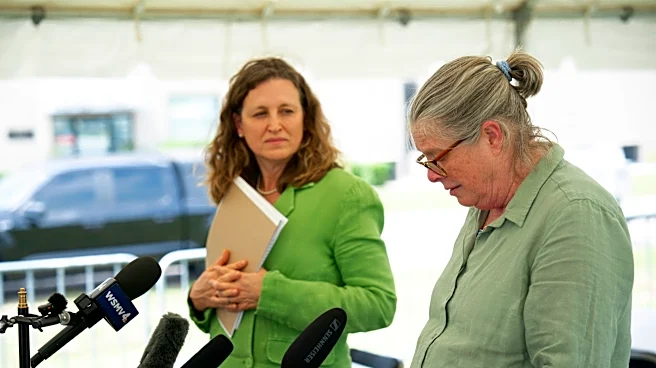
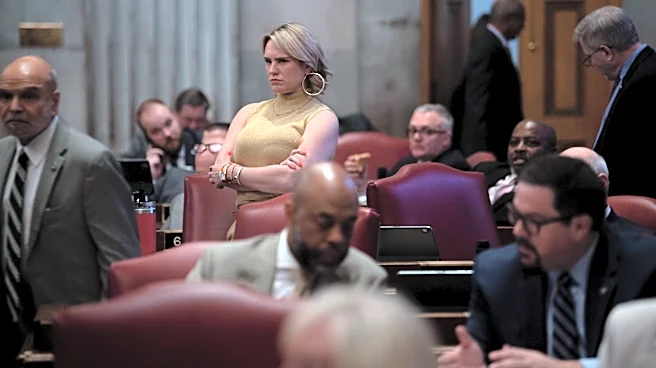
in the lawsuit, including Tennessee State Rep. Aftyn Behn, D-Nashville, and Nashville family law attorney Rachel Welty, focused on the word “recruit,” which is not defined in Tennessee state law and could criminalize speaking to a pregnant minor about health care options, in addition to many other First Amendment-protected activities.
The decision ends the enforcement of the “recruitment” portion of the law, as well as Tennessee’s appeal, which judges called a “meager rebuttal.”
In rejecting the state’s appeal, Sixth Circuit Judge Jane Stranch said the challenged provision “goes further than regulating the content of Welty’s and Behn’s protected speech — it also restricts what ‘opinion(s) or perspective(s)’ they may express.”
The decision also notes that the state law would criminalize speech of out-of-state residents — something the court labels as “unconstitutional several ways over.”
It also warns the state that it cannot “invent new (categories of unprotected speech) simply because it concludes that certain speech is too harmful to be tolerated.”
“This is a resounding victory for Ms. Welty, Representative Behn, and every Tennessean who believes the government has no business prosecuting people for sharing truthful information,” said Nashville attorney Daniel Horwitz, Welty and Behn’s lead counsel. “The Sixth Circuit’s thoughtful and well-reasoned opinion reaffirms that viewpoint discrimination has no place in a free society and that no government has authority to criminalize pure speech simply because it dislikes a speaker’s point of view.”

The Tennessean has reached out to Behn and Tennessee Attorney General Jonathan Skrmetti for comment.
A nearly identical law in Idaho, lobbied for by the National Right to Life Committee, whose state chapter was instrumental in writing Tennessee's law, saw a nearly identical enjoinment in December 2024 on the recruitment provision, also for First Amendment reasons.
James Bopp Jr., general counsel for the National Right to Life Committee, discussed the matter previously with The Tennessean.
“There's no confusion about that,” he said, adding that “nobody thinks” that the word “recruit” could include “just posting information” or speaking about abortion.
When asked how he defined the word “recruit,” written in his own model legislation for the law, Bopp read the definition of the word from vocabulary.com and gave an example of what he considered illegal recruitment — an example that included speech activity.
Thursday’s ruling ends all debate over whether the recruitment provision violates First Amendment-protected speech rights.
“Based on today’s ruling, Tennesseans remain free to speak truthfully about legal abortion options without fear that crusading District Attorneys will try to prosecute them for it,” Horowitz said.
Angele Latham’s role covering First Amendment issues at The Tennessean is made possible by a collaboration among Freedom Forum, Journalism Funding Partners and the USA TODAY Network. Freedom Forum does not provide editorial input. Reach Angele Latham at alatham@gannett.com, on X at @angele_latham and on TikTok at @angelelatham.
This article originally appeared on Nashville Tennessean: TN appeals court blocks portion of abortion travel ban