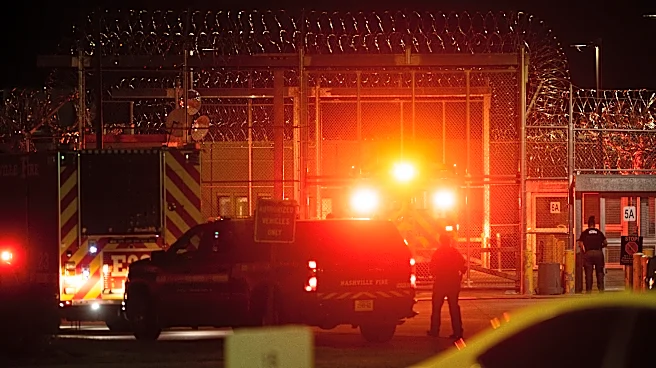






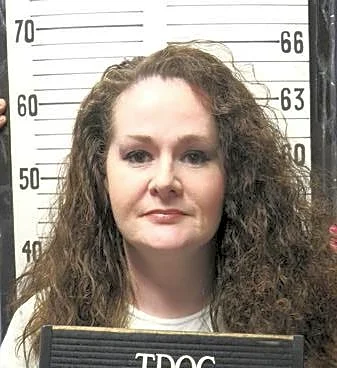
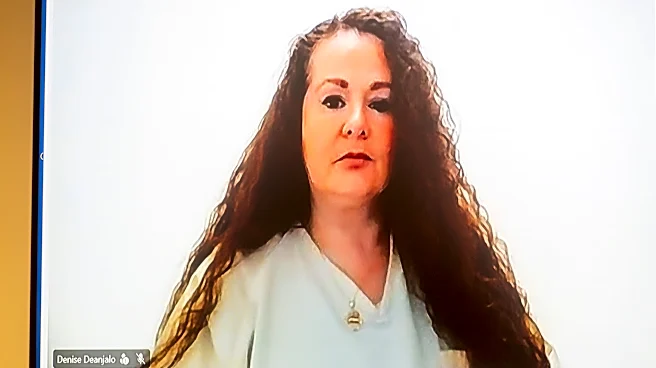
Following Tennessee’s failure to execute Christa Pike, support is coalescing among top Republican lawmakers to expand options for executing death row inmates — whether by adding new chemicals approved for lethal injection or making the electric chair a primary method of execution.
Meanwhile, top Democrats are calling for the legislature to exercise due oversight over the Department of Correction, an executive agency, citing a yearslong pattern of execution failures.
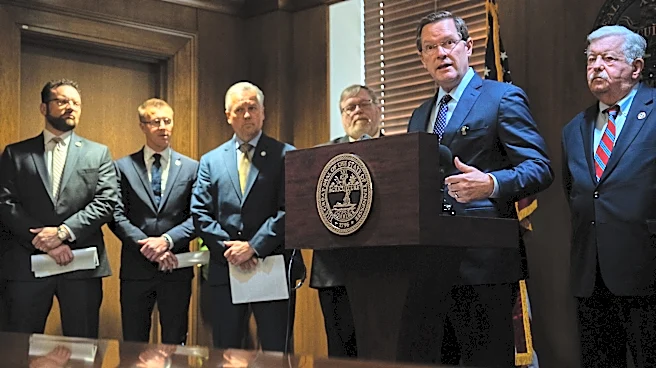
House Speaker Cameron Sexton said he will work with the Senate to add new execution alternatives. That could include changing the medication used for lethal injection to include potassium chloride. Sexton denounced those who defended Pike as a victim, saying “the only ones who matter
in this case are Colleen and the Slemmer family.”
“Justice wasn’t carried out last night due to an error. In the coming months, I will work with my Senate counterparts to investigate this failure and past failures to make sure this doesn’t happen again,” Sexton said.
Senate Majority Leader Jack Johnson, who is seeking the post of lieutenant governor, said if the investigation finds lethal inejction to be an unreliable method for carrying out executions, he supports adding alternatives.
“A thorough investigation is the first step toward understanding what went wrong and ensuring these failures are never repeated,” Johnson said.

Support for the electric chair
Hours after Pike survived two lethal doses of pentobarbital, Republican gubernatorial nominee and U.S. Sen. Marsha Blackburn called to “bring back the electric chair.”
A chorus of voices from the Republican establishment chimed in to express support, including U.S. Rep. Tim Burchett, R-Knoxville, and Tennessee House Majority Leader William Lamberth, R-Portland.
“Agree 100%,” Lamberth said.
Tennessee is one of nine states that already authorizes the use of the electric chair as a method of execution.

State law already permits electrocution as a method of execution if an inmate's crime was committed before Jan. 1, 1999 — Pike’s case qualifies. Former Gov. Bill Haslam in 2014 authorized the state to carry out executions by electrocution if lethal injection drugs are unavailable. At the time, Tennessee had not carried out an execution since 2009 because lethal injection drugs were becoming harder to obtain. Tennessee paid more than $588,000 for lethal injection drugs in recent years.
The last time Tennessee used the electric chair was during the execution of Nicholas Todd Sutton in 2020. The state has used that method five times since 2018.
Democrats call for accountability, legislative oversight
Senate Democratic Leader Raumesh Akbari called the Correction Department's management of death row cases "cruel and inhumane."
“The Department of Correction says it followed every step of its protocol. If that is true, then the protocol itself is a problem," Akbari said, referencing a new lethal injection protocol adopted in Tennessee in January 2025.
Akbari said her caucus will "gladly" work with Republicans "in the interest of transparency and accountability" to exercise oversight over the Correction Department.
"The governor's third-party review is a start, but it is no substitute for oversight. It is time for the General Assembly to exercise its oversight function over the executive branch," Akbari said. "This pattern of mismanagement is more proof that the death penalty is a failed policy. It is an abuse of state power to willingly take a life. Its cost outpaces its value, and it has never been proven to deter capital crime."

House Democratic Caucus Chairman John Ray Clemmons called the botched execution "the latest example of heartless incompetence of the Lee administration." Clemmons noted that the state is legally required to carry out executions "in a manner that does not resemble torture."
"When the state acts, it acts in all of our names. What happened last night at Riverbend is not who we are," Clemmons said. "Accountability is not optional when the state is taking a life. ... The people who ran this process should not handpick the people who investigate it."
Gubernatorial candidates call for accountability, oversight
While Blackburn called for implementation of the electric chair, both independent and Democratic rivals for governor called for accountability.
Independent candidate David Hatley called the issue “a systemic failure” that “rests with the political leadership that oversees the system.
"This was not a freak accident. It's a pattern, and Tennessee's leaders have let it go on for years,” Hatley said.
He pointed to problems around the executions of Oscar Smith in 2022, Byron Black in 2025 and Tony Carruthers in May, in addition to Pike.
“Each time, the Department of Correction insisted it followed protocol. Each time, the governor ordered a pause, a review or a reprieve. Each time, we were told the problem had been solved. Then it happened again,” Hatley said. “Whatever you believe about the death penalty, no Tennessean should accept a state that keeps getting this wrong and keeps promising it won't happen again.”
Democratic nominee Jerri Green said Pike’s execution was rushed after Carruthers’ botched execution earlier this year. If elected, she pledged to eliminate the death penalty.
“As a public defender, I’ve met a few too many people who were wrongfully convicted on death row who were later exonerated,” Green said. “As governor, I would put a moratorium on all future executions. If we say we are pro-life, that means we must be anti-death penalty."
Independent candidate Lauren Pinkston has supported a pause in executions pending a full review of the death penalty system.
“The sanctity of human life should not be political, but we know that mechanisms of justice usually are,” Pinkston said. “After two failed executions at the hands of our state government this year, we are forced to reckon with the responsibility of ensuring that justice is a right protected for every single person living under our state constitution, including those living inside a prison.”
Pinkston pledged to “audit the justice system” to make sure that the Correction Department gives offenders opportunities to “restore and make amends for their crimes if they choose.”
“Mercy is not the same thing as excusing evil,” Pinkston said.” Accountability is not the same thing as vengeance. But the best stories from Tennessee corrections are those of restorative justice. We must reduce recidivism, restore righteousness, and work towards a state that responsibly uses tax dollars to bring liberty and justice for all.”
Vivian Jones covers state government and politics for The Tennessean. Reach her at vjones@tennessean.com.
This article originally appeared on Nashville Tennessean: TN GOP leaders support electric chair, new execution drugs