





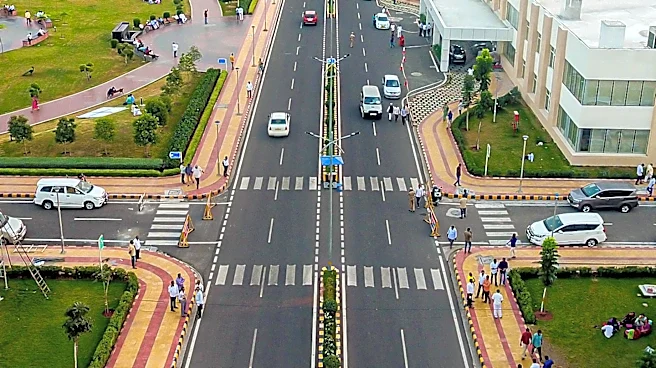
The intersection of Eighth and Wedgewood avenues just north of Berry Hill is, more often than not, home to plenty of traffic.
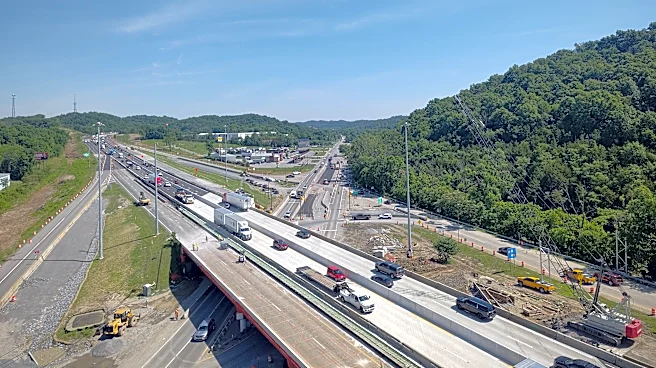
The Tennessee Department of Transportation’s average daily traffic count in the immediate vicinity, based on 2025 data, shows that tens of thousands of vehicles travel through the intersection each day — 34,768 in either direction on Wedgewood Avenue and 21,193 in either direction on Eighth Avenue, measured from just down the street south of the traffic lights.
With access to Interstate 65 close by, traffic at the busy intersection tends to start backing up by the early afternoon.
It’s a challenge that DJ Harris is well aware of. Harris works at a nearby Shell station, where you can see Eighth Avenue out the front windows.
Harris lives on Elm Hill Pike. By the time he needs to head east to make it to his 2 p.m. shift, he’s typically forced to navigate neighborhood streets like Polk Avenue instead of taking the most direct route to avoid getting caught up in congestion.
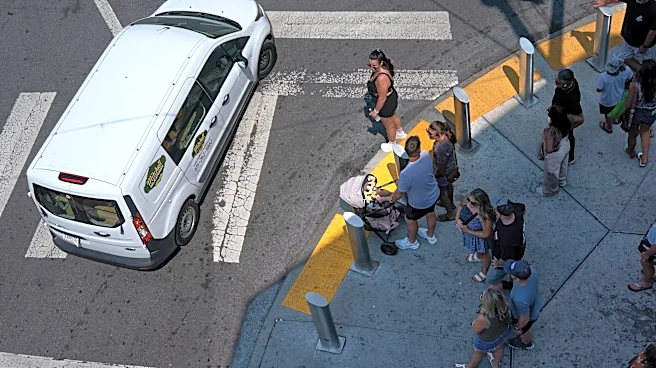
For him, the idea of banning right turns at red traffic lights in Nashville’s urban core, a move that the Metro Nashville Council is currently weighing, feels like it’ll only exacerbate the issues with his commute. Harris said he thinks most drivers at the intersection would simply ignore the new rule and end up causing more traffic stops in turn, effectively adding even more traffic to the tally.

“If they stop (allowing) that, it’s going to be backed up even more,” Harris said.
Whether that ban comes to pass is still an open question, as the bill sponsored by District 30 council member Sandra Sepulveda is still early in the process toward approval. It passed its first of three readings required for implementation at the council’s Aug. 4 meeting.
But the bill’s scope is now beginning to narrow, giving a clearer picture of what might be in store.
Here’s what to know.
Narrowed scope could garner more support from council members
Sepulveda's bill, filed July 28, proposes eliminating right turns on red at intersections throughout Nashville’s dense Urban Services District, which covers nearly 200 square miles of Davidson County.
Supporters say the move is backed by past local studies and is a simple rule that would make things safer in an increasingly hostile environment for Nashville pedestrians.
At this point, though, it appears unlikely that a final version of the bill would end up banning the practice on such a broad scale. Sepulveda shared on her social media pages Aug. 8 that it’s always been her intention for the legislation to target more specific areas.
She’s now in the process of drafting a substitute version focused on school zones and areas outlined in two long-range plans: the Connect Downtown action plan, which homes in on the neighborhoods surrounding the heart of downtown, and NashvilleNext, Davidson County’s general plan for physical development through 2040.
NashvilleNext designates several areas throughout the Urban Services District as tier one growth centers, where coordinated investments were to shape population growth and support transit service over the decade since the plan was adopted by Nashville’s Planning Commission in 2015.
Those NashvilleNext tier one growth areas expand the scope of the substitute version of the bill beyond the heart of downtown and out into areas like a stretch of Lebanon Pike in Donelson, Gallatin Pike as it passes through Madison and down south near I-24 in Antioch.
All those more limited areas come with their own unique factors, Sepulveda said. Some are on the list for improvements through the Choose How You Move transportation improvement program, while others have high pedestrian accident rates.
Including Sepulveda, the bill has gained 13 co-sponsors from the 40-member council so far.
The version targeting more specific areas could end up drawing even further support, though. For example, Nashville Mayor Freddie O’Connell’s office appears poised to back a more limited version of the bill.
On Aug. 10, O’Connell’s office said the Nashville Department of Transportation is working with council members to recommend a more targeted geographical scope, “guided by data on where it’s needed most.”
Specifically, that includes focusing on areas with the heaviest pedestrian traffic and reviewing Nashville’s high-injury network, the streets where serious crashes are most concentrated.
Days earlier on Aug. 7 at Glencliff High School, O’Connell told reporters that he’s looking to tackle pedestrian safety issues from more than one angle.
That includes through strategies like a community-led tactical urbanism project on Antioch Pike that reduced a mile-long stretch of the roadway between Nolensville Pike and McCall Street into a one-lane road, with the outer lanes buffered by repurposed tires providing more separation between cars and the sidewalks.
“I think the scale that’s been initially proposed without any kind of pilot period or data capture, it seems very quick, seems a broad geographic area,” O’Connell said. “I think what we would rather work with Metro Council on is how to do things like we’ve done in the Antioch Pike area, test it, pilot it, see where it might be the most effective in terms of road safety, check on public acceptance.”
At least one council member who currently isn’t included among the bill’s dozen or so co-sponsors, District 14 council member Jordan Huffman, also appears to have an appetite for a more limited proposal.
Huffman, who chairs the council’s Public Health and Safety Committee, said the constituents he’s hearing from in the Hermitage area are opposed to a blanket ban on right turns at red traffic lights throughout the urban services district. But Huffman said he’d be in favor of the legislation if it included a more concentrated area instead.
Road ownership could add further complications as the bill moves forward. A draft map of potentially affected intersections shows that while 157 of them are on locally-owned roadways, 190 other intersections sit on state routes where making changes would require collaboration with Tennessee Department of Transportation officials.
It’ll take a while from here before the bill moves forward any further, though. According to Sepulveda, the next step will be to present the substitute version to the Nashville Traffic and Parking Commission when it meets Sept. 14. Then, the substitute bill could be presented at the council’s meeting the following day on Sept. 15.
Austin Hornbostel is the Metro reporter for The Tennessean. Have a question about local government you want an answer to? Reach him at ahornbostel@tennessean.com.
Get Davidson County news delivered to your inbox every Wednesday.
This article originally appeared on Nashville Tennessean: Will Nashville ban right turns at red lights? Proposal is narrowing