




The Farmer's Almanac has released its predictions for the incoming winter season, and Tennessee is expected to be right around where it usually is — wet.
El Niño is expected to significantly impact weather this season, resulting in wetter-than-normal conditions across much of the southern United States. According to The Farmer's Almanac, an active storm track will likely extend from Southern California through Texas and the Southeast, bringing frequent storms, muddy fields, and occasional cold air surges. These conditions may lead to sleet, freezing rain, or heavy, wet snow.
Winter, according to the astronomical calendar, will run from December 21, 2026, to March 19, 2027.
Here's what Tennessee can expect from this upcoming winter.
What will Tennessee's winter be like in 2026?

With Tennessee
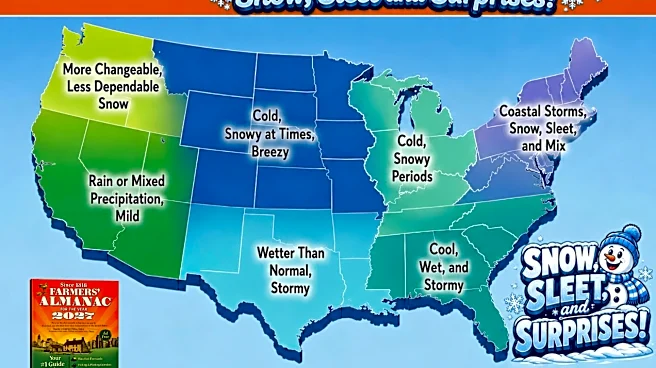
sitting in the northern portion of the Southeastern U.S., it's between two different predicted climate regions for the 2026-27 winter season.
The two regions are similar, with the northern area expected to see cold and snowy periods and the southern region expecting a cool, wet and stormy season. Essentially, Tennessee will likely see a cold and wet winter, with most precipitation likely being rain.
What is the weather usually like for Tennessee winters?
Though Tennessee's geography varies vastly between the eastern and western parts of the state, temperatures are relatively similar, with roughly five degrees difference during the cold months. Precipitation, on the other hand, varies greatly, and winters tend to be much drier in the east compared to the west's rainy winters.
Prep for summer heat at Amazon
Knoxville's winter has an average high of 49.5 in December, 46.5 in January, 50.9 in February and 59.4 in March. The average low during this time is 29.2 in December, 26.3 in January, 29.2 in February and 35.4 in March. During the winter months, Knoxville gets an average of 3.80 inches of rain, with March having the highest amount at 3.96.
In Memphis, winter has an average high of 53.4 in December, 50.9 in January, 55.5 in February and 64.2 in March. The average low during this time is 36.2 in December, 33.3 in January, 36.7 in February and 44.3 in March. Between December and March, Memphis gets an average of 4.98 inches of rain, with March having the highest amount at 5.74.
Winter in Nashville has an average high of 52.2 in December, 49.1 in January, 53.8 in February and 62.7 in March. The average low during this time is 33.3 in December, 30.1 in January, 33.0 in February and 40.2 in March. In winter, Nashville gets an average of 4.36 inches of rain, with March having the highest amount at 4.52.
How accurate is the Farmers' Almanac?
The Farmers’ Almanac has published long-range weather predictions since 1818, using a proprietary forecasting method it says combines natural cycles, solar activity, lunar influences and historical weather patterns.
The publication says its regional forecasts are 80-85% accurate, though independent reviews have found long-range forecasts can be much less reliable than short-term weather predictions.
Meteorologists generally caution that seasonal forecasts months in advance carry significant uncertainty, especially when predicting conditions for specific locations.
How could El Niño affect winter 2026-27?
El Niño is expected to remain an important influence during the winter season, according to the Farmers’ Almanac.
During El Niño winters, changes in the Pacific Ocean and atmosphere can shift storm tracks across the United States. The pattern often favors wetter conditions across parts of the southern U.S. and can influence where storms develop and travel.
However, every El Niño event is different, and other weather patterns will also determine how winter unfolds.
USA TODAY contributed to this report.
Jordan Green covers trending news for The Commercial Appeal. She can be reached at jordan.green@commercialappeal.com.
This article originally appeared on Nashville Tennessean: Tennessee could face a cold, stormy winter, Farmers' Almanac says