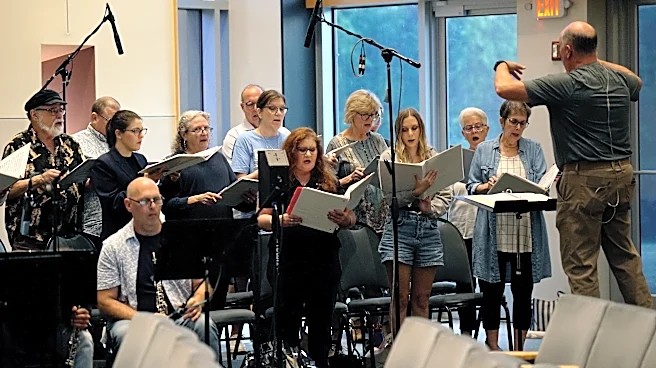








The late afternoon sun poured into the sanctuary at Congregation Micah Sept. 8 as musicians, singers and Cantor Josh Goldberg held their last rehearsal ahead of showtime.
The group was preparing for services set to be performed during Rosh Hashanah, one of the most important holidays in Judaism. There were more than a dozen songs and prayers to run through at the rehearsal, which was sort of like a dress rehearsal. But the team was experienced and ready, especially with Goldberg at the helm.
Goldberg joined Congregation Micah as cantor and music director in 2022 and has recorded multiple full-length albums of Jewish holiday songs, Broadway hits and original compositions. As cantor, he officiates life events for congregants, provides pastoral care
and manages the music programming for services. He's also a songwriter, performer and founder of an independent record label focused on Jewish artists.
Getting ready for the Jewish High Holidays, which include Rosh Hashanah and Yom Kippur, keeps him and the whole team busy at Congregation Micah.
At rehearsal, the group sang in Hebrew, accompanied by a pianist, drums, stand-up bass and wind instruments. They worked together with Rabbi Philip Rice and Rabbi Laurie Rice to practice the evening service for Sept. 11 and the morning service for Sept. 12. Together, those services will kick off the holiest time of the Jewish calendar.
What are the Jewish High Holidays?
Music is a central part of the High Holidays, which include Rosh Hashanah and Yom Kippur. At Congregation Micah, which serves the greater Nashville area, the choir prepares for months under the guidance of Goldberg.
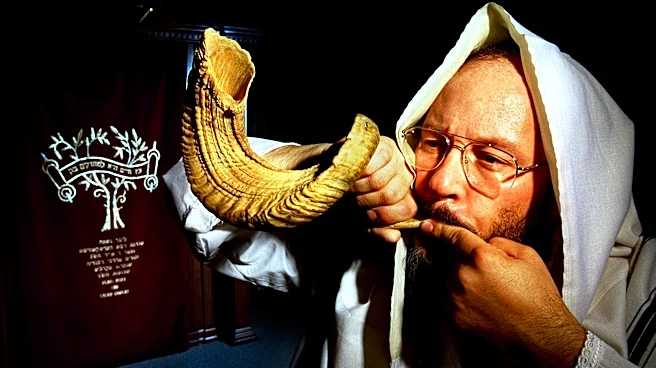
Rosh Hashanah this year begins at sundown on Sept. 11 and is observed for 48 hours. The holiday marks the start of the Jewish New Year and takes place during the first two days of the Hebrew month of Tishrei. To observe Rosh Hashanah, it's a priority to listen to the sounding of the shofar, which is a hollowed out ram's horn, that takes place on both days of the holiday.
The sounding of the ram's horn is just one of many examples of the importance of music during the High Holidays. Rosh Hashanah is a celebratory time that is meant to set the tone for the rest of the year.
"Music is the universal language," Goldberg said. "Even though we're singing in Hebrew, which a lot of people aren't fluent in, we try to underscore the meaning. The music speaks to people and cuts through emotionally."
Between Rosh Hashanah and Yom Kippur are the Ten Days of Awe (or Ten Days of Atonement), a time to ask for forgiveness from people you've wronged or hurt. Yom Kippur, the Day of Atonement, is the holiest day of the Jewish calendar. This year, the holiday is observed from sundown on Sept. 20 to after nightfall on Sept. 21.
Yom Kippur is dedicated to introspection, prayer and asking for forgiveness, and fasting is an important observance for the holiday.
How Cantor Goldberg prepares the choir
The choir and music team at Congregation Micah prepared for months for the special set of holidays. A few of the singers have been with Micah for decades, Goldberg said.
There is a liturgy designated for the services, which includes songs and prayers in Hebrew, but the rabbinical team and Goldberg also like to add in a mix of modern English songs to appeal to all generations of congregants.
"There is more or less a set liturgy, but we like to be creative, too," Goldberg said. "We'll mix it up sometimes."
As the Tuesday night rehearsal went on, the late afternoon became night on one of the few remaining days of the Jewish calendar. On Rosh Hashanah, a new year will begin. One of the songs rehearsed by the group was their rendition of "Who by Fire" by Leonard Cohen, meant to evoke a confrontation with mortality.

The service planned for Saturday is at once somber and celebratory, prompting congregants to reflect on the blessings of the previous year while also looking ahead, praying for sweetness in the future.
"How good and sweet it is when we sit together in unity," goes the English translation of one of the songs.
Molly Davis covers growth and development in Nashville and assists with special projects. You can email her with comments, questions and tips at mmdavis@tennessean.com.
This article originally appeared on Nashville Tennessean: Congregation Micah preps for Rosh Hashanah, Yom Kippur for Nashville