

Matt Hasselbeck turned 50 this year, and birthday calls arrived as usual for the former NFL quarterback.
An old friend, neuroscientist Dr. Chris Nowinski, had earmarked Hasselbeck’s age.
“Chris and I were talking and he and said, ‘What are you doing for your 50th birthday?’ ” Hasselbeck said. “I said, ‘Well, I'm not really doing anything.’ He said, ‘We have this study.’”
Hasselbeck, now in his third season as a TSSAA football offensive coordinator at Ensworth, agreed to be an ambassador for the large-scale “Diagnose CTE-II” study, and flew to Boston to be part of it in August.
The tests focus on former college and NFL football players age 50 and above, as well as other candidates, in an effort to diagnose the progressive brain disease, chronic traumatic
encephalopathy, in the living. CTE can currently only be diagnosed after death.
Hasselbeck is a past member of the NFLPA Mackey-White Committee, which helped improve concussion policies for NFL players and in turn changed the way head injuries are viewed at all levels. He is especially interested in knowing how to differentiate Alzheimer’s, dementia and CTE, and he has already decided to donate his brain to science after his death.

Football was a way of life in his family starting with his late father, Super Bowl-winning tight end Don Hasselbeck, who donated his brain to science as a part of an early Harvard study on CTE.
Matt’s brother, former NFL quarterback and current ESPN analyst Tim Hasselbeck, is Ensworth’s coach. Their brother, Nathanael, played college football at UMass. Tim’s son, Taylor, is a freshman quarterback at Wyoming and his youngest, Isaiah, is an Ensworth junior quarterback.
“There are people who look at football as an experience that has brought a fruitfulness to their life,” Tim Hasselbeck said. “They feel like, ‘Yeah, I would like to make the game better for the guys who come behind me.’ And it might even be your own children and grandchildren who are part of it.”
Why Ensworth OC Matt Hasselbeck offered help for CTE study
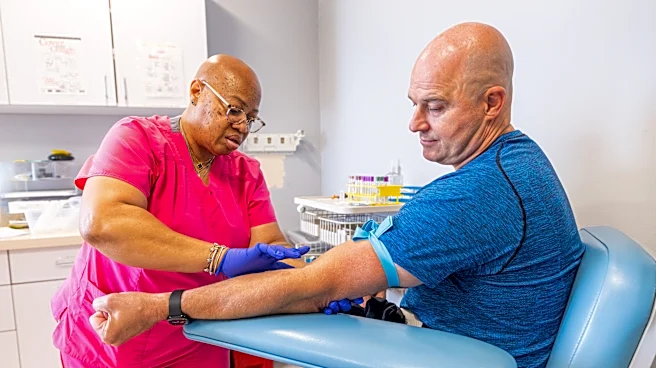
Hasselbeck, who is from Westwood, Massachusetts, underwent his tests at the Boston University CTE Center, which was co-founded by Nowinski. The two-day, expenses-paid visit included two sets of blood workups, a PET scan and a brain MRI.
The team of specialists, led by the clinic’s co-director of research, Dr. Michael Alosco, also gave Hasselbeck neurocognitive tests where he was given tasks like saying the alphabet backwards or counting down from 100 by 7s.

Hasselbeck said he is not currently experiencing CTE symptoms.
“The benefit to me is I’ll sort of get a lot of information about how I am doing in an ‘invisible injury’ kind of way. I fully expect the results to be good,” Matt Hasselbeck said.
Matt Hasselbeck said he has football friends who show signs of struggling. Some reached out to him about joining the study, but they weren’t 50 years old yet. Hasselbeck suspects they are looking for answers so they can receive treatment.

“I can just feel their sense of urgency, and some of them are younger than me,” he said. “There are other studies I can refer them to. But that’s a little bit concerning.”
Hasselbeck’s education about CTE hasn’t changed his opinion on football. He believes the sport can be deeply beneficial for people and wants to see more research on concussions in other sports, such as soccer.
The end goal is to learn more about brain injuries that occur in all people, including military service members.
The Hasselbeck brothers have prided themselves on building a physical Ensworth program since their arrival in 2024, but the Tigers never tackle to the ground in practice and players are required to wear guardian caps.
“I played 18 years in the NFL, and the beginning of my career and the end of my career just looked very different,” Mattt Hasselbeck said. “At the beginning of my career, if someone had a concussion the doctor would say, you know, ‘How do you feel?’ And every player would just say, ‘I’m good.’ That’s what you were supposed to say. By the end of my career, I just felt like it was a whole different game. The game was way safer.
"Now it's, OK, guys are struggling with dementia or have memory loss. The question is why? Is it because they’re 75 years old and their brain is shrinking due to normal aging? Or is it something more than that? Those are things we’re trying to figure out."
Tyler Palmateer covers high school sports for The Tennessean. Have a story idea for Tyler? Reach him at tpalmateer@tennessean.com and on the X platform, @tpalmateer83.
He also contributes to The Tennessean's high school sports newsletter, The Bootleg. Subscribe to The Bootleg here.
This article originally appeared on Nashville Tennessean: Why former NFL quarterback Matt Hasselbeck is pushing for CTE answers