






In 1976, Nashville business leaders gathered to solve a problem: If the city was going to continue growing and evolving, it needed to diversify the voices at the table. The decision makers in the room were all white men.
Community leaders Honey Alexander and Jean Caplinger Farris suggested creating a leadership development program. Nelson Andrews embraced the idea and reached out to newly hired University of Tennessee-Nashville professor Brent Poulton. From that discussion, one of Middle Tennessee's most influential leadership programs was born.
That September, Leadership Nashville launched its first class with 46 participants.
Fifty years later, what began as a volunteer-driven organization has grown into one of the state's most respected executive
leadership programs, bringing together leaders from business, government, education, nonprofit organizations and public service to find solutions for the city's problems. With more than 1,800 alumni, the sixth oldest leadership program in the United States serves as a model for civic problem-solving.

Alumni celebrated the anniversary on Sept. 24 at the County Music Hall of Fame and Museum with the theme of “The UnBroken Circle: 50 years of proximity, purpose and promise.”
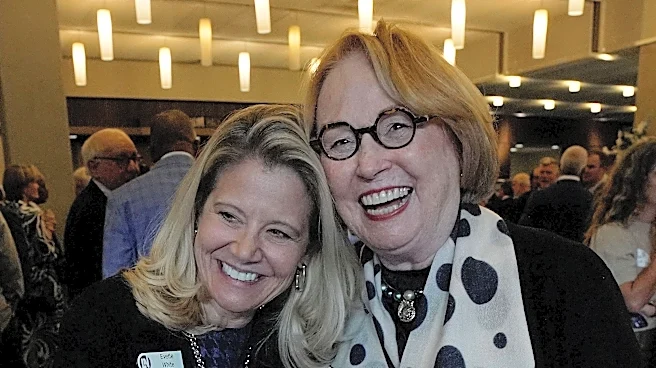
Executive Director Evette White said the organization has been crucial to Nashville's growth from a regional hub to a national leader.
"If you look at 1976 Nashville and 2026 Nashville, you can see the natural progression and cross-reference where our alumni may have intersected with each of the pivotal moments that made Nashville the city it is today," White said. "The contributions our alumni have made after gaining a broader understanding of the entire city through Leadership Nashville are remarkable."

White, herself a graduate of the program, became executive director in 2019. Since taking the helm, she has continued the organization's commitment to attracting a diverse range of leaders and expanding its impact across the greater Nashville community.
Over the past five decades, each class has brought new perspectives and ideas to the organization. Those ideas have often extended far beyond the classroom, helping shape major initiatives throughout the city ranging from social programs to help mothers in recovery to bringing local businesses to a major hub.
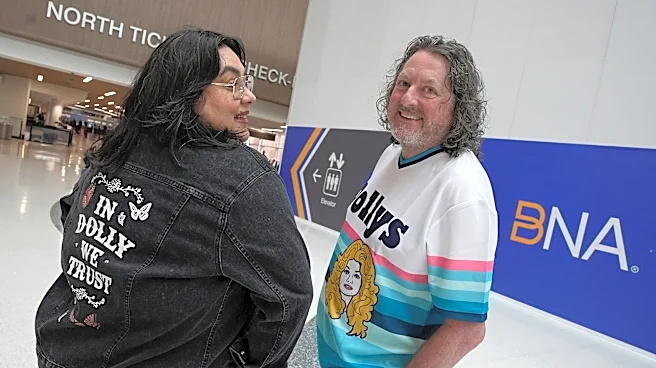
One such idea was the effort to showcase locally owned businesses and restaurants inside Nashville International Airport.

"I learned very early after relocating to Nashville from Huntsville just how deeply the community values and takes pride in its airport," said Douglas E. Kreulen, A.A.E., president and CEO of the Metropolitan Nashville Airport Authority.
Kreulen participated in Leadership Nashville in 2018. Through the program, he gained a deeper appreciation for the city's strong support of local businesses and entrepreneurs.
"One of the most meaningful aspects of the experience was hearing the perspectives of my classmates and gaining a deeper understanding of how their life experiences, from adolescence through adulthood, shaped the way they see our city and the world around them," he said.
The following year, BNA began expanding efforts to feature Nashville-based businesses, including Prince's Hot Chicken, Slim & Husky's Pizza Beeria and the Tennessee Tribune.
"As we began planning BNA Vision, our first major construction and expansion program, we made an intentional effort to bring some of Nashville's most recognizable and beloved local brands inside the doors of BNA," Kreulen said.
"That commitment is why travelers now experience concepts such as The Southern, Acme Feed & Seed, Prince's Hot Chicken, Slim & Husky's, Tennessee Tribune, Titans Press Box, Nashville Predators, Nashville Soccer Club and Parnassus Books at the airport. As the first and last impression of our city for millions of travelers, it was important that BNA authentically reflect Nashville."
According to the organization, Leadership Nashville’s impact has expanded steadily by bringing together participants from diverse racial, ethnic, political and philosophical backgrounds.
Accepted participants have included educators, physicians, bankers, artists, business leaders, clergy, attorneys, labor representatives, public servants, members of international communities and nonprofit leaders. The program also reflects a broad cross section of races, religions, ages, political perspectives and neighborhoods across the region.
"My older brother always made sure we were involved in community service, and I've worked with different nonprofits throughout my life," said Deb Varallo, a former Leadership Nashville Alumni Association chair. "Leadership Nashville introduced me to people I never would have met otherwise, from corporate leaders to nonprofit professionals. It opened doors to organizations and causes that my path simply wouldn't have crossed."
Some community initiatives and organizations that Leadership Nashville alumni helped launch include:

- Music City Center: Black Bottom was a historic, diverse, working-class neighborhood in downtown Nashville that existed from 1832 until it was largely dismantled by urban renewal projects in the 1950s. The area, more recently rebranded as SoBro, remained largely undeveloped for decades until a group of Leadership Nashville alumni proposed creating a new downtown convention center. Following years of research and planning, the Metro Nashville Council approved the project in 2010. The 353,000-square-foot facility opened three years later and remains a major economic driver.
- Renewal House: During the crack epidemic, Renewal House became Nashville's first comprehensive family residential program for young women and children. It was developed by Leadership Nashville graduates.
- PENCIL (Public Education Needs Community Involvement and Leadership): Established in 1982, Nashville business and community leaders recognized the need to be more involved with public education. Leadership Nashville graduate Christiane Buggs current leads the organization in connecting private industry, city officials and other nonprofits to help Metro Nashville Public School students.
"Leadership Nashville has impacted leaders before, during and after the program," White said. "We want alumni to leave with the ability to see beyond their own industries and make an impact on Nashville in different ways. That's why we provide what I call a master's-level backstage pass to the city, exposing participants to areas where they can have influence through decision-making, philanthropy and community support."
As Leadership Nashville looks toward its next 50 years, White, Varallo and Kreulen share a similar vision for the future: continued collaboration, community impact and leadership development.
White hopes future participants will continue creating transformative organizations and initiatives that strengthen the city.
"In another 50 years, I hope the elements of Leadership Nashville that are our secret sauce among community leadership programs nationwide remain intact," she said. "I also hope innovation builds upon that foundation so that even more leaders can go through this program and be inspired to do amazing things."
Varallo is equally optimistic.

"I think in the next 50 years we can save the world," she said with a laugh. "I hope we continue to educate leaders in every field about how we can better support one another and ensure everyone is treated with dignity and respect."
For Kreulen, the program's future success depends on preserving its spirit of collaboration.
"Leadership Nashville reinforced for me that no single organization or leader builds a great city," he said. "It takes partnership, shared vision and a genuine commitment to the community we serve."
While nominations for the 2027 class have closed, nominations for the 2028 class are now open. More information is available atwww.leadershipnashville.org/nominate.
This article originally appeared on Nashville Tennessean: Leadership Nashville marks 50 years of shaping the city's leaders