




Nashvillians are about a year out from electing their next mayor.
Incumbent Freddie O'Connell has launched his bid for a second term, but otherwise the field of candidates vying for the seat is thin. The qualifying deadline to get on the ballot is still months away, however, leaving a lot of time for new contenders to enter the mix.
The election is set for Aug. 5, 2027. If no candidate secures more than 50% of the vote, a runoff election will be held Sept. 16.
Here’s a look at where things stand today, and a guide to the early storylines to follow.
The high-profile candidates
So far, there are just two big names in Nashville politics who’ve announced they’re pursuing the mayoral seat.
One is the incumbent, O’Connell, and the other is Metro Nashville Council member Joy Styles,
who has represented part of Antioch in District 32 for two terms.
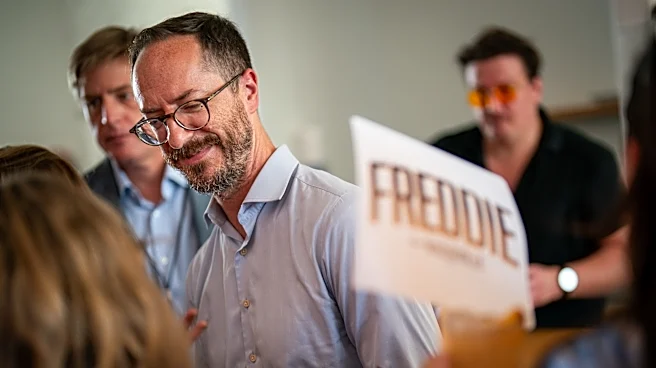
O’Connell’s path to the seat was hard-fought through a crowded field of 12 candidates. He then notched a comfortable runoff victory against business leader and former political strategist Alice Rolli. He’s now seeking his second term as mayor, following two terms on the council representing downtown Nashville.

Questions about whether O’Connell would indeed seek a second term swirled among local government insiders for a while, but he eventually announced his reelection bid in May. Since then, he’s leaned into messaging about building “a Nashville for Nashvillians,” highlighting declining crime rates and affordable housing additions on Nashville’s East Bank.
O’Connell’s also signaled an intent to continue pushing back against what he has described as state and federal overreach. Nashville's particularly fraught relationship with both the state and President Donald Trump's second administration has become a hallmark of his tenure since his second year in office.
Nashville’s been party to several lawsuits filed against the Trump administration under O'Connell. Current and former federal officials, in turn, have slammed O’Connell for how his office has responded to U.S. Immigration and Customs Enforcement operations in Nashville. He and Republican U.S. Sen. Marsha Blackburn, the frontrunner to become Tennessee’s next governor, have sparred as well, most recently over a viral campaign ad ahead of her gubernatorial primary victory that featured the longtime congresswoman smashing fortune cookies to demonstrate her intention to “stop Communist China.”
From a fundraising standpoint, O’Connell is the best positioned so far. His July 15 campaign finance statement showed he had nearly $545,000 on hand.
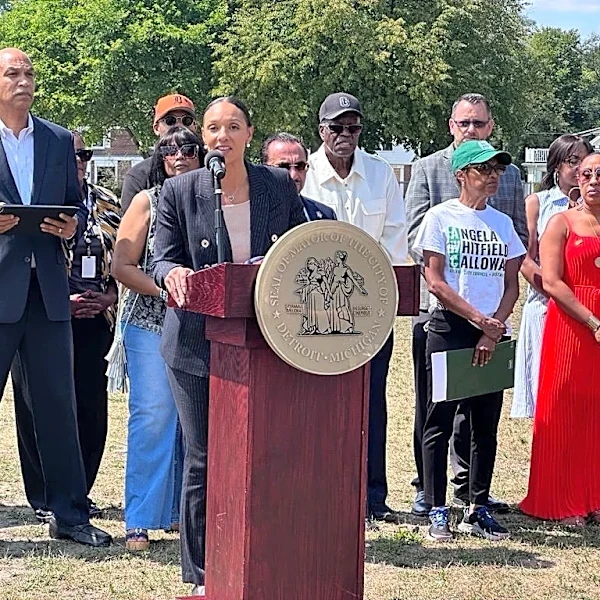
Styles, meanwhile, announced her candidacy in late January, becoming the first person to throw her name into the mix. She’s since fleshed out a platform focused, in part, on public safety, accountability and transparency in government, support for the arts and community equity.

Styles has been critical of the O’Connell administration. When she announced her campaign, Styles blamed O’Connell for allowing development to languish in her district and others while focusing too much on the still-developing East Bank. She also decried a lack of early results from his flagship Choose How You Move transportation program, which at the time had been collecting revenue from the new half-cent sales tax approved by voters to help fund the program for less than a year.
Her criticism of the incumbent mayor has continued since then, on topics from how he responded to the historic Winter Storm Fern to his current bid to acquire a property next to the Nashville Zoo, the site of a proposed data center, by way of eminent domain.
Styles’ most recent campaign finance statement, filed July 14, shows a balance of $21,664.19 toward her mayoral campaign.
Others, including neighborhood activist Lou Wilbanks, former Republican New York State Assembly candidate Sandra Magnano, and 2023 mayoral candidate Natisha Brooks, have also signaled their candidacies.
Vanderbilt professor, pollster says O'Connell's in strong position
If you ask John Geer, co-director of the Vanderbilt Poll and professor of political science at Vanderbilt University, history’s on O’Connell’s side.
Geer said that’s because Nashvillians historically tend to reelect incumbent mayors. He’s seen plenty of those races play out, having taught at Vanderbilt for more than three decades, as part of a pattern that holds true through much of the more than 60 years Nashville’s operated as a consolidated metropolitan government.
The past 10 years or so might be the exception to that trend. O’Connell in 2023 became Nashville’s fifth mayor in the span of a decade, the latest turn in a string of events that started with former mayor Megan Barry leaving the office amid scandal in 2018, with then-vice mayor David Briley going from acting mayor to the winner of a special election to finish out the remaining six months of her term.
Briley would become the first incumbent mayor to lose a reelection bid since the Metropolitan Government of Nashville and Davidson County formed in 1963 when he lost the 2019 mayoral race to John Cooper, who decided against running for a second term.
But before all that, a string of three former Nashville mayors — Phil Bredesen, Bill Purcell and Karl Dean — all won reelection to back-to-back terms.
Geer said that means while O’Connell’s not necessarily unbeatable, he’s still in a pretty strong position. One wrinkle to watch for is a potential runoff, where Geer said unseating the incumbent mayor would likely take consolidating support behind one especially strong opponent.
“All in all, a year is a long time,” Geer said. “Lots of things could happen. But Freddie O’Connell is in a pretty strong position.”
Geer said it’ll likely take some twists and turns to change that. Vanderbilt’s most recent polling shows O’Connell with a 54% approval rating. While that’s a decline from the overwhelmingly positive 71% approval he started his term with, Geer said it’s difficult for any incumbent politician to maintain such high ratings.
It’d likely take something like a bombshell candidate or a significant event to derail that momentum, Geer said.
For example, mishandling the debate about the fate of the Nashville Fairgrounds Speedway could result in some vulnerability, Geer said. A group of neighbors is currently gathering signatures to put the question of whether to eliminate racing as a protected activity on the fairgrounds from city charter. If they’re successful, the referendum would likely end up on the same ballot as the mayoral race, creating a timing that a savvy opponent might see as a potential campaign hook.
“I don’t see it being a problem for Mayor O’Connell at this stage of the game, but if somebody was able to harness that in ways, it could change,” Geer said. “Right now, it’s premature, but the real point is thinking about the various kinds of issues that could pop up that he didn’t anticipate.”
Austin Hornbostel is the Metro reporter for The Tennessean. Have a question about local government you want an answer to? Reach him with questions, tips and story ideas at ahornbostel@tennessean.com.
Get Davidson County news delivered to your inbox every Wednesday.
This article originally appeared on Nashville Tennessean: Who's running for Nashville mayor in 2027? An early look at candidates