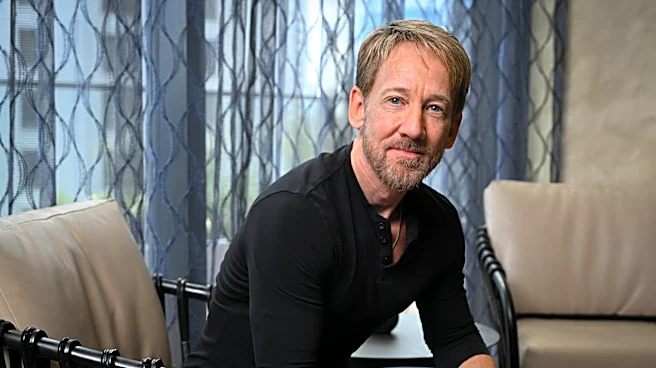





Former Avalon member Michael Passons was kicked out of Christian music nearly 30 years ago. Now, after reaching No. 1 on the iTunes Christian chart alongside Nashville artists Ty Herndon and Melissa Greene with the inclusive re-boot of “Testify to Love,” Passons told The Tennessean he will launch a solo career.
The exclusive news follows a triumphant return for the one-time evangelical entertainer, who said he was forced out of Avalon in 2003 because he is gay. This fall he’ll release his debut single “Not Broken,” a transformative anthem about embracing the identity he was taught to be ashamed of.
“I wrote [‘Not Broken’] in response to the conversion therapy experience I was forced to endure when my former group made it a condition in order to keep
my position,” Passons explained.

Featuring empowering lyrics like “You can’t fix something that’s not broken,” the self-penned track marks a step into the spotlight Passons thought he’d never make. But after the viral success of his re-imagined “Testify to Love,” he said many unthinkable things now seem possible.
“I've never been a solo artist before. I’ve always been that blonde guy in that group,” Passons said. “I’m really excited about that opportunity.”
“Testify to Love” was reinvented as an inclusive Christian anthem
Longtime Contemporary Christian Music (CCM) listeners may remember “Testify to Love.” The anthemic power ballad spent a record-breaking six weeks at No. 1 on Christian Radio after its release by the vocal group Avalon in 1997. It went on to win a GMA Dove award for pop/contemporary recorded song of the year in 1999, and helped send Avalon on a series of successful tours.
Passons left Avalon a few years later. He explained in 2020 that he was actually pushed out of the band because of his sexual identity. He walked away from music shortly after.
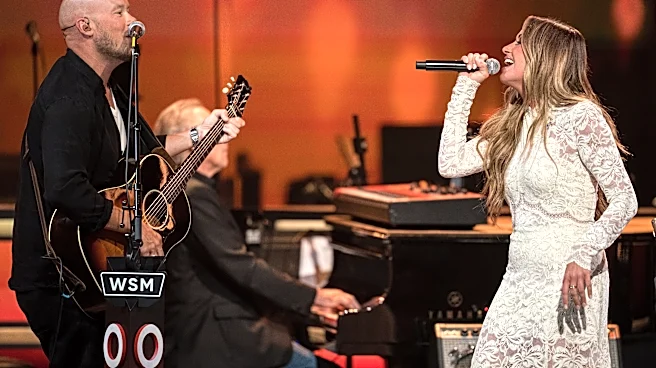
The remade version of “Testify to Love” features the same devoted lyrics and inspiring melody as the original track, and it sent Passons, Herndon and Greene on a redemption journey. Along with hitting No. 1 on the iTunes Christian chart, the song reached No. 3 on Billboard’s Christian Digital Song Sales chart and earned the trio an invitation to sing on the Grand Ole Opry in June.

The song’s return has also sparked a conversation about inclusivity in the Christian-music community. Its success came without Contemporary Christian Radio airplay, or other traditional means of support from the CCM industry. Instead, it was driven by fans who grew up in the evangelical movement but may now feel alienated by its stance on social issues. Passons said the resonance of “Testify to Love” has simply outgrown its old constraints.
“The whole premise of the song is so much more broad and wide and inclusive now,” he explained, noting that when Avalon first recorded the song it was in a “very small evangelical box.”
“It was just time to let this bird fly. It's just so much bigger than that, as is God's love for everyone,” he said. “That's the statement we wanted to make.”
How Michael Passons re-recorded “Testify to Love”
After leaving Avalon, Passons said he went along with a plan to “fix” his sexual orientation through conversion therapy. Widely discredited as ineffective, the practice teaches patients their queer identity is a problem and is intended to change a person's sexual orientation, gender identity or gender expression. This can be attempted by using anything from religious counseling to physical isolation or even electrical shocks.
A 2025 study from the Williams Institute at UCLA School of Law said nearly 700,000 U.S. adults had received some sort of conversion therapy. It also found those who did had "75% higher odds of planning a suicide, and 88% increased odds of attempting suicide compared to LGBT people who did not experience conversion therapy."
According to LGBTQ+ Christian advocate and Nashville-based life coach Mike Maeshiro, the process can be extremely harmful to those who endure it.
“It is very psychologically damaging,” said Maeshiro, a former minister who went through the therapy himself. “It really messes with your sense of self, and it also targets your closest relationships.”
Greene, who was a member of Avalon at the time and took part in the decision to have Passons step away from the band, said they drifted apart.

“When everything went down back in 2003, we lost touch and needed to,” Greene said. “I needed to grow. He needed to heal.”
Greene became the pastor of a Nashville church dedicated to inclusivity. Over the years, she reconnected with Passons. He says she became one of his fiercest allies.
The new version of “Testify to Love” happened after Passons was introduced to Herndon, the singer who scored three No. 1s on country radio charts starting in the ‘90s. Like Passons, Herndon knew what it meant to be raised in the evangelical community, pretending to be something he was not. Now an openly gay country singer and LGBTQ+ advocate, Herndon came out in 2014 and wanted to help Passons find his voice again.
“I spent decades trying to hide the fact that I was gay,” Herndon said. “At the end of the day, God gave us a gift. I just wanted to use it and use it to help others, and that should have been the story all along.”
In June 2025, Herndon convinced Passons to sing at his annual Concert for Love and Acceptance in Nashville. It was the first major concert appearance for Passons in years, and he brought Greene along. When the trio performed “Testify to Love,” the crowd’s reaction was so overwhelming that the artists decided to record a new version, informed by their experiences. No one expected it would become a hit (again).

“We were doing it for us,” said Greene. “We hoped that people would love it, but we felt great about the song and great about the moment.”
“Testify to Love” speaks to demographic of believers who felt pushed away
Ever since the new “Testify to Love” was released in May, the trio have been inundated with support.
“More people than I can keep up with,” Passons said.
Fan comments, left on social media and delivered in person, often focus on a faith-based childhood and a personal memory of “Testify to Love,” along with an eventual decision to step away from the Christian evangelical movement. Many expressed a disconnection from what’s perceived as cruelty toward the LGBTQ+ community.
“Whether you’re gay or an ally, so many people have walked away from evangelicalism because of the homophobia,” said Maeshiro, who grew up loving “Testify to Love” and now feels the song has been “reclaimed.”
“The song is about love, and a lot of us are like, ‘That’s what Christianity is about. That's what Jesus is about,’” he said.
The success of “Testify to Love” may not mean Christian music fans are clamoring for songs with LGBTQ+ themes. But it does suggest a large group of listeners still love the song, and want people like Passons to be a part of the community.
Former CCM artist Crystal Lewis, who helped define the genre’s ‘90s sound with multiple Dove award-winning hits, toured with Avalon as her opening act during the first wave of “Testify to Love” success. She told The Tennessean the Christian format has always had an uneasy relationship with questions of queer identity. The unspoken understanding was that it was not OK to be gay.

“That was the messaging that was subtly sent, I think,” she said. “And it was probably very obviously sent to people who were queer in the industry.”
Lewis said looking back, it’s heartbreaking to know Passons was singing “Testify to Love” every night while feeling so internally conflicted. The two have become close, along with Greene and Herndon.
“He had to go sing this big hit song … everyone in the room translated it differently than he did,” Lewis explained. “In that moment. He was like, 'Yeah, testify to love, great. Not for me.'
She said that she wept when then new version came out.
Lewis quietly left CCM and said she has not been involved with the format for over 10 years. She has faced backlash at times for being an LGBTQ+ ally (as well as for her tattoos and love of Halloween), but still has ties to what is now a fast-growing industry.
In 2026, Luminate noted the growth of Christian and gospel music is outpacing rock and Latin, while Spotify streams of CCM are up 60% in the last five years. Band-van rental specialists Bandago noticed “touring-scale church-group rentals (choir tours, worship teams, mission trips) are up 65% over the decade and 24% in the last year alone.” Around 215 of the Christian music tours launched from Nashville, specifically.
Growth often brings creative diversity, but Lewis said it’s still difficult to be an openly gay artist in modern Christian music.
“It's still definitely frowned upon to call yourself a Christian and gay at the same time,” she said. “There's a massive part of that particular population that would say, ‘Oh, those are progressives. That's not true Christianity.’”
The backlash against the new “Testify to Love”
Passons, Greene and Herndon know their resurgent hit has attracted critics. Christian commentators like Boyce College professor of biblical studies Denny Burke claimed Passons had co-opted the song's message, despite the fact that the original writers love it.
Meanwhile, author and podcaster Allie Beth Stuckey had a negative review of the remade song, adding that Christians should not try to be "nicer than God."
CCM group Point of Grace faced online pressure after engaging with the release and eventually clarified that, while they love Passons personally, they do not endorse his progressive views.
Passons also went on to say he personally knows of “a few” Christian artists who found promoters canceling their shows after they shared support for his return. Yet the vast majority of responses have been positive.
“It just says to me we've hit something here that needs to be addressed,” he said.

His story is not unique. The documentary film “Safe for the Whole Family: How to Make a Christian Superstar” recently highlighted what Passons went through, along with the “toxic” experience endured by Nikki Leonti (dropped from her label after becoming pregnant at 17) and Jennifer Knapp (who left the genre after refusing to “push a conservative agenda”).
After all he’s gone through, Passons sees a new day dawning. That’s why he has decided to go solo.
“The gatekeepers are gone,” he said. “It's the fans who now decide what goes No. 1. Not the label, not Christian radio."
Are the “Testify to Love” artists still believers?
One aspect of the “Testify to Love” story stands out: The sense that faith is still essential, both to the artists who recorded the song and the fans who wish for a different way to worship. Each “Testify to Love” artist said they still see themselves as believers … in their own way.
Greene is "peacefully post-Christian," having moved away from the word "Christian" because of how she feels it has been used in the name of exclusionary acts. She said no one gets to define "who God is and who God loves and who this is for."
Herndon agreed, saying "if you ain't hitting the love button, you're missing the Christian boat."
For Passons, he’s just glad for the opportunity to use his voice again, to “forge this frontier of proclaiming that God's love is that big.”
“Yes, I am still a believer,” he explained. “I'm not evangelical. That was my upbringing. But I'm still very much a believer.”
This article originally appeared on Nashville Tennessean: Avalon’s Michael Passons shares the trials queer Christian music artists face | Exclusive