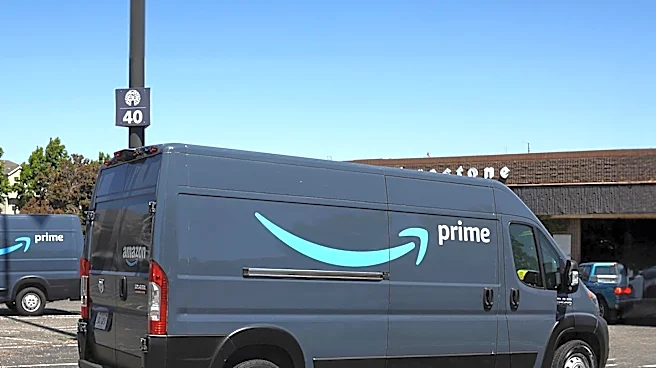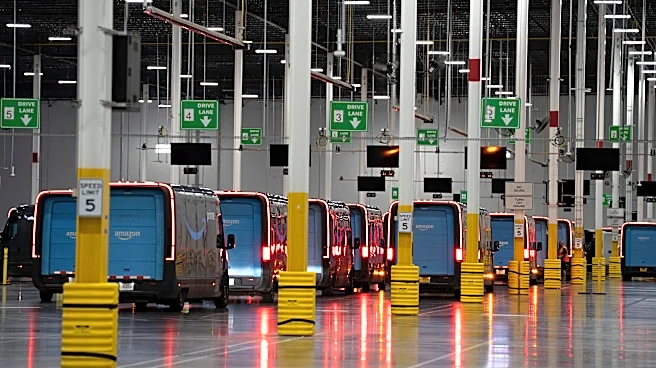




At 9:45 a.m. every day, hundreds of electric delivery trucks bearing Amazon's signature smile logo stream into the loading bay at DTN8 in Lebanon.
Drivers wind past the Nashville Superspeedway and a cluster of warehouse-style buildings in the industrial park before converging at Amazon's largest last-mile delivery station of its kind in Middle Tennessee.
As soon as drivers put their vehicles in park, a whistle blows and a flurry of activity erupts. Facility employees wheel cart after cart of cardboard boxes into the covered loading dock, and delivery drivers organize their haul to streamline plans for the day of driving ahead.
DTN8 plays a key role in moving packages from Amazon's logistics network onto delivery trucks and ultimately to customers'
doorsteps. The sprawling operation offers a glimpse into the technology, training systems and data infrastructure the company deploys in facilities all over the U.S., from custom-built electric delivery vans to anti-slip safety training system and safety training including driver simulations.
Every five minutes, more trucks arrive and the process repeats until hundreds of thousands of boxes have left the center.

It looks like clockwork because it is. Packages are scanned every time they are handled along the journey until they are loaded onto a last-mile delivery truck. From there, every package is scanned as it leaves the truck
Over time, that helps shape delivery routes and improve warehouse systems in facilities like DTN8.
Watching the process reveals just how much energy actually goes into same-day delivery, even after an item is packed into a box and brought to the delivery station.
Innovation, efficiency drives Amazon's largest Tennessee delivery station
The Lebanon delivery station is one of 9 facilities like it across Tennessee, and it serves the primary purpose of sorting packaged goods and sending them on their way with both Amazon-owned delivery trucks and independent contractors. These facilities are different from fulfillment centers, where inventory becomes a boxed customer order. Amazon has 17 fulfillment and sorting centers in Tennessee.
Inside the expansive warehouse, giant conveyor belts transport packages from the receiving bay into the facility, where they are sorted by final destination into stalls and staging areas and prepped to be placed on delivery trucks.
In another section of the building is the delivery driver training center, where safety demos teach employees how important it is to lift heavy packages and get in and out of trucks with proper form and mechanics. Drivers also take safety simulations that look a little bit like arcade driving games and practice anti-slip techniques on slick surfaces.
Amazon's operations demonstrate the company’s commitment to efficiency, a company spokesperson said. Through intricate processes, Amazon said it has nearly eliminated the chance of a package getting lost and minimized the risk of injury to drivers while ensuring every employee is prepared for worst-case scenarios.
“It’s an easy concept, but by no means is it an easy job,” Amazon employee Chris Robison said. “We just want to make sure our delivery associates know everything that comes with it.”
While Amazon trains all of its delivery associates, it doesn’t directly employ them. Instead, approximately nine third-party businesses work with Amazon in Middle Tennessee to supply drivers.
After passing the 16-hour long training, they can hop into the driver’s seats of custom Amazon Rivian trucks. They drive like golf carts, Robison said, and each is fitted with interior and exterior cameras. That way the driver can see a 360-degree view of the vehicle, and Amazon can track instances of speeding or distracted driving.
The company also maintains a decade’s worth of data on delivery processes for any address that has received an Amazon package. As the drivers move along their routes, they are able to view a portion of those notes, like where the package room is in an apartment building, gate codes, changing business hours or if there are any notable pets to look out for.
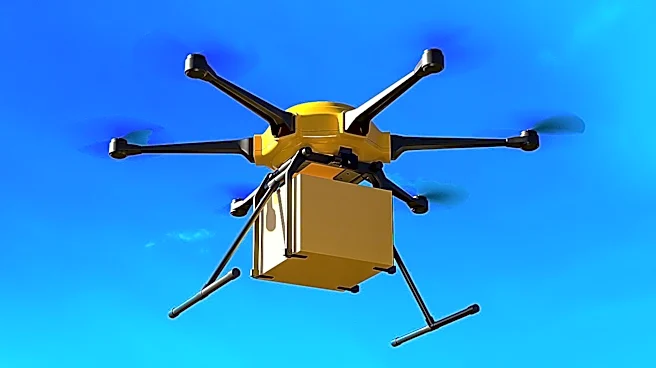
Since most of the executives behind Amazon's operations innovation are based in Nashville, Robison said facilities in the area often test out new technology first. While drone delivery hasn't made its way to Nashville yet, Robison said other technologies are actively being tested here.
Amazon invested $30 billion across Tennessee
Before Starbucks, Oracle and In-N-Out Burger decided to make Nashville a central part of their operations, there was Amazon. On Nov. 12, 2018, the day before the company would announce its plans to the world, Amazon executives called Gov. Bill Haslam and Nashville Mayor David Briley to break the news.
After a months-long courting process wherein Tennessee officials attempted to woo the e-commerce company into opening its second headquarters in Nashville, they lost. Arlington, Virginia, ultimately won the competition, but Nashville didn’t walk away empty-handed.
In exchange for a $102 million incentives package, Amazon promised to build an Operations Center of Excellence downtown, investing $230 million of its own funds into the city and creating 5,000 jobs paying an average of $150,000. The deal became the single largest jobs commitment that a company had ever made in Tennessee, until Oracle came along.
At the time, Amazon had six supply chain facilities across Tennessee. Now, the company operates 26 fulfillment centers and delivery stations in the state, plus two 20-plus-story office towers in the downtown development Nashville Yards. The company moved employees into one of the towers in 2021, but the second remains empty, an Amazon spokesperson said.
In total, Amazon estimates that it has invested close to $30 billion in Tennessee since 2010, including in infrastructure and employee compensation, a 2026 company report states. It also reported a total of 28,000 full- and part-time employees in the state.
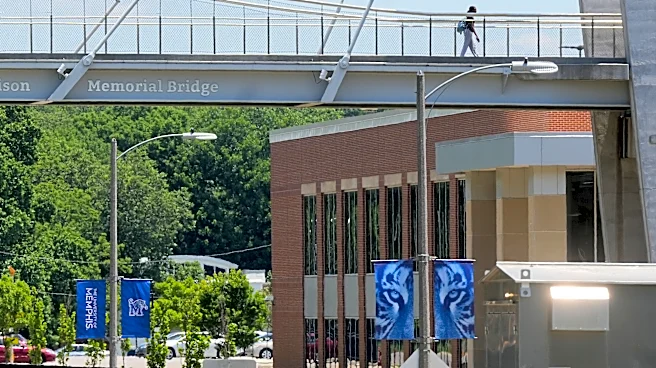
And there are at least three more Amazon industrial facilities planned for Tennessee, including one just down the road from the last-mile delivery center in Lebanon, one in Chattanooga and a new delivery center in Memphis that will expand guaranteed same-day delivery in West Tennessee.


Molly Davis covers growth and development in Nashville. You can email her with comments, questions and tips at mmdavis@tennessean.com.
Hadley Hitson covers business news for The Tennessean. She can be reached at hhitson@tennessean.com. To support their work,subscribe to The Tennessean.
This article originally appeared on Nashville Tennessean: Same day delivery? How Amazon gets your package to your door in Tennessee