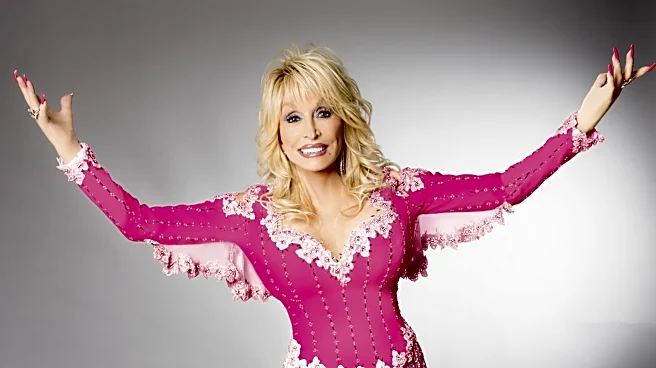

Following news of a dispute involving the late Dolly Parton’s closest family and advisors, the country music icon's estate management seems to follow a painful pattern revealed by Nashville's history,
which is littered with disagreements over the post-life intentions of Music City stars.
Recent years have seen lawsuits over the $275 million estate of Jimmy Buffett, for example. And, even though Patsy Cline died in 1963, her family was still figuring out how to allocate some of her personal belongings 40 years later.
The restraining-order request at the center of the Parton case is not truly an estate dispute, but it does illustrate the challenges public figures face when planning for a future after they’re gone. According to court filings affiliated with She's Alive, LLC., which Parton established to protect her professional property and business interests after her death, Parton's nephew put "'no trespassing' signs on the lawn and by the front door," plus yellow caution tape and barbed wire "surrounding the front steps" to deter anyone from delivering documents to his home.
Legal experts told The Tennessean that the frequency of conflict between a deceased star's confidants is one of the reasons that high-net-worth individuals invest so much time in estate planning.
“How do you navigate the potential for in-house fights?” said Sandbox Succession president Josh Matas, whose team manages the estates of Johnny Cash, June Carter Cash, Loretta Lynn, Roy Orbison and Richard Petty. “That is really the number one issue that comes in and causes absolute paralysis of these things.”
Matas was just one of the industry professionals who told The Tennessean that disputes over the estates of major artists are common, even for those who do plan carefully.
How are estates created?
Tiffany Dunn, a Nashville-based partner at the law firm Loeb & Loeb who has 26 years of experience setting up and running the estates of major musical artists, said every estate plan is different. But they all start with one question: “What is your creative vision for what you want your legacy to be?”
When a new client walks in, entertainment lawyers like Dunn will ask for a complete list of assets the client owns and controls. Those can include real estate holdings, investment portfolios and personal belongings, but also intellectual property like songwriting copyrights or master recordings.
The legal team will transfer ownership of those assets into a trust, which is put in the name of a “trustee.” When the client is still living, they are the trustee. After they die, another trustee or team of trustees must be clearly spelled out. According to Dunn, that person or group “are essentially my bosses.” In Parton's case, there are no public documents revealing who the trustees are, only that her controversial nephew is among the beneficiaries.
“Do you want bobbleheads, or no bobbleheads?” Dunn said, adding that the trust plans can be very specific about how a star wants assets to be used in the future. “Sometimes that’s a very quiet legacy and sometimes it's a very public legacy, like our sweet Dolly Parton.”
Crucially, lawyers may also need to set up LLCs to do business on behalf of the trust in different states or countries. These plans are crucial because of the massive value of a major artist’s estate. Both as it exists when they pass away, and its future earnings potential. Much of the reporting around the Parton estate has included She's Alive LLC, run by her longtime manager Danny Nozell, who is the one in conflict with Parton's nephew. Several members of the family have defended the nephew, Bryan Seaver, in social media posts since the country icon passed away.
In some ways, this is comparable to Buffet's estate feud, where the singer's longtime business manager, Richard "Rick" Mozenter, remains locked in legal battles with the singer's widow to this day. Sometimes, the financial stakes in these cases can actually increase over time.
How much money can be made from an artist’s estate?
As the president of Sandbox Succession, Matas said his job is not just to preserve the value and legacy of an iconic artist, but to grow it. He first began managing the Cash estate in 2014, and said by the time his company was founded in 2021 “we had grown it pretty significantly.”
“We'd launched restaurant ventures, we launched new licensing campaigns, we'd released new music, we'd launched two documentaries at that point,” he explained.
He and Dunn both said a large portion of an estate’s value comes from the ability to license an artist’s work, including the artist's name, image and likeness. Income from a big star’s recording catalog “typically sits at a seven-figure income level,” Matas said. But placing songs in a major film or TV show can often be “six-figure opportunities.”
Lawyers and estate specialists are there to manage those opportunities and pick the right ones, because each decision impacts the perceived value of the client’s legacy and work.
“By not approving a lot of cheap licenses. I can keep the value so high that I've been able to almost triple [an estate's money] for some of my clients,” Dunn explained.
“That doesn't happen on its own,” said Matas. “You need somebody who can be timely and responsive to the business opportunities that are there, and that's certainly where we come into play.”
The "Jolene" singer spoke openly about plans for avatar shows and new business ventures before her death. The value of those initiatives may be factors in the growth and management of her estate.
What mistakes do artists make with their estates?
The biggest mistake artists make in estate planning is not being clear about their wishes. In situations where multiple loved ones are left behind, it can be difficult to select one as trustee over the others. But experts told The Tennessean that is often the best course of action for practical business strategies.
The Buffett estate may be an example of why choosing one person in charge is often the best policy. The “Margaritaville” star left his estate in the hands of both his wife and business manager, with his manager making financial decisions. That has led to a lawsuit over how those decisions are made. Matas said difficult conversations with a spouse or other members of the family are often put off until it’s too late, leading to questions of intent.
“Sometimes people aren't ready to have some of those conversations and, unfortunately, it complicates things down the line,” he explained. On the other hand, choosing the wrong person to take the helm can be equally problematic.
What can go wrong if estate plans are not diligently followed?
Even if specific plans are made, issues can arise. Jordan Matthews is an attorney for Los Angeles-based Holtz Matthews LLP, which often deals with complicated celebrity estate disputes. He recently worked on a case involving the estate of Elvis Presley with his widow Priscilla and their daughter, the late Lisa Marie.
As trustee of much of her father’s estate, Lisa Marie had amended the beneficiaries of two trusts before her death in 2023. But she did not notify the existing beneficiaries, as was required in trust documents. This led to a dispute between Priscilla and her granddaughter, Riley Keough, which took years to resolve and reportedly ended with Priscilla receiving a lump sum payment, yearly income and other considerations, while leaving key assets in Keough’s hands.
Matthews said artists might spend significant energy setting their estate up, but there’s no accounting for the human element. Either the client themselves or a future trustee may not pay close attention to every detail of the plan. In that case, he said “everything” can go wrong.
“The likely result is there's going to be years of costly litigation that may very well eat up a lot of the value of the estate and make a lot of other people wealthy, but it really eats up the assets,” he told The Tennessean. “I think it can also tarnish a legacy a bit.”
Dunn said in her experience, there are two kinds of clients.
“I have clients who are very diligent about their life plan, their career plan, their family plan, their business plan,” she explained. “And then I have clients who sail into my office every couple of years if something's gone wrong, and otherwise they're off. Some people just don't like to deal with this stuff.”
It's clear that Parton was herself a meticulous planner. It remains to be seen how the human element will play out after her death.
What has changed about estate planning?
In Parton’s case, she seems to have spelled out her wishes and plans with keen attention to the details. She wanted her music and other business ventures to stay together and continue being used, under the control of people she trusted to make decisions like she would have. Part of Seaver's concerns reportedly involve how Nozell will manage his aunt's legacy, a sensitive topic for grieving family members.
Matas noted managing complex assets, like song catalogs, and other business ventures is a significant “burden” which artists like Bruce Springsteen have opted to take off their families’ shoulders by selling the rights to his music catalog for as much as $500 million in 2021. "Honestly, it's a lot easier if you let the money guys work with a big pot of money than if you ask them to work with an asset," he said.
Sometimes, removing the potential for a dispute in the first place is worth considering. But according to Dunn, anticipating the future is difficult no matter how much effort goes into it.
“It's very hard. I think especially hard as some of these areas of the law evolve,” she said. “With the onset of AI and how to control people creating masters that are soundalikes … it's very difficult to anticipate what might be coming down the pike for a trust that's been in existence for 30 or 40 years.”
This article originally appeared on Nashville Tennessean: Experts say Dolly Parton estate conflict follows this pattern | Exclusive