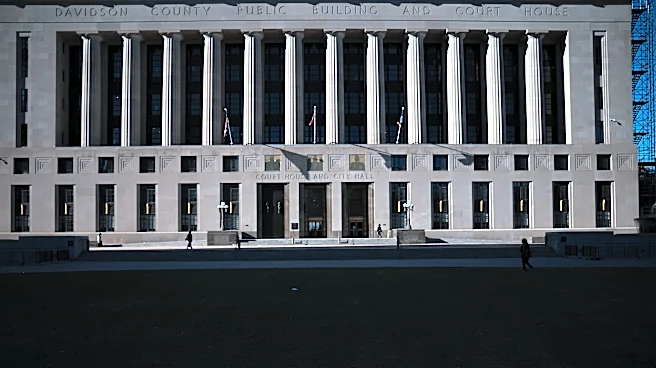






Nashville’s newly adopted regulations for large-scale data centers are among the strongest in the Southeast, but there is room to improve, according to preliminary findings of a city report on data center development in Nashville.
Mayor Freddie O’Connell’s office released the report to Metro Nashville Council members Oct. 5. It found that the city could improve community engagement practices, vibration-noise regulations and other aspects of its oversight of data centers.
O’Connell’s office commissioned the report in a June executive order, which backed the Metro Nashville Council’s work to institute a temporary moratorium on new data center development and directed city departments to identify and evaluate the potential impacts of large-scale
data centers and provide remedies.
Those recommendations, as well as areas identified in the report as targets for further evaluation, were developed by Metro Water Services, the Planning Department and the Department of Health, as well as Nashville Electric Service.
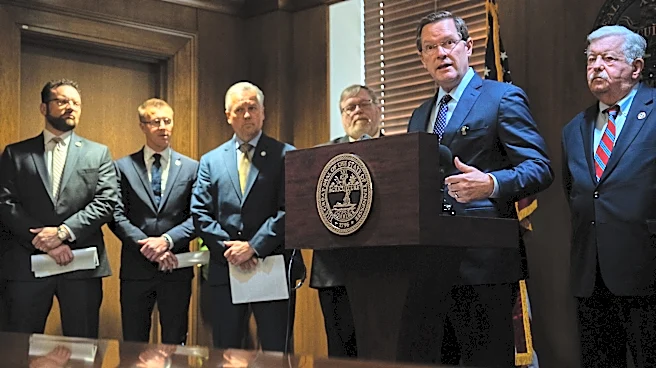
“We’ve got preliminary findings back from the departments and should have a final release that we will make public corresponding to the executive order’s request in just a few weeks,” O’Connell told reporters Oct. 2. “But what we’re seeing in the early going is that we are going to have one of the most robust regulatory frameworks in data center technology and land use in the country.”
O’Connell added that city leaders will be watching closely to see if Tennessee leaders decide to take a different position on data center development across the state.
What data center regulations do Nashville departments want?
The report lists several recommendations, some of which would require more Metro Nashville Council legislation.
For example, the Planning Department recommended updating the data center rules to clarify that elements like capacity, impacts on the power grid and reliability will be governed by NES and the Tennessee Valley Authority’s technical determinations. Meanwhile, city regulations will inform the elements of proposed developments that aren’t related to electricity infrastructure.
Others wouldn’t require new legislation to implement, like working to align regulations for smaller cities within the Davidson County footprint with those of Nashville.
The same goes for launching a working group including Nashville, NES and TVA officials tasked with establishing compliance procedures for data centers, a recommendation from Nashville’s Department of Codes Administration.
What Nashville data center issues require further evaluation?
The rules may now be in place, but to date, Nashville hasn’t yet had to apply them to a new development proposal.
That makes the challenges they may face relatively unknown, the report said, with precedents largely informed by a rapidly evolving landscape of peer city regulations.
That means there could be more to study. The report calls out several areas worth exploring to strengthen Nashville’s rules moving forward.
The Nashville Planning Department, for example, recommended continuing to monitor how other cities approach distance buffers between data center projects. Nashville’s regulations require a half-mile buffer between large data centers, a requirement the report said is uncommon among peer cities like Atlanta, St. Louis, Louisville and Birmingham.
And the mayor’s office suggested that it may be valuable to require that new facilities develop and submit a community engagement plan detailing how they anticipate working with residents, businesses and others near a proposed development site to minimize detrimental impacts and otherwise address community concerns.
Metro Water Services and the health department also flagged several impact areas worthy of further study: the potential new wastewater discharge contaminants produced by data centers’ closed-loop cooling systems; the possible effects on surrounding properties from equipment vibration, and whether to enact regulations limiting the extent of any increase in the baseline ambient noise from the property line of a new development.
Austin Hornbostel is the Metro reporter for The Tennessean. Have a question about local government you want an answer to? Reach him at ahornbostel@tennessean.com.
Get Davidson County news delivered to your inbox every Wednesday.
This article originally appeared on Nashville Tennessean: Report identifies ways Nashville could strengthen data center regulations