


Before Taylor Swift found "A Place in This World," before her song "Tim McGraw" played on country radio and before she became a nebula-sized superstar, she was a teenage girl with corkscrew curls writing songs in a Hendersonville bedroom.
Oct. 24 marks 20 years since the release of Swift's self-titled debut album, the country record that launched her career. And even as she has become one of the world's biggest pop stars, the singer continues to acknowledge the Nashville roots that shaped her.
Washington Post reporter Emily Yahr has spent nearly two decades covering pop culture and country music.
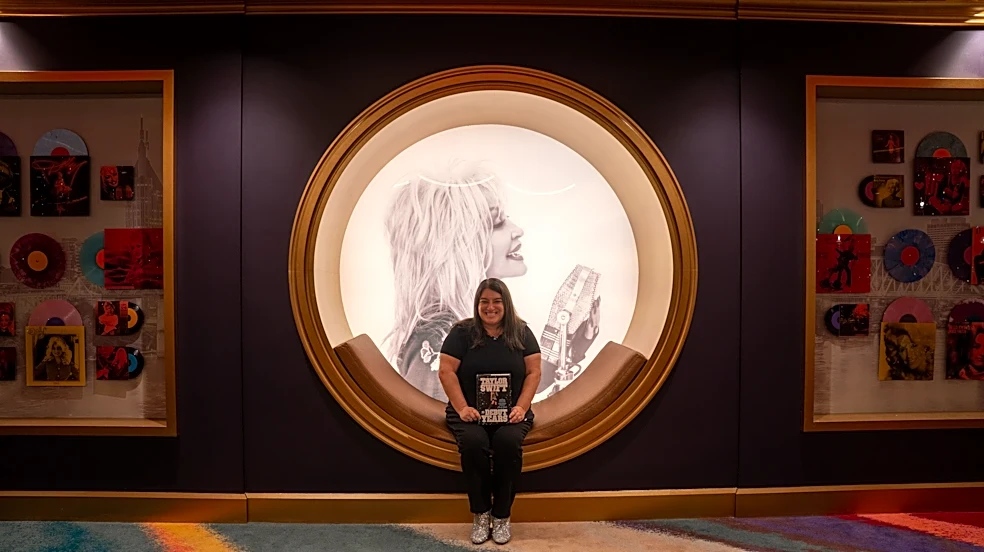
"Taylor had the 'it factor' so early on," Yahr said Oct. 8 outside of Dolly Parton's "Life of Many Colors" museum in downtown Nashville. Behind her three
kaleidoscope-colored butterflies punctuated the Nashville skyline. The winged creatures were a fitting backdrop, echoing the butterfly imagery associated with Swift's debut era.
"I think that after the Eras Tour, Taylor's fan base just grew so much that a lot of people really just know her as this pop star," Yahr said. "Maybe they know she started in Nashville and she was a country singer, but I think there's a lot about her country years that get overlooked."
Drawing on more than 100 interviews, Yahr examined the Nashville relationships, industry skepticism and early decisions that shaped Swift's career in "Taylor Swift: The Debut Years."
The result is a richly reported, engaging trip through Music City at the dawn of Swift's career, filled with the behind-the-scenes conversations, missed opportunities and unlikely partnerships that helped shape her earliest hits. For longtime Swifties, it's a nostalgic return to the debut era; for newer fans, it's a revealing introduction to the Nashville world that first embraced her music.

A teenage songwriter's vision
One recurring theme surprised Yahr: just how many people doubted Swift's potential.
At the time, country radio largely catered to adult listeners. Executives questioned whether songs about high school crushes, friendships and heartbreak could attract a substantial audience.
In the book, Yahr recounts how Sony/ATV executive Arturo Buenahora Jr. questioned Swift's decision to name her real-life crush, Drew, in "Teardrops on My Guitar." He suggested replacing the name with something more universal, but Swift insisted on keeping it because the song was about Drew. The exchange illustrated how firmly the teenage songwriter held to the personal details that would become a hallmark of her music.
"I think Taylor really understood how when you are a young woman, those feelings are so important and so formative that even years later, you can still connect to them," Yahr said.
The skepticism extended beyond whether teenage girls would listen. Some executives failed to anticipate how Swift's autobiographical lyrics would resonate with adult women.
"Even 30-something women heard [Swift's songs], and they immediately brought them back to their high school years," Yahr said. "I think I was taken aback by just the sheer number of people, even those who worked with her and supported her later on, who just didn't get it and told her — sometimes to her face — they did not think that this would work."
The Nashville turning point
The book flashes back to November 2004, when songwriter Robert Ellis Orrall arranged a showcase for Swift at the Bluebird Cafe.
Among those watching was Scott Borchetta, a country radio promotion executive preparing to launch Big Machine Records.
Borchetta recognized something others had missed: a teenage songwriter who knew what she wanted to say and insisted on writing her own material. Swift wrote some of her debut album's most distinctive songs by herself, including "Our Song" and "The Outside," which she wrote when she was 12 years old.
"Scott was really the one person, and Taylor has talked about this too, he was the one that seemed to get it right away without reservations and was willing to let her kind of do what she wanted and write her own songs," Yahr said.
Their partnership would eventually fracture over the ownership of Swift's original recordings. But Yahr's reporting examines their early alignment, when both were taking considerable risks.
Big Machine nearly failed to launch, Yahr learned. A crucial $3 million investment helped establish the independent label, which initially signed Swift, Jack Ingram and Danielle Peck.
Shake a million hands
Another ingredient in Swift's ascent was MySpace.
Before TikTok and Instagram, the teenage singer used the social networking platform to communicate directly with listeners, developing relationships that fans remembered decades later.
That connection became valuable when Swift's debut single, "Tim McGraw," encountered skepticism at country radio.
"Some programmers, like, they were a little lukewarm. They didn't really get it. They thought it was weird that it was called 'Tim McGraw,'" Yahr said.
Her team used MySpace data to demonstrate that listeners were already interested. Combined with Borchetta's radio relationships, the strategy helped introduce Swift to an audience that traditional industry research had overlooked.
Early manager Rick Barker helped Swift navigate country radio promotion and encouraged an approach she would carry throughout her career: "Shake a million hands, make a million fans."
From modest CMA Fest appearances along the Cumberland River to a marathon 13-hour fan meet-and-greet at Bridgestone Arena, Swift made accessibility a defining part of her career.
"She knows that fans are at the center of everything," Yahr said.

Country roots remain
Yahr's book follows Swift through "Fearless," "Speak Now" and "Red," ending with her transition to pop music through "1989."
But the reporter believes Nashville remains central to Swift's musical identity.
She pointed to the singer's recent emphasis on her country roots, including her country radio success with "I Knew It, I Knew You" from "Toy Story 5."
"It's always so impossible to tell what Taylor is going to do," Yahr said. "But yeah, there have been all these hints."
The possibility of another country chapter particularly interests the songwriters who helped build Swift's early catalog. Swift posed for a picture with her "Tim McGraw" cowriter, Liz Rose, earlier this year at the Songwriters Hall of Fame ceremony in New York. Rose often gives talks about working with Swift and speaks highly of their collaborations.
Although Yahr has never formally interviewed Swift, the journalist did meet the singer backstage during the 2018 "Reputation" tour. That encounter opens the book, including a memorable exchange about Yahr's journalistic policy against posing for photographs with celebrities.
For Swifties looking to revisit the songs, songwriters and Nashville stories behind the singer's debut, "Taylor Swift: The Debut Years" offers 304 pages of early-career history. The hardcover is $31.
Don't miss any Taylor Swift news; sign up for the free, weekly newsletter This Swift Beat.
Follow Taylor Swift reporter Bryan West on Instagram, TikTok and X as @BryanWestTV.
This article originally appeared on Nashville Tennessean: Taylor Swift's debut album turns 20, new book revisits her Nashville roots