




As a new academic year begins on college campuses across the country, students and families are considering one of the most important investments they will ever make: a college education. And many are asking an important question: Is it worth it?
That question arises amid a national narrative that increasingly portrays higher education as too expensive, out of reach and no longer worth the investment. Those concerns deserve to be taken seriously. But when that narrative is fueled by incomplete comparisons, inaccurate information or broad claims that simply do not match the facts, it does a disservice to the students and families trying to make informed decisions about their futures.

Where the college affordability story misses the mark
Recent reporting about college tuition claimed that tuition is
increasing faster than inflation. That is simply not the case at the University of Tennessee. Over the past five years, average increases in undergraduate tuition and mandatory fees across our campuses have remained modest. For 2026-27, the approved increases range from approximately 1% at UT Knoxville to 3% at UT Chattanooga, UT Martin and UT Southern, continuing our focus on keeping a UT education within reach. The five-year averages are similarly below inflation, ranging from 1% to 2.6%.
Facts matter, particularly when students and families are making decisions that can shape the course of their lives.
Affordability matters, too. Universities have a responsibility to keep higher education within reach, and we should be held accountable for doing so. But the national conversation has become so focused on what college costs that we risk losing sight of the other side of the equation: what students receive in return.
At UT, that means looking at the entire student experience and the outcomes that follow. More than half of our students graduate debt-free. Programs such as UT Promise are expanding access and providing free pathways to a degree, while new academic programs have the potential to reduce both the time and cost required to earn a degree.
What Tennesseans are telling us
Another important sign that the national narrative does not tell the whole story: Tennesseans themselves are telling us something different.
Today, 72% of Tennesseans believe a four-year degree from a Tennessee public college or university is worth the investment, up 13 percentage points in just one year. Perceptions of UT’s affordability have increased seven points, confidence in educational quality is up seven points, perceptions of workforce preparation have risen eight points and overall positive opinion of the UT System has increased six points.
Those are meaningful shifts. They suggest that when Tennesseans have a fuller understanding of affordability, outcomes and opportunity, they see higher education differently.
The economic case for college degrees
The economic data backs them up. Bachelor’s degrees and higher have stronger economic resilience – setting our citizens on a path for increased economic security throughout their lives. Tennesseans with a bachelor’s degree or higher drove the state’s job growth through and after two recessions, adding 361,000 jobs from 2008 to 2021.
By comparison, jobs held by people with a high school education or less fell by 90,000, while jobs held by those with an associate degree or some college increased by only 49,000.
A sizable earnings premium remains for college graduates. When students graduate, their opportunities expand for the rest of their lives – a four-year degree adds an average of $1.5 million to their lifetime earnings.

A conversation grounded in facts
We should have a vigorous national conversation about the cost and value of college. Universities have an obligation to control costs, innovate, demonstrate results and continually prove that the investment students, families and taxpayers make is worthwhile. At UT, we welcome that accountability.
But accountability works both ways. Conversations about higher education should be grounded in accurate information, meaningful comparisons and the full picture of what students receive in return.
Higher education remains one of the most powerful drivers of individual opportunity, workforce development and economic growth. Its value is found in the careers graduates build, the families they support, the communities they strengthen and the opportunities their education makes possible.
The facts matter, and they tell a compelling story.

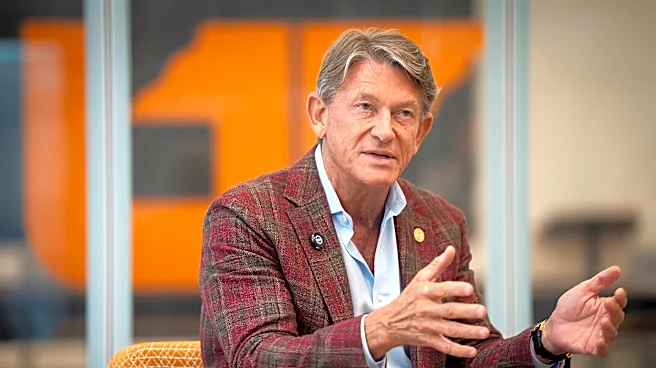
Randy Boyd is the president of the University of Tennessee system.
This article originally appeared on Nashville Tennessean: College is worth the investment and Tennesseans agree | Opinion