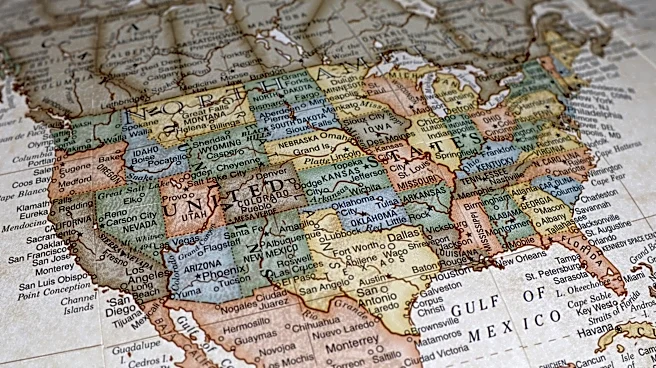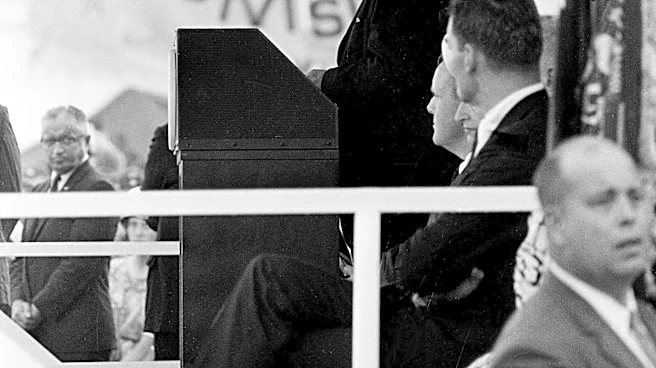



President Lyndon B. Johnson and Lady Bird Johnson visited Fort Campbell on the Tennessee-Kentucky line on July 23, 1966. During their visit, they spent time with soldiers wounded in Vietnam. They were accompanied by daughter Lucy, who was weeks away from her wedding to Pat Nugent.
In July 1966, the first-ever patients were transferred over to a brand-new Medicare program, Johnson had just signed the Freedom of Information Act into law, and the conflict in Vietnam was at its height. Security for the presidential visit was high, reporters wrote at the time, as the Kennedy assassination was a recent memory.
Johnson flew in from Indianapolis – the second stop of the day for the Washington press corps. Rain began falling just as he began to deplane.
The first lady wore a bright red suit with white trim and a white straw hat, and carried a bouquet of red roses given to her by the wife of the base commander.
Johnson reviewed some 6,000 troops as the Fort Campbell band played "The Tennessee Waltz." The 101st Airborne Division also demonstrated “an impressive combat maneuver such as is staged almost daily in Southeast Asia.”
In a 20-minute speech to the 101st Airborne Division, Johnson “expressed hope that the civilians will make as good a showing as the military in the present Vietnam crisis.”
“The initiative is now with us – not with the enemies of freedom,” Johnson said, after declaring that American troops “have turned the tide of the battle.”
During the visit, Johnson met wounded Vietnam veterans and medical staff at the U.S. Army Hospital, and presented 18 men with honors for valor in the conflict.
“We were within six feet of the President when Mr. Johnson walked over to face the Fort Campbell band, which was playing ‘Hail to The Chief,’” a columnist for the Kentucky New Era wrote at the time. “He looked taller and thinner than we had figured. His face is tanned. In fact, unless he was wearing make-up he has the best tan we ever saw.”
Johnson was also taken on an aerial tour of the Land Between the Lakes area in western Kentucky.
Afterward, during remarks at the airport in Louisville, Kentucky that day, he struck a hopeful note in announcing federal funding for a state park development project.
All of these facilities will provide recreational opportunities for more than 70 million Americans, who will be located within a day's drive of this beautiful recreational area," he said. "It will also be available to our fine fighting servicemen and their families who have served this country so well and who are now stationed at Fort Campbell, which we visited earlier this afternoon."
He glanced back in looking ahead.
"You may, with my economists, keep calling the Upper South an exciting new frontier of progress," he said. "But you took Franklin Roosevelt's New Deal and you converted it into the beginning of a Great Society while I was still just a junior Congressman."
A Texan with Kentucky heritage, he signed off with a gracious thank you to the Bluegrass State.
"I want to thank you again for your welcome," he said. "I want to thank you for the contribution this great State has made in the Halls of the Congress, in the outstanding leaders that you have provided us in this Nation, in the field of public service, in the field of journalism, in the field of the development of the TVA, and many other worthwhile projects."
This article originally appeared on Nashville Tennessean: President Lyndon B. Johnson's visit to Fort Campbell