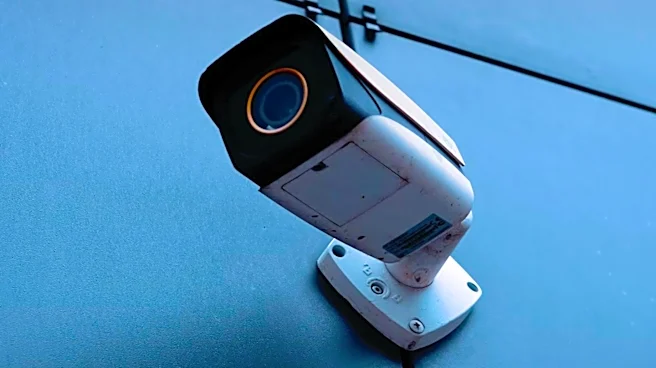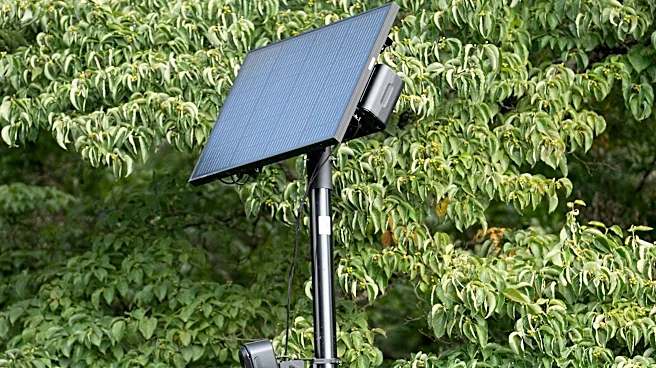





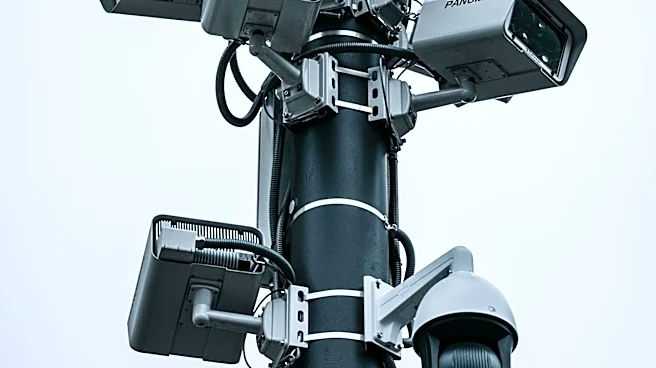
Garrett Langley, the chief executive officer of Flock Safetyposed a fundamental question about mass surveillance: “How do we have our safety, and how do we balance privacy?”
The answer isn’t as elusive as Langley seems to imply. Countless Americans are growing deeply uneasy with automated license plate readers blanketing our communities. This isn't a simple disagreement over how much liberty we are willing to barter for peace of mind. It is a fundamental question about whether local, state and federal governments should be permitted to erect a permanent, AI-powered dragnet over free citizens without warrants.
Some of us might feel like dismantling Flock camerasthemselves, but we’re better off deconstructing arguments used to defend them.
The problem isn't the tech, it's the power behind it
First,
those of us who are skeptical of a surveillance state are often accused of wanting to ban technology that saves lives and stops crime. That is the thinnest of straw men. If private citizens, businesses or neighborhood associations want to procure Flock cameras to protect their property, they should absolutely be able to do so.
Technology that helps locate a missing child during an AMBER Alert or track stolen property is genuinely valuable. But private security measures chosen voluntarily by a neighborhood are fundamentally different from government agencies deploying thousands of optical sensors able to record every resident's movements.
We shouldn't ban the tech, but we must prohibit the state from converting everyday travel into a real-time tracking grid.

Legislation should clarify Flock camera usage
Second, defenders correctly note that the Supreme Court has repeatedly reinforced that individuals have no reasonable expectation of privacy in public. That is a constitutional reality, but a judicial minimum is not the bar for public policy.
In 2018, long before AI-powered networks could track millions of citizens in real time, the U.S. Supreme Court recognized in Carpenter v. United States that historical location tracking via cell phone data creates a comprehensive record of a person’s public and private life, and that obtaining that data constitutes a Fourth Amendment search.
If we don't want the government watching us constantly without probable cause, we should enact laws clarifying the circumstances which demand a warrant. Setting a higher standard through legislation is entirely constitutional and serves as a vital safeguard against state overreach.
Flock doesn't allow users to opt out
Third, surveillance proponents argue that we already surrender tomes of private information to tech giants like Google, Apple and Meta. That is a voluntary exchange where users receive direct benefits like turn-by-turn navigation and account access, while retaining clear options to turn off tracking.
Flock is a completely different animal. It is an uninvited eye picking up license plates and vehicle attributes across public thoroughfares. You cannot opt out, you do not voluntarily surrender the data and any benefit to the individual driver is indirect at best.

Flock is building the infrastructure for mass surveillance
Fourth, advocates insist these are merely automated license plate readers, not continuous video surveillance systems. That distinction is dangerously naive. Flock and its competitors are building the physical hardware infrastructure for mass surveillance. A camera capable of reading a license plate and recording vehicle attributes is, at its core, a lens wired into a high-powered network.
With simple software adjustments, that same hardware can easily transition from snapshot reads to recording continuous video feeds and tracking individual movements across an entire city and, potentially, the nation.
Privacy controls are at the mercy of human misconduct
Fifth, defenders promise software controls will prevent abuse. But government employees are human beings, and unmonitored access to power routinely invites misconduct. The Institute for Justice ALPR abuse database recently cataloged over 100 documented cases of police officers misusing license plate readers.
In Kentucky, an officer was arrested after using Flock cameras to track his ex-girlfriend over 2,000 times. In Norfolk, Virginia, audit logs revealed officers typed meaningless justifications like “la la la la” into search fields hundreds of thousands of times without attracting scrutiny. The reason we require warrants in criminal investigations is to establish an independent, neutral third-party check on government surveillance.
The Flock debate is an issue of ownership
Finally, critics are charged with ignoring Flock’s success stories in solving violent crime and recovering stolen property. We should readily acknowledge those successes, which is why the technology shouldn't be banned outright. Once again, government ownership is the real issue.
If I walk past one of my neighbor's Ring cameras, I’m aware that I might be recorded. They have every right to protect their property and family. Notably, companies like Ring have embraced privacy by deploying Throw Away the Key encryption technology, which automatically deletes video decryption keys within 24 hours so that even the corporation itself is locked out of user video feeds. That voluntary encryption inspires consumer confidence. State-owned surveillance offers no such assurances.
The Flock camera right outside my neighborhood whispers, "We are watching you." Every morning when I drive past, it silently records my presence. But unlike my neighbor's porch camera, I wonder who is sitting on the other end of the line, scrolling through my location history, completely invisible behind the power of the state.
USA TODAY Network Tennessee columnist Cameron Smith is a Memphis-born, Brentwood-raised recovering political attorney who is raising four boys in Nolensville with his particularly patient wife, Justine. Send outrage or agreement to smith.david.cameron@gmail.com or @DCameronSmith on X. Agree or disagree? Send a letter to the editor at letters@tennessean.com.
This article originally appeared on Nashville Tennessean: How to dismantle every argument in support of Flock cameras | Opinion