


Tennessee’s governor’s race is typically a contest entirely between Republican and Democratic nominees. But this year, two independent candidates are in the mix, and they’re changing the dynamics of the race.
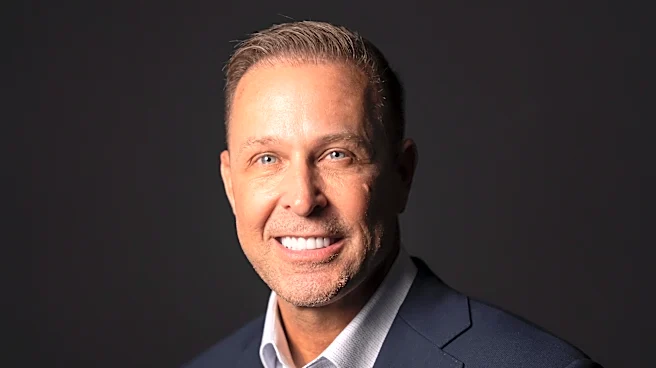
David Hatley, a hot tub manufacturer from Johnson City who’s poured $7 million of his own money into his campaign, has caught the attention of Republican nominee U.S. Sen. Marsha Blackburn.
Meanwhile, Columbia businesswoman Lauren Pinkston, a former school teacher and mother of four with a PhD in philosophy, is running to fight what she calls the injustice of having "to be a political extremist in order to be a represented citizen.”
Both have managed to build statewide campaigns and reach tens of thousands of voters through social media, without
the support of traditional party organization.
Bill Lyons, associate director for community outreach at the Institute for American Civics at the University of Tennessee, said Hatley and Pinkston have gained historic traction but likely won’t have a significant impact on the governor’s race.
“The race would have to be quite close, and the draw toward the independents would have to increase — and oftentimes that doesn’t happen toward the end," Lyons said.
Here’s what to know.
Will it make a difference in the overall race results?
It’s hard to say exactly. Reputable polling in the race has been scarce and rarely mentions independent candidates individually.
A TargetSmart Communications poll of 600 likely voters showed independent David Hatley with 10% and Pinkston with 2% support. Meanwhile, Blackburn held a single-digit lead with 45% support, and Democratic nominee Jerri Green had 36%.
A poll released earlier this month by the Beacon Center of Tennessee found Blackburn with 46% support and Green with 33%. “An independent candidate” got 8% support, and 14% of voters said they were undecided. The poll did not make a distinction between the independents.
Among voters in their own party in the Beacon poll, Green earned 87% support among Democrats while Blackburn had 79% of support among Republicans. More Republicans than Democrats said they would vote for an independent. Among voters who identified as independents, 33% said they would vote for Green, while 18% said they’d support an independent candidate.

“There’s no doubt that in terms of the support they’re getting, the resources they’re putting into it, and the attention they’re drawing from other candidates and the public: This is a different election with the impact of these two,” Lyons said.
Does the two-party system still work?
According to analysis of Tennessee voter files by the Independent Voter Project, 48% of active Tennessee voters are independent, while 34% are Republican and 18% are Democrat.
Nationally both parties are soul searching, considering what they want their respective futures to look like. With President Donald Trump in office two more years, Republicans are beginning to consider what’s coming next. Democrats are getting ready to ride a forecast blue wave midterm into the 2028 presidential cycle. In this moment, many voters feel politically homeless.
"A lot of people are disappointed with the two-party system,” Lyons said. “There’s an increasing segment in the great middle that feels left out these days, particularly in national politics. And I don’t think Tennessee is immune from that.”

Pinkston says the two party system has led to systemic ineffective representation, and her campaign has sought to supersede political tribalism with nuanced policy solutions.
“Without the third option, people stay stuck in the trenches,” Pinkston says. “But I don’t believe that because I refuse to be in this trench or in that trench that I have to be in a ditch somewhere. I really believe that there is a hill in the middle and most of us want to climb it.”
Calls to quit
Blackburn and Green are each angling for an independent to drop out of the race, as they see the independents as diverting votes away from their own campaigns.
“Hatley is really going after the same conservative constituency and base that Sen. Blackburn has,” Lyons said. “And he’s spent a reasonable amount of money to do that and gotten some attention, including from her.”
Blackburn’s team launched an AI-fueled website depicting Hatley in a prison uniform, a reference to a past felony conviction for writing bad checks. Hatley laughed off Blackburn’s attack.
“I didn’t grow up with a silver spoon in my mouth. I had to work and learn things the hard way, and I turned my life around,” Hatley said.
Green called Pinkston’s campaign last week to ask her to drop out. Campaign manager Alex Hensley said Pinkston "cannot win" and should drop out to avoid pulling support from Green.
“Jerri Green sees Lauren Pinkston as more of a threat to her support,” Lyons said. “But it looks to me that Lauren is looking to draw from a mix, maybe some disaffected Republicans or even some quite moderate Democrats. She’s trying to offer a little bit of a different candidacy.”
Pinkston has declined to withdraw.

“I didn’t enter this race to preserve a two-party system that has left too many Tennesseans feeling unrepresented and unheard,” Pinkston wrote in a social media post.
On Sept. 24, a business of Hatley’s in Johnson City was spray-painted with the words “Drop Out or Die” with a red anarchy A symbol — a threat of violence he immediately condemned.
“I think we can all agree that rhetoric calling for political assassination has no place in Tennessee or anywhere,” Hatley said. “We must never lose sight of the fact that more unites us than divides us and whatever differences we have, we work through them via the democratic process and civil debate, not through violence and terror.”
What they’re spending
Hatley has spent $7 million of his own cash to boost his candidacy. His well-funded bid has drawn some big spending in opposition.
Choose Freedom PAC, a new Alabama-based super political action committee registered earlier this month by an accountant with Republican compliance firm Crosby Ottenhoff, has purchased TV ads attacking Hatley that echo the website produced by Blackburn's team.
"[He] was sent behind bars but now wants to sit behind the governor's desk," the ad states as a depiction of Hatley in an orange jumpsuit kicks up his feet on a desk.
Pinkston's fundraising is approaching $500,000, including about $40,000 in self-loans, after her team raised $140,000 in the first two weeks of September, her campaign announced.
She just launched a new ad spree featuring voters in very wrong-sized red and blue T-shirts.
"When it comes to government accountability, when it comes to integrity, the Republican party — the Democratic party — doesn't fit anymore," voters featured in the ad say. "You deserve more than two options."
Blackburn, who has been the frontrunner in polling since before she announced her candidacy last year, has not agreed to debate any of her opponents. All have called for her to do so.
This week, Hatley raised the stakes by pledging to donate $1 million to charity if Blackburn agreed to debate. Green and Pinkston have both agreed. Blackburn has not.
Election Day is Nov. 3. Early voting begins on Oct. 14. The deadline to register to vote is Oct. 5.
Vivian Jones covers state government and politics for The Tennessean. Reach her at vjones@tennessean.com.
This article originally appeared on Nashville Tennessean: How independent bids are shaking up race for Tennessee governor | Analysis