
AUBURN, AL ― When Vanderbilt football began its rise under coach Clark Lea, it was built around a run-first identity.
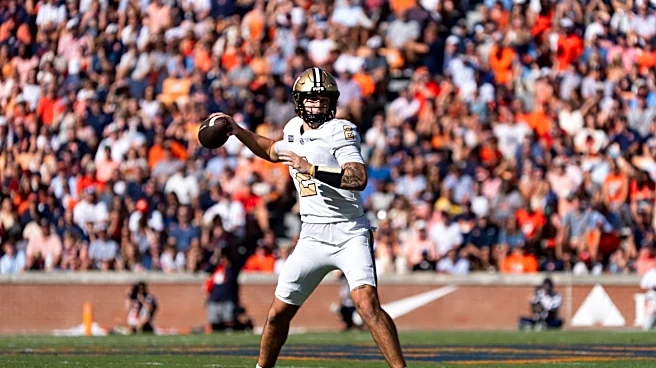
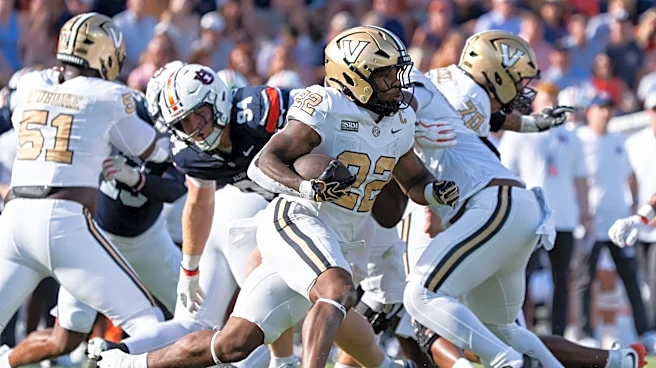
The Commodores' option-based attack was effective in 2024 and unstoppable in 2025. But in 2026, it's been ineffective. A 21-15 loss to Auburn on Sept. 26 featured a now-familiar inability to run the ball. Taking sacks out of the equation, Vanderbilt had 135 rushing yards, averaging just 3.6 yards per rush. Just over half those rushing yards (69 of 135) came from quarterback Jared Curtis.
The Commodores (3-1, 0-1 SEC) were tackled for a loss eight times, and Curtis was sacked four times. He also escaped several other sacks and found space where he could open space via scrambling. That speaks to an offensive line that's struggled
to get synced.
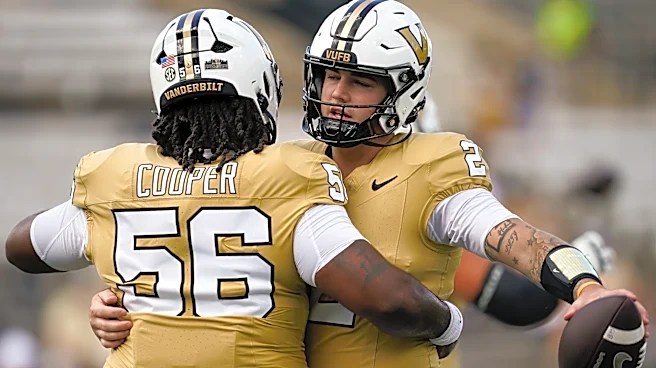
Injuries have played a role. Center Lyndon Cooper left the game due to an AC joint sprain and didn't return, forcing Cade McConnell from guard to center. There were also four offensive line-related penalties, including three false starts and a holding call.
"I felt like our offensive line in the second half in particular played a cleaner game, which was good to see," Lea said. "Cade needed to step in and play some center for us today because Lyndon was hurt, and I thought he did that really well."
Vanderbilt now ranks 13th in the SEC in both rushing yards per game and per attempt.
That lack of rushing success bled into the Commodores' issues on third down, going 4-for-17 converting first downs (albeit with a 4-for-5 success rate on fourth down) compared to Auburn's 7-for-15. Vanderbilt faced five third-and-longs (defined as third down with nine or more yards to go) while the Tigers faced just two. The Commodores also went just 1-for-8 on third down with four or fewer yards to go, normally the perfect time to run the ball.
"We don't want to live that way," Lea said. "This needs to be a team that can convert on first and second down. You talk about third downs, you're starting to talk about high-pressure downs. Obviously, we were converting on fourth down to try to extend drives. Those are the drives we scored on. So that's not a way to live offensively."
It's not just that Vanderbilt hasn't been efficient running the ball, the run game has also lacked explosiveness. This season, the Commodores have one rush play of at least 20 yards, tied with Arkansas for last in the SEC. On top of that, they are one of four teams without a rush play of at least 30 yards.
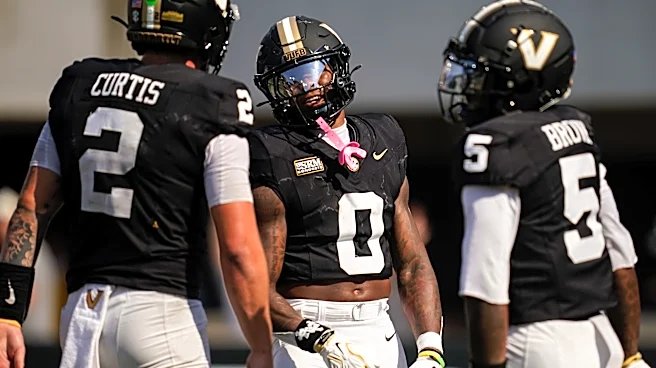
"It's life, it's adversity, and we're figuring things out," running back Makhilyn Young said. "We'll get it corrected, and we're a good team up front too. Those guys continue to be confident. They turned it on second half, and I want them to know that they have what it takes, and they are who they are, and we still have everything in front of us."
Everything is still in front of Vanderbilt, but with five of the Commodores' eight remaining opponents ranked in the top 50 of ESPN's SP+ metric, Vanderbilt will need to figure out its ran game quickly to have a shot at bowl eligibility.
Aria Gerson covers Vanderbilt athletics for The Tennessean. Contact her at agerson@gannett.com or on X @aria_gerson.
This article originally appeared on Nashville Tennessean: Why Vanderbilt football run struggles continued in loss to Auburn