



The Metro Nashville Council is one step away from clamping down further on surveillance technology.
On Aug. 18, the group voted to advance a bill targeting drones as first responder programs, unmanned aircraft systems and surveillance technology. Council members Jeff Eslick and Tonya Hancock were opposed and Joy Styles abstained. The bill’s now one vote away from final approval.
The vote comes as some council members and community advocates have voiced alarm about a Metro Nashville Police Department drones as first responders pilot program, which began operating within a two-mile radius of the Madison police precinct in late May. The pilot has since ended, but throughout its brief run drew scrutiny because it launched without council approval.
It’s the latest instance of the Metro Nashville Council turning away from legislation supporting expanded access to surveillance tools. Council members have cited concerns with how the tools could be misused, particularly by federal immigration authorities like U.S. Immigration and Customs Enforcement.
"Even before I was on council, the body before many of us were seated had a specific requirement that there would be a public hearing when a new surveillance technology was brought forward, regardless of if a contract was approved or not, to give the general public an opportunity to speak and give their thoughts," council member Sandra Sepulveda said. "I wanted to make sure that we codified that, and there are specific regulations into what a drone as a first responder can be used (for)."

Deploying surveillance tools in Nashville has required a public hearing and council approval since 2017. But as the code’s currently written, it allows an exception to that rule for surveillance technology used by law enforcement on a temporary basis, either for “the purpose of a criminal investigation supported by reasonable suspicion or pursuant to a lawfully issued search warrant.”
This bill, co-signed by a dozen council members including main sponsor Sepulveda, aims to narrow that exception to instead allow drones as first responders to be deployed only during active shooter incidents, hostage situations or active searches for missing people, for a period up to 10 days or as a result of a state of emergency declared by the mayor or during natural disasters that present an immediate threat to life or critical infrastructure.
The bill would also ban the use of facial recognition technology and the use of autonomous drones operated by artificial intelligence.
Council members will likely consider the bill for a final vote as part of the group’s next meeting Sept. 1.
What supporters, opponents are saying
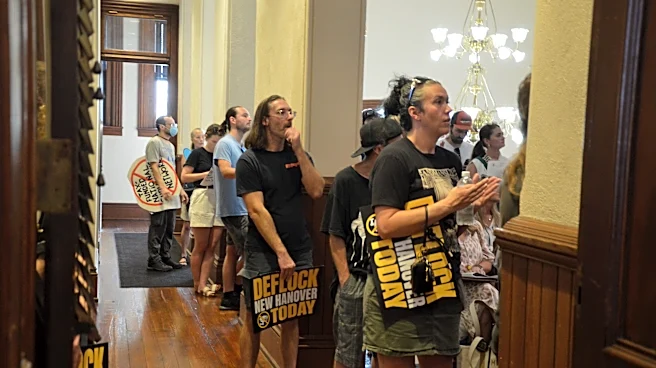
The bill drew little council discussion Aug. 18, as it advanced out of committee with a unanimous recommendation for approval. However, several supporters did chime in during the meeting's general public comment period.
Benjamin Davis, one supporter of the bill, said that MNPD had bypassed the council's authority and had disrespected "the rule of law" and the rights of Nashvillians.
"By voting against this bill, you will be giving MNPD and the corporations that supply the technology unfettered access to patrol our skies and to spy on our citizens," Davis said. "The people of Nashville are sick of being recorded without their consent and of having their privacy revoked.
"Please do not give them yet another tool to invade our lives," Davis said.
Opposition, on the other hand, didn't emerge during the Aug. 18 council meeting. Metro Nashville Police Chief John Drake did express “serious concerns” about the bill in a July 31 letter to council members, though, before it was amended to specify restrictions on drones as first responder programs.
“This legislation threatens the safety of officers and the public by banning the use of most MNPD drone operations,” Drake’s letter reads.
Drake said the bill would prevent MNPD from deploying drones in circumstances where they’ve been used for “nearly two decades.” He said that included everything from collecting and identifying evidence at crime scenes to quickly mapping the scene of fatal crashes, protecting crowds from threats during special events, safely clearing buildings of armed or dangerous subjects, and assessing hazardous scenes where it’d be unsafe for a person to approach.
Drake said the legislation would also affect the ability of the Office of Emergency Management and Nashville Fire Department to deploy their own drones in service of life-saving operations. And, he said, it would force MNPD to request assistance from the Tennessee Highway Patrol and “our federal partners to fill this critical life safety gap.”
“The public safety value of this tool cannot be understated,” Drake’s letter reads. “The failure to utilize drones in situations where it could save officer and citizen lives would be negligent at best, reckless at worst.”
Austin Hornbostel is the Metro reporter for The Tennessean. Have a question about local government you want an answer to? Reach him with questions, tips and story ideas at ahornbostel@tennessean.com.
Get Davidson County news delivered to your inbox every Wednesday.
This article originally appeared on Nashville Tennessean: Nashville Council advances bill curbing police drone surveillance