









For Sam, I mapped out a complex route to his job interview on a bright pink sticky note because he did not have a phone, noting exactly which stop to get off at, which direction to walk and what building to look for.
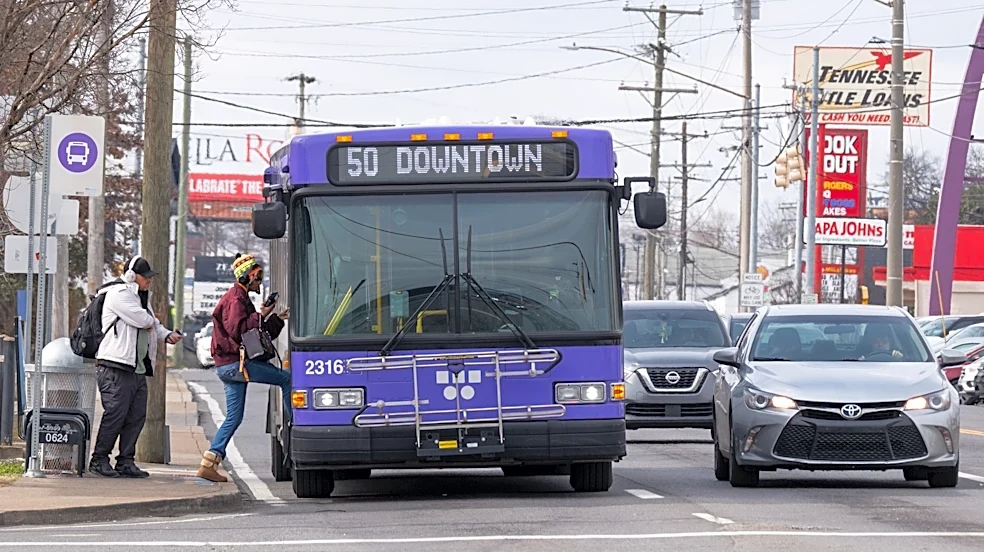
Richard would come in sweating from the Nashville summer heat and mention that his only option was to walk 45 minutes to our building because he couldn't take the bus. But not everyone who needed our services lived within walking distance.
This summer, I worked at a reentry nonprofit, which supports people returning to their communities after incarceration. I spent much of my time with Sam, Richard and others who struggled to access consistent transportation. Two dollars
for a bus pass might not seem like much. But when those dollars could be used to buy a bottle of water on a grueling Nashville summer day or a pack of Maruchan ramen for a meal, that may make all the difference.
Transportation may not seem like a major part of reentry, but it plays a critical role in bridging the gap between available support and those who need it. The issue is not that reentry supports are nonexistent, but rather people may not be able to access them in the first place.
Tennessee should expand transportation support for people leaving incarceration so a bus pass isn't the barrier to securing employment or stepping foot into a nonprofit rooting for their success.

A bus pass shouldn't determine who gets a second chance
In 2021,Tennessee's recidivism rate, or rate of returning to incarceration after release, was around 46%. A rate this high raises concerns about whether people leaving incarceration are receiving enough support.
Specifically, underTennessee Code § 41-21-219, certain individuals leaving state correctional facilities on parole or probation may receive up to $30 and, if needed, one ticket for the "cheapest available means of transportation" to their residence. That often doesn't go far when you need food, water, a job, identification and a place to live.
Transportation is not the sole barrier people face after incarceration, but it plays a powerful role in accessing necessary support. This challenge is reflected in the experiences of formerly incarcerated individuals, who haveidentified transportation inaccessibility as a hindrance to successful reentry.

Transportation is a gateway to opportunity
This is no surprise: Many reentry nonprofits cannot do their work over the phone. Members often need to come in to complete enrollment and orientations, provide documentation and receive tangible resources such as food and mail. As a result, transportation is a gateway to the support needed to build a new life.
Employment is a critical step toward financial and personal stability after incarceration, but it often depends on reliable transportation. Members would frequently recount the anxieties associated with making it to their shifts on time and would even describe instances in which rides fell through, leaving them unable to show up at all. In turn, transportation instability may compromise employment as it can cause employees to seem unreliable even when the circumstances are beyond their control.

The solution is simpler than it sounds
Tennessee could expand transportation assistance during the initial reentry period by providing free or reduced-fare bus passes for the first month after release, giving individuals a temporary bridge to accessing supports.
Expanding Tennessee's transportation assistance services does not necessarily require a drastic restructuring of its reentry system. If direct subsidies are not feasible, the state could fund nonprofits that already provide bus passes.
Expanding Tennessee's transportation service may raise concerns about cost. With alittle over 10,000 people released from Tennessee state prisons in 2023, and amonthly bus fare of $65 based on Nashville’s fare, one month of bus passes would cost around $650,000 annually. Yet Tennessee spentan estimated $39,842,360 in 2021 on costs related to recidivism, which raises the question of whether saving on transportation support now could lead to higher costs later.
Some may wonder why this cost should fall on the state. But if we, as a society, expect individuals released from incarceration to reintegrate, we must provide them with the resources to make those expectations reasonable.
A ride to work can be a ride to a new life
What struck me most about Sam and Richard was that despite their long commutes, they would greet me with a smile every day they came in. A bus pass might just seem like a slip of paper to some, but for many who walked through our doors, it was a ticket to building a new life.
And as I watched individuals like Sam and Richard ring the bell at our office to celebrate their first job after incarceration, I got to see their new life materializing right in front of my own eyes.

Spandana Pavuluri is a senior at Vanderbilt University majoring in public policy studies and minoring in legal studies. She previously interned at Project Return, a Nashville nonprofit that supports people returning to their communities after incarceration.
This article originally appeared on Nashville Tennessean: A bus pass shouldn't decide who gets a second chance in TN | Opinion