







It was brutally hot at Fat Bottom Brewing on Sept. 1, as the Nashville Area Restaurant Alliance brought together independent restaurant owners and dozens of vendors for an afternoon devoted to discussing the business of running a restaurant.
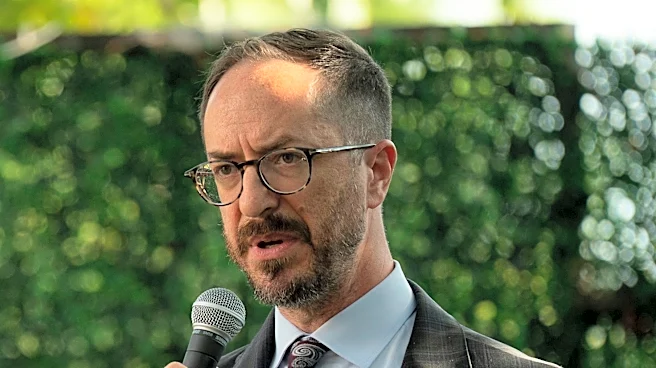
A live band played in the steamy courtyard until Mayor Freddie O'Connell stepped up between sets to speak to the crowd.
"Thank you for nourishing Nashville, and I mean that in a lot of different ways," O'Connell said. "I just got to talk to Brandon (Styll) on this podcast and talked about the importance of food and community and how much I know our local and independent restaurants contribute to both of those ideas."
Styll founded NARA and hosts Nashville Restaurant Radio, a podcast focused on the city's restaurant
industry.
Restaurant owners emphasized how difficult it has become to keep their businesses running.
Kimberly Wolff, co-owner of 312 Pizza in Germantown, asked the mayor about Metro's proposed Legacy Business Program to support longstanding local independent operators. Her restaurant has been open since 2014, short of the proposed 15-year threshold for funding.
O'Connell said the question was worth considering. Should 15 years define a legacy business, he asked, or should a decade be enough?

Another restaurant owner pressed O'Connell about rising property taxes and whether Nashville could find a way to give businesses more stability as assessments rise.
Three days later, Wolff texted Styll with more immediate news: 312 Pizza was preparing to close after Labor Day.
Styll went to the restaurant the next day and recorded an unscheduled episode of Nashville Restaurant Radio with Wolff. She described months of declining customer traffic despite efforts to bring people through the doors. Styll had already worked with the restaurant through NARA to negotiate a new food contract. Lower costs had helped, Wolff said, but the restaurant still needed customers.
By then, a conversation with the mayor's office and a newly launched GoFundMe had given 312 Pizza more time. Styll used the episode to urge listeners to eat there, share its story and support the fundraiser.

The episode was an unusually public example of the problem NARA was built to address.
"Restaurants aren't failing because they don't know how to cook or serve," Styll said. "They're failing because they're getting crushed on what they buy."
How NARA reduces food costs for locally owned restaurants
Large chains and restaurant groups have an advantage: They can leverage the purchasing volume of multiple locations to negotiate prices and contract terms that a single independent restaurant often can't. They also have marketing departments, purchasing staff and other resources that small operators typically lack.
NARA's stance is that Nashville's independent restaurants don't have to join a deep-pocketed restaurant group or be part of a chain to gain some of that leverage. They can band together and fight like one.
Established in 2025, NARA pools the purchasing power of independent restaurants to negotiate with the companies that sell them food, linens, dishwashing chemicals and other goods and services, with restaurants paying nothing to join.
The alliance has grown quickly. NARA had about 80 members in June. By late August, Styll said membership had surpassed 100, prompting him and his business partner to temporarily stop onboarding restaurants. By early September, 20 more were waiting to join.
Purchasing power isn't the only advantage large restaurant groups have. They can employ people whose job is to analyze costs and negotiate vendor contracts, work that often falls to an owner already juggling every other part of the business.
"I'm an owner, I'm a chef. I'm talking to tables. I'm out there visiting people," Styll said. "My prices are changing every day. The toilet is backed up. My cooler just went down. Three staff did not show up."
Styll knows that workload firsthand. He has spent about 30 years in the restaurant industry, including selling produce and working in restaurant operations. He was director of operations for Green Hills Grille, Mere Bulles and Chago's before NARA began taking shape through conversations he was having on Nashville Restaurant Radio.

After interviewing restaurant owners, Styll said, he would ask them off-air how their businesses were really doing. Many told him they were struggling. He began helping some informally with vendor contracts and other operational problems and saw a need for the kind of back-office expertise many independent restaurants couldn't afford on their own.
His years selling produce had already taught him how much purchasing power could matter.
Styll remembers an independent restaurant owner confronting him after learning a much larger restaurant was paying considerably less for the same case of romaine lettuce.
"Math is screwing you," Styll recalled telling him.
Bigger orders cost less to deliver per case, giving suppliers room to offer better prices to larger accounts. Independents can further dilute their buying power by splitting orders among several distributors in search of the lowest weekly prices.
NARA instead uses a restaurant's total purchasing volume to make suppliers compete for the account, then negotiates the contract the owner ultimately chooses.
"I don't represent any one brand. I represent the restaurant in that negotiation," Styll said.
Styll said those negotiations are currently saving many members about 12% to 14% on food costs. Even at the low end, that would amount to $60,000 a year for a restaurant spending $500,000 on food, or $84,000 for one spending $700,000.
Restaurants pay nothing to join NARA. The for-profit company instead makes money through vendor-side commissions, rebates and negotiation fees, Styll said.
When cash becomes the advantage
Sean Lyons has seen what those negotiations can be worth.
Lyons is a partner in Up Hospitality, which operates Germantown Cafe, Park Cafe and Karrington Rowe. The group was NARA's first member. NARA negotiations have brought Up Hospitality between $200,000 and $225,000 in cash from vendors, according to Lyons.
Cash can become critical fast in the restaurant business. Lyons pointed to what happened when a winter storm closed his restaurants for four days. Sales stopped, but payroll, rent and vendor bills did not. Depending on the size of the operation, Lyons said, getting through even a short disruption can require tens or hundreds of thousands of dollars on hand.

Vendor contracts can also put cash in a restaurant's hands upfront. Styll said NARA can negotiate an advance on anticipated rebates in exchange for a restaurant committing to buy a certain amount from a supplier over several years.
Styll generally recommends taking lower prices over upfront cash because those agreements come with strings attached. Restaurants that fall short of their purchasing commitments may have to repay some of the money or remain under contract longer.
For Lyons, falling sales eventually mean harder decisions, from postponing raises to cutting employees' hours. In a crowded restaurant market, even loyal customers may not come back as often.
"It's easier to lose somebody's habit," Lyons said.

A customer who once visited every few weeks can easily become one who comes every few months as new restaurants and other options compete for attention.
That competition isn't going away. But Styll argues independent restaurants have enough challenges in common that they also have reason to work together.
"If we're on this list, we're not competitors. We're all here to help each other," Styll said.
NARA Connect was built around that idea. The Sept. 1 event drew 37 vendors, up from 22 at the alliance's first gathering in 2025, with restaurant owners meeting the companies they increasingly negotiate with as a group.
NARA can't solve every pressure those owners raised with O'Connell that afternoon. It can't lower property taxes or keep a snowstorm from shutting them down. Its pitch is narrower: Independent restaurants can work together to gain more control over what they can change.
After O'Connell finished taking questions, Styll took the microphone.
"This is a new Nashville we live in. Things are more expensive. Everything's costing more. It's a new world we live in," he said. "We want to help you lower your costs the best we possibly can in the things that we can control."
Mackensy Lunsford is the senior dining reporter for The Tennessean. Reach her at mlunsford@tennessean.com.
This article originally appeared on Nashville Tennessean: As Nashville restaurants struggle, more than 100 are fighting together