
In the last 50 years, eight teenagers committed crimes the state deemed so heinous that they were sentenced to death in Tennessee. Seven had their death sentences vacated, and are now sentenced to life
in prison.
Only one is still scheduled for execution: Christa Pike.
She also is scheduled to become the first woman executed in Tennessee in more than 200 years.
"She has fallen within this perfect storm (of teenage killers)," said Randy Spivey, an attorney in the Tennessee Office of the Post Conviction Defender. "Others got a benefit that she never did."
Pike was three months before her 19th birthday when she bludgeoned Colleen Slemmer to death in Knoxville on Jan. 12, 1995. Pike is scheduled to be executed Sept. 30, barring clemency by Gov. Bill Lee.
Death Penalty Information Center stats show Pike also is the only person, out of more than 3,100 people convicted of first-degree homicide in Tennessee since the death penalty was reinstated in 1977, scheduled to be executed.
Pike's lawyers say this shows bias.
The average age of condemned men at the time of their crimes in Tennessee was 29. The youngest were 23 when they committed their crimes − Robert Coe (1979), Cecil Johnson (1980), David Miller (1981), Nicholas Sutton (1985) and Stephen West (1986).
Their age at time of offense was not the reason each was granted a reprieve from death row. Each case featured a legal maneuvers to vacate the death sentence, including ineffective counsel, mental health concerns and procedural errors.
"Tennessee courts and juries seem to understand what we knew about brain science − that an 18-year-old is not a 23-year-old," Spivey said. "One by one, they all came off death row."
All except Pike.
Spivey and Kelly Gleason, another Post-Conviction Defender attorney, said Pike has raised all the same issues as the others sentenced to die for crimes committed as teens.
Gleason said Pike was told by her first attorney not to take a plea bargain in which she would have avoided the death penalty because, the attorney told Pike, "she would never be executed because she was a pretty young girl."
The state has not disputed Pike suffers from serious mental health concerns, including a childhood of trauma in which she was abused by family members and raped three times. The third rape occurred less than a year before Pike killed Slemmer.
Experts have testified Pike suffers from post traumatic stress disorder and bi-polar disorder.
"It strains belief that we're where we are today," Spivey said.
Two rulings by the United States Supreme Court set precedent for handling murder cases involving teenagers. The Roper v. Simmons case in 2005 made it unconstitutional to execute convicted murderers who were younger than 18 at the time of their crimes. Pike missed that cutoff by nine months.
"Seventeen is an arbitrary number," Spivey said.
Miller v. Alabama banned mandatory life-without-parole sentences for juvenile offenders, citing the "mitigating qualities of youth."
In the murder of Slemmer, in which Pike kept part of her broken skull as a souvenir, Pike's codefendant, Tadaryl Shipp was sentenced to life with the possibility of parole. Shipp was 17 at the time. The motive prosecutors established for Slemmer's murder was that Pike thought Slemmer was romantically interested in Shipp, who was Pike's boyfriend.
Both Pike and Shipp said they worshipped Satan. A pentagram was carved into Slemmer's body during the attack.
Pike's attorneys said Shipp made the pentagram, and that Shipp was the practicing Satanist. Pike, they said, was influenced by Shipp.
"He was more into it (Satanism) and was the driving force," Gleason said.
Spivey and Gleason said the Pike/Shipp murder trial was enveloped by "Satanic panic" and should have been moved to another jurisdiction far away from Knoxville. That, Spivey said, should have won the appeal, but it did not.
"There was a frenzy," Spivey said. "There was a level of notoriety to Pike that made it difficult to change any decision made about her."
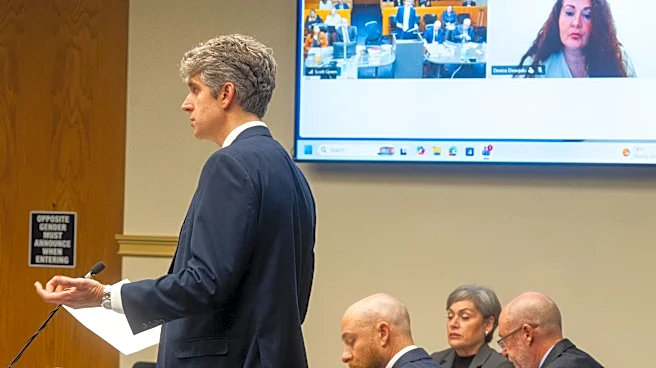
Pike has since embraced Buddhism. Most of the challenges argued by Pike's legal team during a hearing in Knoxville in August were dismissed but prevail on some legal fronts. She will be allowed to have a Buddhist advisor with her in the death chamber, ruled Senior Judge Mark Ward, a special master appointed by the Tennessee Supreme Court.
Pike has acknowledged the severity of her crime.
"I was a mentally ill 18-year-old kid. It took me numerous years to even realize the gravity of what I’d done," she wrote in a petition seeking clemency. "Even more to accept how many lives I affected. I took the life of someone’s child, sister, friend. It sickens me now to think I had the ability to commit such a crime."
Pike also was convicted in 2004 of attempted murder during an incident in prison.
Her attorneys point to details in the cases of condemned prisoners later spared.
Tony Bobo, 18 when he killed a woman in Memphis, later beat two fellow inmates to death. His death sentence was reduced to life without parole.
"He was an 18-year-old who got relief," Gleason said.
Convicted killers Henry Lee Burrell and Zakkawanda Moss worked in tandem to murder six people in Lincoln County, including an 18-month-old child who was stomped to death.
Both were sentenced to life without parole.
Pike's crime, Spivey said, is not more heinous.
"It is not more severe that people who got life. But once the system makes a decision, it is so hard to reverse that decision."
This article originally appeared on Nashville Tennessean: Seven teen killers won relief in TN. Christa Pike is still set to die