





Her voice broke 12 seconds into the recording.
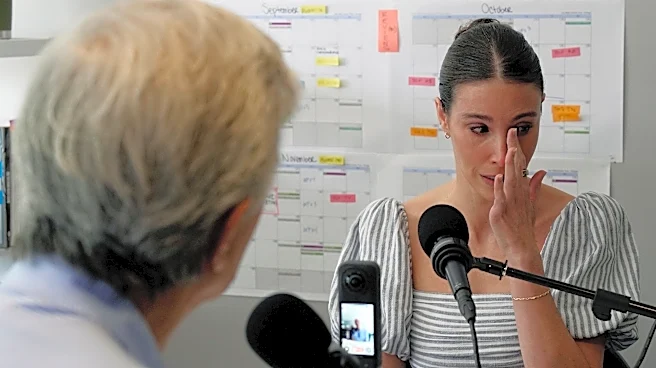
Microphone pointed at her chin, Katelyn Walter, 35, sat across a table from her dad, who traveled from Charlotte, North Carolina, to Nashville to have this conversation.
The dad who, when she was a girl, secretly spread store-bought seashells on the sand in front of her so she could more easily find souvenirs during beach trips. The dad who later sat down with each of her high school suitors before dates to tell them how special his little girl was.
The dad who on Easter Sunday last year had a heart attack and almost died.
"Then he got a heart transplant," Walter said quietly.

"Then," she said, nodding her head toward two microphones, "I had this opportunity to ask him questions I realized I always wanted
to ask, to hear some of my favorite stories, and really take advantage of what feels like bonus time that we've been given with his new heart."
The Walters were among 70 or so Tennesseans who recorded conversations July 12-26 with StoryCorps during a Nashville stop on the nonprofit's six-city mobile van tour of the South.
Many folks know StoryCorps through emotional, two-minute stories that air from time to time on public radio station 90.3 WPLN and on the StoryCorps podcasts.
“We are huge StoryCorps fans here at Nashville Public Radio!" President and CEO Holly Kernan said. "We are so glad to have them in Nashville for this project.”
But fewer than 1% of the conversations end up on air or in podcasts. The rest of the stories — more than 700,000 people have recorded them since StoryCorps launched in 2003 —are archived and available to anyone online or in the Library of Congress.
Participants usually are everyday people who want to memorialize a significant event or relationship. Two old Army buddies who survived combat. A father and daughter talking about the day she got accepted to medical school. A family talking about losing a loved one in a natural disaster. A man asking his grandmother about attending segregated schools.
A Nashville therapist asking her dad, after he survived a heart attack, for his thoughts on their relationship from birth until today.
"I'm a little nervous," Katelyn Walter told her dad just before StoryCorps facilitator Emmanuel Lee started recording.
"Just you and I talking," her dad said.
The facilitator counted down and nodded toward Katelyn Walter, who read from a StoryCorps script designed to launch the recording.
'There's so much love'
"My interview partner today is Greg Walter," she said, her voice catching, eyes misting, "and he, uh, mostly goes by the name 'Dad.'"
She looked down for a second before looking across the table. "Wow, I'm already crying."
"You can cry during this," her dad said as the facilitator slid a box of tissues toward the Walters.
"I'm really glad we're doing this," Katelyn Walter said, her voice breaking again as she grabbed a tissue.
"It's OK," her dad said. "We had a really tough year last year."
"Yesterday was the one-year anniversary of when you came home from your heart transplant. And I think there were so many times in the past year and a half that I wasn't sure," she said, her voice dropping to a whisper, "if I was going to be able to ever ask you these questions or hear you tell my favorite stories you've told my whole childhood."
Father and daughter spoke for 40 minutes about her birth (23 hours of labor), her love of Barbie dolls, family Christmas morning celebrations (he often teased his girls that Santa didn't come), her teen dating years, what makes great parents (being patient and present) and his heart attack.
Afterward, the facilitator, Lee, said the conversation inspired him to call his dad more often.
"Every time I do call him," Lee told the Walters, "there's so much love. I forget that sometimes. It's wonderful that you guys could be that reminder for me today."
For the Nashville visit, StoryCorps partnered with Songwriting With: Soldiers, a nonprofit that pairs songwriters with military veterans to help veterans process trauma through music, and nonprofit Oasis Center, which works with teens. Both organizations reached out to staff and clients to try to find storytellers.
Oasis Center vice president Jenn Garcia answered the call, reaching out to a former mentee, healthcare industry exec Shohreh Daraei.
In their conversation, Daraei shared that she's the daughter of Kurdish immigrants and that Oasis Center helped her to expand her peer circle outside Nashville's Kurdish community. She also said Oasis Center programs and Garcia's mentorship helped her build the confidence to go to college and launch a successful career.
On the day of the recording, Garcia, nervous at first, said the microphones seemed to melt away after the first few minutes of the conversation.
"I found myself completely focused on our conversation, soaking in every word she shared," Garcia said afterward.
"It was a deeply moving and inspiring experience, and I felt incredibly honored to have the opportunity to intentionally reflect on our relationship and the lasting impact it has had on both of our lives."
For many folks, the microphones can be intimidating at first, but somehow the environment also fosters vulnerability and depth at levels that participants may not have reached before, Justin Cummins, associate director of interview selections, said.
"People are talking about stuff they typically don't share with one another," Cummins said. "It's an opportunity for them to go deeper. We foster an environment where people can be open and honest."
Reach Brad Schmitt at brad@tennessean.com.
This article originally appeared on Nashville Tennessean: Gratitude and tears spill out during StoryCorp's two weeks in Nashville