
So here's what'll happen:
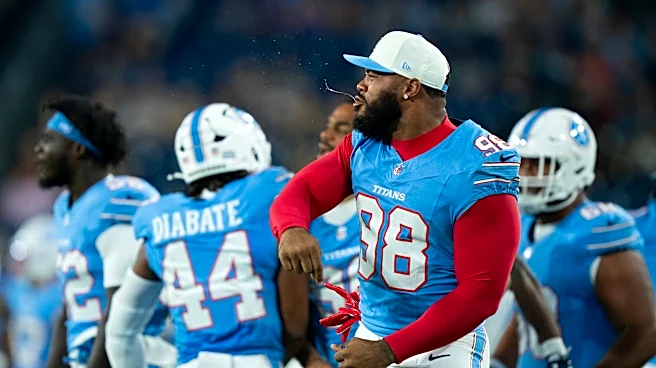
Once or twice a year, an NFL team gets brave and decides to engage in a little bit of delusion. They'll call up the Tennessee Titans and try to gin up a trade for Jeffery Simmons. Maybe a millisecond passes. Maybe two, for the sake of courtesy. Then the Titans will say no and the brave team's delusion ends about where it started.
Multiple sources familiar with these conversations told The Tennessean that talks never even get to the "offer" stage. The Titans have been so closed off to moving their cornerstone defender that they don't even let his suitors name their price. And this has been going on for years.
Consider that, really. The Titans are 12-46 in their last 58 games. Over that span they've parted ways with two
general managers, two head coaches, a president of football operations, four offensive play-callers and era-defining franchise players like Derrick Henry, Kevin Byard, Ryan Tannehill, Taylor Lewan and Harold Landry III.
Yet Simmons, through it all, has remained untouchable.
The fact that the Titans have held onto Simmons all this time isn't what is perplexing. The most perplexing factor in this conversation is that Simmons is more adamant than ever that this is where he wants to be.
"It’s one of those things where why would I let my mom down?" Simmons told The Tennessean in August. "My mom believed in me my whole life. It’s the same thing when I walk out the house. The Tennessee Titans are a family. This is my home outside of my home."
Jeffery Simmons, legacy and trash collection
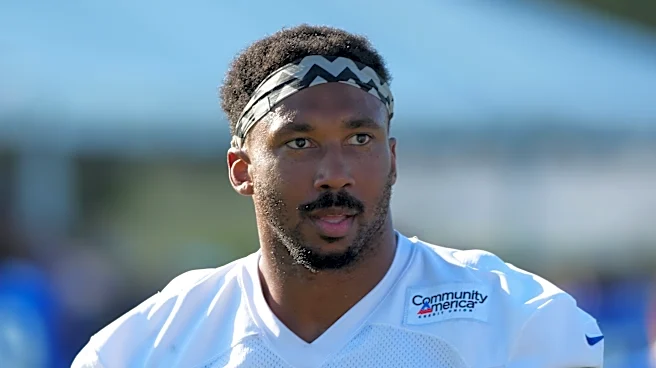
To understand Simmons, a 6-foot-4, 305-pound defensive tackle, is to understand one simple principle: Every moment and every action counts toward your legacy.
It's not just that Simmons believes this. He does, but it's also a thing where Simmons seems to believe that everyone else believes this too. Over the course of a 30-minute exclusive interview with The Tennessean, Simmons mentioned no fewer than three times that he assumed this reporter wants every single article he writes to be the best article in the world. Simmons projects the pride and care he puts into his work onto anyone else in his orbit, and to fall short of that standard is to fail.
When Simmons was in high school, he saw a video about the New Zealand All Blacks rugby team's "sweep the sheds" philosophy, an ideology rooted in servant leadership wherein every player is expected to help unload the bus before games and is expected to leave the locker room spotless postgame, win or lose. A decade later, Simmons still barks at teammates for leaving trash around.
"There’s no fluff," safety Amani Hooker says of Simmons, his teammate of eight years. "Whether it’s halftime and coming in and motivating guys or it’s in the building mentioning we can pick something up to keep the house clean."
Simmons points out a stat that comes up often in D-line meetings. It's said at least 40% of NFL plays are lost before the ball is snapped. Misalignments. Bad communication. Poor focus. Controllables that weren't controlled.
Not unlike scooping discarded tape off the ground on your way to the bus.
"That could be that thing in late December to where, ‘Dang, remember when we left that locker room a mess?’ " Simmons says. "It’s the little things."
All this, again, is in service of legacy. Simmons says he treats every snap of every practice and every second of every game as if the person across from him doesn't want him to feed his family. Simmons says he's at a point in his career where he's not uncomfortable, but he's not comfortable either. True comfort would be his career's death knell. He says the moment he relents and stops striving to be the best defensive lineman ever is the moment he'll know he has no reason left to play.
Jeffery Simmons, the Tennessee Titans and the quest for more
Simmons established himself as the NFL's best interior defensive lineman in 2025. He led all defensive tackles in sacks, quarterback pressures, pressure rate, quick pressures and pressures against double teams. In June, the Titans rewarded Simmons with a contract extension worth up to $105.9 million, briefly making him the richest defensive tackle in league history.
With three All-Pro nods and four Pro Bowl selections in the last five years, Simmons is positioning himself in the conversation among the best defensive linemen of his generation. The fact that he's doing so while playing on bad teams is almost unheard of. Only one of the 20 defensive tackles named to an All-Decade team since the 1970s have done so while playing for teams with records worse than Simmons' Titans have in the 2020s. Fifteen of the 19 played in multiple conference championship games in their careers, and 11 of the 19 won at least one Super Bowl.
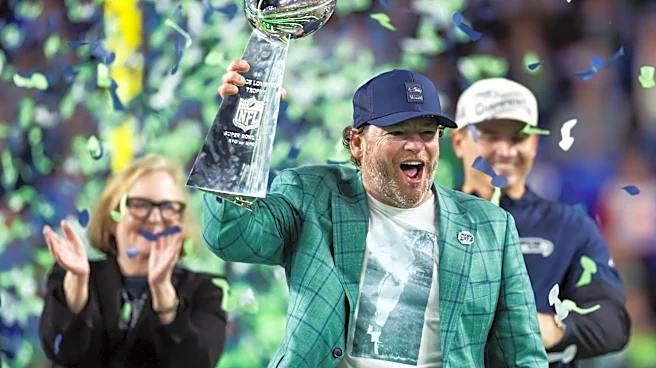
Simmons, meanwhile, is stuck in purgatory. While he's been the face of the NFL's worst team, his ex-teammates have thrived. A.J. Brown's been to two Super Bowls and hoisted the Lombardi Trophy once. Byard and Landry have been to Super Bowls too, as has former Tennessee Titans coach Mike Vrabel. Henry's the NFL's leader in rushing yards and rushing TDs since leaving Nashville.
"Let’s go back to the Super Bowl last year," Simmons said. "Don’t get me wrong: I was happy as hell. I’m happy for Vrabel. I’m happy for Harold. I’m happy for (defensive assistants Terrell Williams and Clinton McMillan). I’m happy for those guys. I’m down there for the (Walter Payton) Man of the Year (ceremony) and we go on the field pregame and these guys are running out the tunnel and I’m seeing them hugging and dapping. You get excited for that. I’m excited for these guys. But at the same time, I want that feeling. I want them to be on the other side of it...
"That’s what motivates me to be able to have that mindset. It’s ‘No, I’m not jealous. I’m happy as hell for y’all, because I know that them tables can turn real quick.’ I know that’ll be us once. Hopefully pretty soon."
Jeffery Simmons, safety and the moment
If that sounds like a goal, don't mistake it for one.
A few years back, Simmons stopped setting goals. Goals were his thing in college. He was the kind of kid who had a mirror absolutely covered in sticky notes. But then he got further and further into his pro career and he started to find his goals were conflicting with the team's goals. He'd started chasing plays, jumping out of his gap, making the small, selfish choices that prioritized individual stats over team success. He'd get his, then Jonathan Taylor would screech free for an 80-yard touchdown run. Plenty of boom. Plenty of bust.
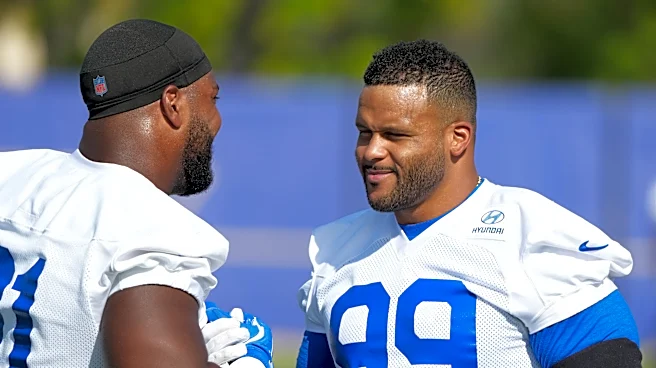
Look in Simmons' iPad notes now and the only goal he's set for himself is "Be in the moment." It's easier said than done. Simmons admits he still reads, sees and hears what fans and media say about the Titans. But he's stopped seeking out comparison. He says he doesn't watch other D-linemen's highlight reels on social media anymore. He says he stopped comparing his offseason regimens to those of folks like Aaron Donald, and he says he's not the kind of person anymore who'd even care if Donald un-retired to theoretically retrieve his perceived crown as the NFL's best defensive tackle.
In effect, Simmons says he's done caring about what doesn't really matter. One catalyst for this shift came in December when Simmons arrived home from the Titans' road trip to San Francisco to find his home had been burglarized.
"The biggest lesson that I learned was the only things they took were valuables," Simmons said. "They took a lot of valuable things, jewelry, whatever. But when you focus on what really matters, my family was safe. None of that other stuff really matters. When you get into the NFL, we go and buy all these jewelry and bussdowns and all these things. And I’m like, ‘Man, why am I really tripping about that?' "
Talk to Simmons now and you'll find a man insistent on finding sanctuaries. He says he doesn't bring his home stress to the football field and he doesn't bring his football stress home. He decided to conclude what mattered from the break-in is that his mom wasn't in the house, as she often is during Titans road trips. He decided to conclude that what matters about football is prioritizing what the team needs in the moment over what looks best for him long term.
It's about the moment.
"Once we start to feel like we’ve got to do something, that’s when you start to fall out of love with something," Simmons says. "I compare my real life to football, because football is real life. If you get tired of something and think ‘Man, I gotta do this. I gotta do that,’ that’s when you kind of start to push away from it. I just wake up every day to attack my day with ‘I’ve got another opportunity to play this game. God gave me an opportunity to drive down I-65 to go to work.’"
Nick Suss is the Titans beat writer for The Tennessean. Contact Nick at nsuss@gannett.com. Follow Nick on X @nicksuss. Subscribe to the Talkin’ Titans newsletter for updates sent directly to your inbox.
This article originally appeared on Nashville Tennessean: Inside what drives Jeffery Simmons and why he remains loyal to Titans | Exclusive