


A former Ohio State University football player avoided prison after admitting to nine bank robberies over the course of seven weeks.
Marcus Williamson, 27, pleaded guilty in March to nine counts of robbery in connection with the seven-week spree in March and April 2024.
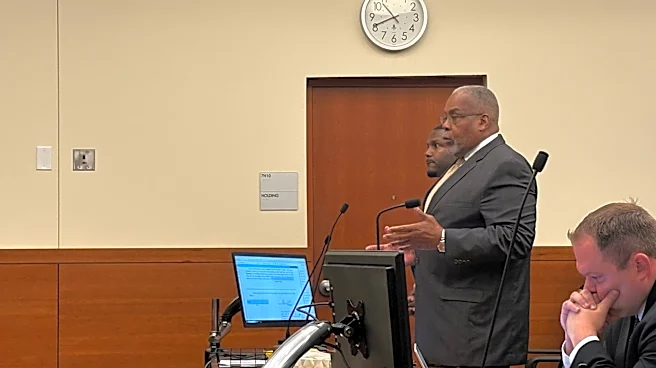
Franklin County Common Pleas Judge Sheryl Munson sentenced Williamson to four years of probation
and ordered him to complete programming through a specialized court docket.Munson oversees the program, which focuses on defendants who are struggling with significant mental health challenges and those challenges led to their involvement with the criminal justice system.
During his Aug. 6 hearing, Williamson said doctors diagnosed him with schizoaffective disorder. The Cleveland Clinic
defines schizoaffective disorder as a mental health condition in which the patient exhibits symptoms of both schizophrenia and a mood disorder, such as bipolar disorder or depression.
What can Ohio judges consider in deciding a sentence?
Under Ohio law, there are a number of factors judges have to consider in determining a sentence. A sentence should:
- Protect the public from future crime by the defendant or others.
- Punish the offender.
- Promote effective rehabilitation using the minimum sanction that would accomplish the purpose without causing an unnecessary burden to the state or local government.
- Balance the need for incapacitating the offender, deterrence, rehabilitation and making restitution.
Some crimes, like murder, have a required sentence that does not give the judge any other options. Other crimes offer judges limited discretion in determining a sentence but require prison time.
The charges to which Williamson pleaded guilty – second- and third-degree felony robbery – carry what Ohio law calls a presumption for prison. This means prison is not absolutely required, but the charges are expected to result in a prison sentence unless the presumption is overcome and the judge outlines such findings on the record.
The law says that some of the factors weighing in favor of prison include whether the victim suffered serious physical or psychological trauma, whether the defendant is a public figure or helped facilitate the crime and whether the defendant was motivated by a person's race, gender or sexual orientation.
Factors leaning toward a lighter sentence include whether the defendant has shown genuine remorse, if the crime occurred under circumstances that aren't likely to happen again and their previous criminal history.
Why do some people spend years in prison for bank robberies but Williamson got probation?
Judges weigh each case and each defendant's individual circumstances, along with the details of their specific crimes, individually.
A judge is not required to give someone the same sentence that another person received for committing the same crime from a different judge.
What did Judge Sheryl Munson decide in Marcus Williamson's case?
In Williamson's case, Munson said the information provided through a presentence investigation report, as well as other information to which she had access, indicated the presumption was overcome and that sentencing Williamson to prison would be "purely punitive."
"Does that retribution outweigh doing what what we think is the right way to make him a successful member of his community?" Munson said. "Whatever decision is made here today is on me, and I have to do what I think is right."
Williamson is subject to a reserved, or suspended, prison sentence. That means if he violates the terms of his probation, he faces 19-21½ years in prison.
Reporter Bethany Bruner can be reached at bbruner@dispatch.com.
This article originally appeared on The Columbus Dispatch: How an ex-Ohio State football player avoided prison in 9 bank robberies