






With hundreds of requests to remove billionaire Les Wexner's name from Ohio State University's campus still pending, a university committee has decided on the future of a different named space.
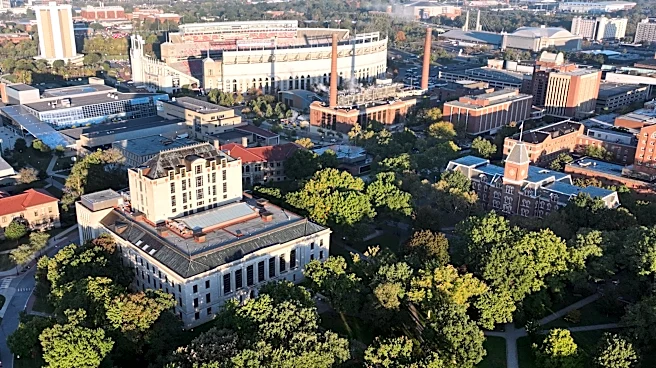
Ohio State will take no action on a request to rename Thompson Library, according to a report published Aug. 14 by the Standing Advisory Committee for the Review of University Space and Entity Names. Ohio State President Ravi Bellamkonda agreed with the committee's decision.
Citizen Advocates for Public Education – a local advocacy organization that supports public education policies – submitted a request to remove Thompson's name from the library in 2022. The group initially sent a letter to then-Ohio State President Kristina Johnson and the board of trustees
in 2020, and renewed its request two years later when Ohio State introduced a formal naming review procedure.
For years, it was the only request in Ohio State's naming review portal.

Mark Stewart, a longtime educator and member of Citizen Advocates for Public Education, told The Dispatch that the group is disappointed by the committee's decision.
"They outwaited us," Stewart said.
The library was named in 1951 for William Oxley Thompson, the university's fifth president. He held that position from 1899 to 1925. For nine of those years, Thompson also concurrently served as president of the Columbus City Schools Board of Education.
Citizen Advocates for Public Education's rationale for the request for removal of his name from the library is rooted in Thompson's history as a supporter of racial segregation.
"Thompson was instrumental in setting up a de facto segregated system in the early 1900s," Stewart said.
Stewart said that Thompson was an "avowed segregationist" and used his positions of power "to help develop and implement policies and practices that were discriminatory and harmed generations of students."
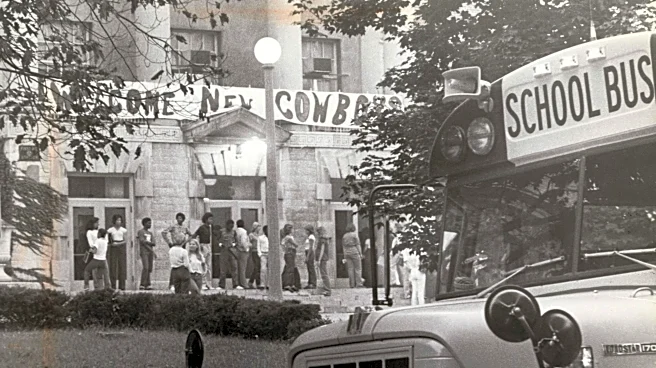
Under Thompson's leadership, the Columbus City school board approved the opening of racially segregated Champion Avenue School. That decision established de facto racial segregation and gerrymandering of the district's schools from 1909 until 1977.

Thompson and his colleagues "feared miscegenation, and the long-term effects of children of different races in the same classroom," according to a historical analysis of Champion Avenue School by Ohio University professor Adah Wolfe Randolph. They believed that it was in the best interests of both Black and white students that they be educated in separate schools.
The group also said Thompson maintained racially segregated student housing during his tenure as Ohio State's president.
Committee members conducted their own review beginning in 2023 to determine whether a name change for Thompson Library was warranted based on the allegations. The review "took significant time to complete and required extensive historical research given that the allegations concern conduct from the early 1900s that is largely not memorialized in university-maintained records," according to the report.
Based on their review, committee members chose not to recommend changing the name of the Thompson Library or taking any alternative actions regarding the naming of that space. The report found that requestors were accurate that Columbus City schools were de facto segregated "for a significant period of time despite the fact that Ohio law prohibited segregation as a matter of law, and that this practice can be traced to the opening of the Champion Avenue School, which occurred during Dr. Thompson’s time on that Board."
"Such segregation was clearly improper and immoral," the report read.
However, the committee said that "the fuller historical record does not sufficiently substantiate the requestors’ views," specifically those that Thompson was the one to spearhead establishing racially segregated CCS schools, and the committee reported it could not find any evidence that Thompson promoted racially segregated student housing at the university.
"Further, while the CCS records lend some limited insight into Thompson’s individual views on these issues, additional contemporaneous records, including both personal correspondence and public remarks, reveal that he was engaged thoughtfully on issues of race and civil rights in the face of an evolving state and national dialogue," the report read. "Viewing these factors in their historical context and weighing them against the broader evaluative factors that the Committee must consider under the Procedure, the record does not meet the high standard for removal of Dr. Thompson’s name from a university space."

Citizen Advocates for Public Education had suggested Thompson Library be renamed after Robert M. Duncan, a federal district judge appointed by Richard Nixon and an Ohio State College of Law graduate.
Duncan was the first Black man to serve on the Ohio Supreme Court and is credited with deciding the historic Columbus City Schools’ desegregation cases, according to the court.
Stewart said that he is glad, in a sense, that the group finally got a response, even if it wasn't the one it wanted. However, he doesn't think it should've taken six years to decide.
"Ohio State's bureaucracy has become so byzantine," he said. "It's frustrating."
Bellamkonda said that the requests to rename spaces bearing Wexner's name are still pending. He said he hopes to have a resolution by the end of the year.
Higher education reporter Sheridan Hendrix can be reached at shendrix@dispatch.com and on Signal at @sheridan.120. You can follow her on Instagram at @sheridanwrites.
This article originally appeared on The Columbus Dispatch: As Wexner renaming requests linger, Ohio State denies request for different space