





Grandview Heights was in near-panic two decades ago. City Council meetings were urgent. Tempers flared.
Owners of the Depression-era Big Bear grocery chain had declared bankruptcy two years before in 2004. The chain's warehouse operation on the city's eastern edge represented about 10% of the city footprint. About 500 workers and a half-million dollars of tax revenue would soon be lost.
City streets and facilities were in disrepair. The municipal pool was leaking. And city workers needed to be paid.
Big Bear's acquisition by Penn Traffic in 1989 had saddled the company with heavy corporate debt. And competitors Kroger, Cub Foods and others saw the limping Bear as an opportunity to climb the food chain.
"Financially we were really in a tough time,"
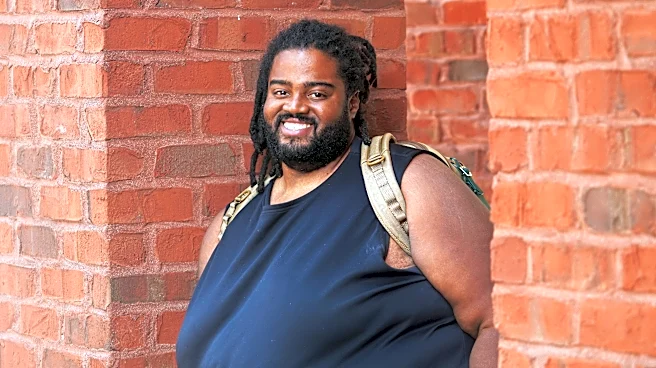
recalled Ray DeGraw, the city's mayor from 2004 to 2019. "We were picking and choosing the bills to pay. We didn't have a lot of operating cash."

That challenge prompted a collaboration of city leaders and developers that led to one of the most successful mixed-use projects in central Ohio. Decades later, the Dispatch examines how Grandview Yard came to be and whether it can be a model of urban revitalization that other communications could emulate.
At the depths of the Big Bear fallout, Grandview had little more than two weeks of cash reserves, where three to six months is considered the benchmark fiscal safety net.
"I think people wondered if we would fail," DeGraw told The Dispatch. "I had an attorney contact me about declaring bankruptcy."
The city didn't fail. The cash didn't run out.
But it took years of planning and persistence to get here.
First they had to convince voters that increasing the income tax to 2.5%, along with austerity measures, would help Grandview Heights regain its footing enough to pay the bills.
DeGraw and his newly hired development director, Patrik Bowman, friends from college at Ohio State University, had planning backgrounds. "And we had a vision. We only had one shot and we had to do it right," recalled DeGraw.
Big Bear's then-blighted brownfield site was silent. Its dated buildings and pitted parking lots would become a whiteboard from which to plan. But how to turn 125 acres into revenue? Who would back it financially? Would residents of this quaint community of about 7,000 support the changes?

Nationwide Realty, more than insurance
The development arm of Nationwide Insurance Co. had already proven itself by turning the old Ohio Penitentiary site into the Arena District, built around the city's NHL franchise Columbus Blue Jackets.
And even without a sports juggernaut anchor, Nationwide Realty Investors (NRI) saw potential in the old Big Bear site — proximity to Downtown, walking distance to OSU, and a central location close to freeways.
But "The Yard," as it is frequently called, has become much more than that, with many of the features that local leaders frequently tout elsewhere to enhance the tax base.
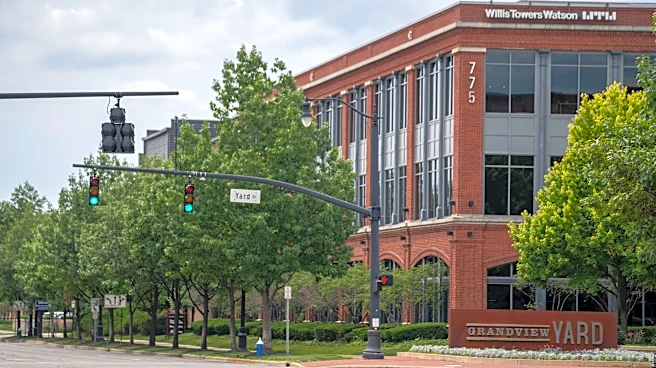
High-density housing, small parks, attractive streets with supporting restaurants and shops were the aim. The look and feel today is similar to the Arena District, but without the sports buzz. A swanky, Giant Eagle Market District has become a gathering space, surrounded by restaurants and businesses.
Grandview Yard's 59 businesses employ 3,100 workers. It is bounded by Goodale Boulevard to the south, CSX railroad tracks to the east, and Northwest Boulevard to the west. Its northern boundary stretches as far as 5th Avenue in part of the development and 1st Avenue elsewhere.
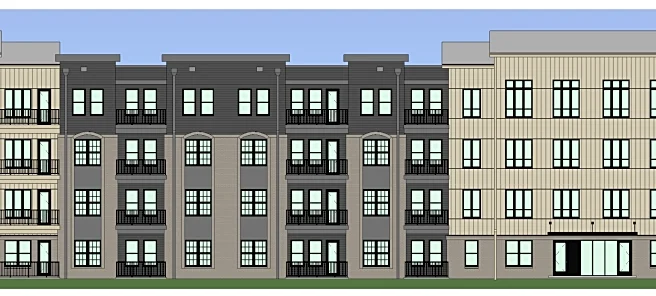
NRI touts the conversion of 125 acres of blight into a modern development, with 1.2 million square feet of commercial space completed to date and 1,900 residences (1,700 multi-family units in 10 completed projects and 233 single-family homes and condominiums).

Brian J. Ellis, NRI's president, described the project to The Dispatch as "a powerhouse mixed-use development ... widely regarded as one of the region’s strongest business districts and residential communities, and continues to attract investment, employers, and residents."
Among the residents are just 50 children enrolled in K-12 classes at Grandview Heights Schools.
The development, unlike others with high housing density, "hasn't created a lot of new students, but it has created a great deal of funding for us," said Beth Collier school district treasurer.
One of the draws for residents not available Downtown is free parking, with NRI touting its 6,800 parking spaces in several large garages. The garages are owned and operated by NRI.
Tax incentives stoked NRI interest, partnership with city and county
Nationwide Realty already saw the site's potential, but funding help was needed, including tax exempt bonds, deferred taxes and abatements. Each helped close the deal on the billion-dollar project, more than $150 million of which was helped by government-backed financing and the Columbus-Franklin County Finance Authority.
Overall, $800 million has so far been invested in Grandview Yard, including $610 million in private investment and nearly $190 million in public infrastructure funding, comprised mostly of approximately $150 million in bonds. The balance derives from various grants and other funding sources, according to an NRI spokeswoman.
There currently are 175 land parcels with 15-year property tax abatements, including office use (25% abated), multi-family housing (50%) and two hotels (75%), the terms of which extend into the mid-2030s and beyond.
These have helped NRI buy land and build roads; install utilities and plant trees and other streetscape features. The company purchased its first parcels of land in May 2006. Once construction is completed, an abatement typically begins, said Meagan Miller, the city's director of finance.
Payments in lieu of taxes last year generated $6.2 million for Grandview Heights public schools, $45,000 to the Grandview Heights Public Library and $7.6 million for Grandview Yard's non-building infrastructure like streets, curbs and utilities.
A small portion of the city's income tax earned from the Yard developments also goes toward payment on the infrastructure bonds.

A totally new feel. But for everyone?
Many of the streets are lined with mature trees, some almost forming a canopy. "They soften everything in the area," said DeGraw, creating a sort of buffer with Grandview Heights proper.
The soft color palettes on buildings and clean sidewalks and parking garages define the area, but not everyone feels the vibe.
Softening is not a term Lisa Clodfelter uses to describe Grandview Yard.
"It's a game day every day now," she said of traffic that used to besiege the area on OSU football weekends. "These new apartments have brought everybody into the area."
Clodfelter, 64, said she's leaving her home on Broadview Avenue near the buffer between old and "new" Grandview for the rural peace of Union County. "It's just getting too crowded. But this is a generation that is used to being elbow-to-elbow."

Her son, Wesley Clodfelter, 41, who will stay in the Broadview home when his mom leaves, said he would be fine with more energy.
"My expectation (of the development) was something along the lines of Dublin's Bridge Park with more shops, bars and a North Market feel ... with a food hall that is more energized. Instead, it's more corporate businesses and residential buildings. It feels sterile," he said.
Even some now living in Grandview Yard don't see it as a permanent home.
Chelsey Corella and her husband pay $2,700 a month for a 1,300 square foot apartment overlooking DeGraw Park. Both work at OSU and support year-old daughter, Charlotte.
"Our lease is up in September. We're going to renew just one more year, or go month-to-month if we have to, until we find the right home. This just isn't it," she said.
Corella envisions a yard and a swing set for Charlotte as she grows older, amenities not easily found in the density of the Yard.
"The population's just getting very young. When I'm going to bed at 9 and the young surge is heading out, and I'm sitting on my couch," she said. "... When Charlotte was first born, we'd be up in the middle of the night and be like 'Oh, they're coming home from the bars, but we're up for a 2 a.m. feeding.' "

Has it paid off?
Ellis told The Dispatch that success has been forged through partnerships and perseverance.
"Grandview Yard demonstrates what can be achieved through long-term vision, patient investment, and strong collaboration. Over the past two decades, we’ve worked closely with (Grandview Heights) to turn the former brownfield site into a thriving mixed-use district that delivers significant value for residents, businesses and the broader community."
Anthony Panzera, a one-time councilman and still an active real estate agent/broker in the community, is among the staunchest defenders of the development, despite what he calls "single issue, mass-gripe crowds" often found on social media.
When the development was first conceived, he recalled the city's annual capital budget being around $350,000, at the same time "bonded infrastructure investment" exceeded $120 million. That meant that paying off badly needed street, building and repair projects could take "the equivalent to about 300-400 years of our then capital budget."
The convergence of NRI, lenders and city and county governments "and the often skeptical support of our residents all led us to a new and bright future as Grandview Heights," Panzera said.
As a result, he said, Grandview has been able to expand and renovate all of its city parks, build a new swimming pool, a modern public works facility, a joint police/fire/city hall and a new parks and recreation facility.

"We've gone from near-broke with just a few days of operating capital, to a robust budget with nearly 200 days of reserve," he said. "We re-invented the city and gave it a proud identity now known throughout central Ohio, and even beyond."
Current city leaders agree.
"I think this has been transformative for our city," said Mayor Greta Kearns, noting the city's 1.3 square-mile footprint. "Smaller" size creates challenges and opportunities. "This is really about the best outcome you could have with that kind of scenario, not only allowing us to survive, but to thrive."
Council President Emily Keeler describes "a look and feel. You know you're in the Yard. When it was being built there was a feel of kind of 'put a wall up and we'll take your money.' But the residents are now integrated, they show up at council meetings and at PTO meetings."
DeGraw credits Yard succeess to "the power of poximity."
"We are basically Downtown, up against OSU and the central city. Everything is very close to us."
The Yard and other developments demonstrate the mix of walkable, office-commercial uses that Columbus seeks and supports but is hampered in achieving because the city's zoning code "has not kept pace with our changing economy," Luis Teba, Zone-In Columbus Project Manager, told The Dispatch.

He said that less restrictive zoning still to be implemented will protect office and industrial areas, preserve key employment locations, and provide new mixed-use and areas and neighborhoods. "For example, the South Side has legacy industrial areas that, through rezoning, could be opened to redevelopment for a mix of uses, such as office, light industrial and residential."
Joe Mann, NRI construction superintendent, states it simply after removing road barricades in front of the recently built Parkline, one of the Yard's largest buildings: "This is progress and growth. This is what it looks like."
Park now thrives where grocery-laden trucks once delivered
Standing next to the stone wall and plaque that bears his name, DeGraw recalls the near-disastrous fiscal mess his city faced. And how outsiders wrestled with the decision to help out.
"We were in a flood plain. We were in a brownfield," he said of the lush parkland that 10 years ago was a vast, empty warehouse. "It needed roads. It needed clean-up."
Today, he said, "It's vibrant. It's become part of the community. The people here associate themselves with Grandview Heights." The city's grown by about 25% since 2010 (now about 8,900).

A pickup game of spike ball draws 20-somethings to the park on a recent Friday evening. Others walk dogs.
DeGraw smiles. Does he take credit?
"Anybody who was involved with the project should be extremely proud. And there were a lot of people involved," he said.
Council President Keeler is grateful too, noting "It kicked off a kind of renaissance of this type in central Ohio," she said, citing Dublin's Bridge Park development and Columbus' "zone-in" concept to ease restrictions on development. "I walk to work every day, mostly along a multi-use trail," she said. "I'm very grateful to those who came before me who put the effort in. We had to make it work."
Added Mayor Kearns, "It's a hundred years younger than the rest of the community. But the financial stability is really indisputable."

Growth and development reporter Dean Narciso can be reached at dnarciso@dispatch.com.
This article originally appeared on The Columbus Dispatch: From blight to might. How grocery's demise led to Grandview Heights' rise