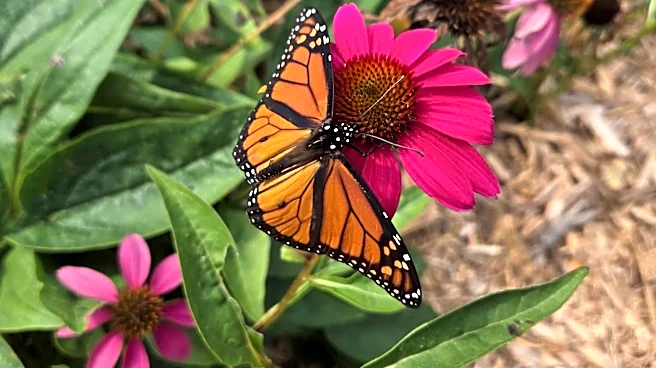





Many gardeners and homeowners have recognized and embraced the need to plant more native flowering pollinator plants in their gardens and home landscapes to support beneficial insects such as bees, as well as other pollinators.
These plants play an essential role in the landscape and ecosystem by providing a food source for wildlife as well as pollen and nectar for native insects and their larvae, which in turn sustains local and migrating birds, bats and other wildlife.
Providing food and shelter
These plants not only provide food, but they can provide needed shelter for nesting and overwintering habitats for bees, wasps and other beneficial insects. Bees and wasps create small nests beneath the soil, within dead plant stems and in cavities in wood.
Other beneficial insects
such as butterflies, moths, fireflies, lady beetles and ground beetles overwinter in places such as leaf litter and brush piles. Such locations provide protection from both harsh winter weather and predators.

Save the stems
Many hollow or spongy plant stems and branches provide excellent places for cavity-nesting insects to spend the winter and build nests in late winter and early spring. Plants such as bee balm (Monarda spp.), roses (Rosa spp.), native thistles (Cirsium spp.) and cup plant all have hollow or spongy stems that can serve as nesting and overwintering habitats for beneficial insects.
Insects which use dead stems and branches for their winter home include cavity-nesting bees and wasps, stem-boring moths and some spiders. Additionally, some insects insert their eggs into the stems of wildflowers and grasses for safe keeping over the winter.

Instead of cutting herbaceous perennial plants at ground level and disposing of dead stems in the fall, consider leaving stems standing through the winter. By cutting dead stems at various heights from 8 to 24 inches above the ground, you create vertical nesting opportunities in a variety of diameters, suitable for insects of different body sizes. The tops of stems which are cut can be left in a pile on the ground to provide additional nesting and overwintering habitat.
In spring, new growth generally grows past the stubble from last season, allowing insects to continue to nest in the dead stems throughout spring. If desired, these dead stems can be removed from the planting bed in late spring after insects emerge.
Compared to artificial nesting options such as bee blocks or bee hotels, natural nesting habitat features better mimic the natural nest site density of insects and decay, naturally limiting disease and parasite buildup.
Learn how at a free field day
A free Fall Native Plant Field Day will demonstrate the best methods to clean up and manage perennial plants this fall in order to provide winter habitats for beneficial insects, pollinators and wildlife. The field day will be held on Sept. 12 from 10 a.m. to noon at Waterman Farm on the Ohio State University campus.
The field day is free, but advance registration is limited and required before Sept. 10. Register at go.osu.edu/fallnativefieldday. Free parking is available for the event. Participants will receive free educational resources to take home and will have the opportunity to see how perennial plants in the Waterman Learning Gardens are managed to provide overwintering and nesting habitats for beneficial insects and wildlife.
Mike Hogan is Extension Educator, Agriculture & Natural Resources and associate professor with Ohio State University Extension. He can be reached at hogan.1@osu.edu.
This article originally appeared on The Columbus Dispatch: Leaving dead plant stems can help your garden