



Succulents are popular plants due to their attractive leaves, stems, growth habits and flowers, which come in many colors, shapes and sizes. Succulents are versatile and can be grown outdoors as annual plants during the growing season or indoors all year long. My wife grows dozens of different succulents in containers and in the ground outdoors each year and moves some of them inside when temperatures drop in October and gives others away.
Succulents belong to several different plant families including stonecrop (Crassulaceae), spurge (Euphorbiaceae) and cactus (Cactaceae). Plants in these families require minimal care and thrive in similar environmental conditions. All cactuses are succulents, but not all succulents are cactuses.
Bright indirect light is required for succulents
One reason succulents
seem to be so popular right now is likely the minimal care needed for them to thrive both indoors and outdoors. Succulents do best when grown in bright, indirect light. This type of light is bright enough to cast a shadow, but not direct sunlight.
Light can be the most limiting factor when growing succulents indoors. These plants need up to 10 or more hours of bright indirect light. Some species of succulents tolerate lower light levels, but most need a minimum of six to eight hours of bright light.
You may need to rotate succulents grown indoors to prevent lopsided growth. In low light during Ohio winters, some succulents can become pale and leggy, and you may need to move succulents to different locations in the home or use supplemental light for optimum growth.

Soil must dry quickly for succulents
Succulents require soil which is well-aerated and drains quickly. Typical potting mixes retain too much water and can cause root rot. Cactuses and succulent soil mixtures are an excellent choice for succulents, especially when they are planted in containers indoors.
You can also make your own succulent potting mix by adding one-third potting mix with two-thirds mineral material such as perlite, coarse sand, pumice or fine gravel.
Succulent containers need drainage
Succulents can be grown in many different types of containers as long as the container has drainage holes. Succulents do not tolerate wet roots, and a layer of gravel at the bottom of a container is not an adequate substitute for drainage holes. If a desired pot does not have a drainage hole, you can “double pot” a succulent in a slightly smaller container with drainage holes and place that pot in the desired container.
While terra cotta clay pots can be challenging when growing non-succulents outdoors in warm weather, they are perfect for growing succulents both indoors and outdoors because they are porous and allow for quicker soil drying.
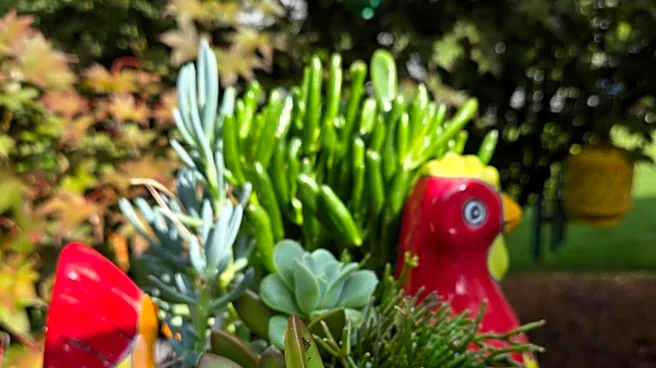
Small or shallow containers made of any type of material are ideal for succulents because the small volume of soil will dry out more quickly. Larger containers can be used to plant several different species of succulents together since nearly all succulents have the same growing requirements. The contrast of succulents with different shapes, colors and growth patterns planted together can be striking design feature.

Favorable indoor temperatures best for succulents
Despite being native to hot and dry climates, most succulents don’t require hot temperature and will thrive in typical indoor environments. Succulents prefer a temperature range of 55 degrees to 75 degrees Fahrenheit, and some will tolerate temperatures as low as 45 degrees and as high as 85 degrees.
Succulents thrive in the low humidity found in most homes, especially during winter, as the low humidity helps the soil dry out more quickly. Unlike some houseplants, succulents rarely are adversely affected by dry indoor weather during winter months.
Succulents thrive on infrequent watering and fertilizing
While the frequency of watering will depend somewhat on light, soil, type of container, indoor temperature and humidity, succulents require less frequent watering than other houseplants. Under typical conditions indoors, most succulents will need to be watered only every two or three weeks.
Succulents should be watered thoroughly until water drains through the drainage hole in the container. Then let the soil completely dry out before watering again. Symptoms of overwatering succulent plants include yellowing, soft stems or leaves and complete collapse and browning of lower leaves.
Succulents require little fertilizer to thrive. Use an all-purpose houseplant fertilizer in spring and summer at a half to quarter rate, while fertilizers made specifically for cactuses and succulents should be used at full strength as directed on the package.
Learn more about succulents at a free workshop
If you’d like to learn more about succulents, plan to attend a free hands-on workshop, where you can plant an indoor succulent garden to take home. Plants and Pints will be held on Sept. 24 from 6-8 p.m. at Seventh Son Brewing Co., 1101 N. 4th St.
The event serves as a fundraiser for the Franklin County Master Gardener Volunteer program, and the first 75 participants will be able to plant a free small indoor succulent garden to take home. Alcoholic and non-alcoholic drinks will be available for sale and food trucks will be onsite. No advance registration is required.
Mike Hogan is Extension Educator, Agriculture & Natural Resources and associate professor with Ohio State University Extension. He can be reached at hogan.1@osu.edu.
This article originally appeared on The Columbus Dispatch: Simple ways to keep your indoor succulents thriving