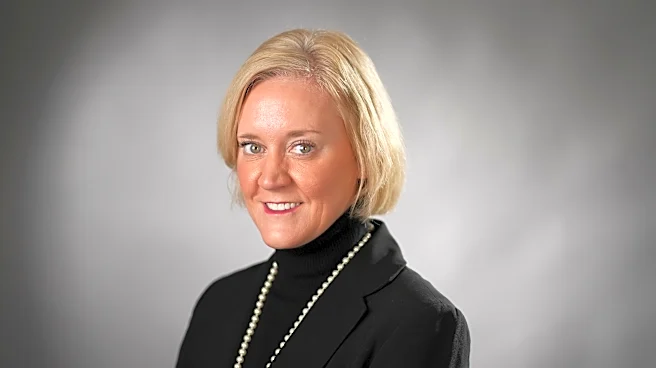







Adam Sharp has served as executive vice president of Ohio Farm Bureau since 2016 and is a fourth-generation farmer who farms alongside his brothers in Fairfield County.
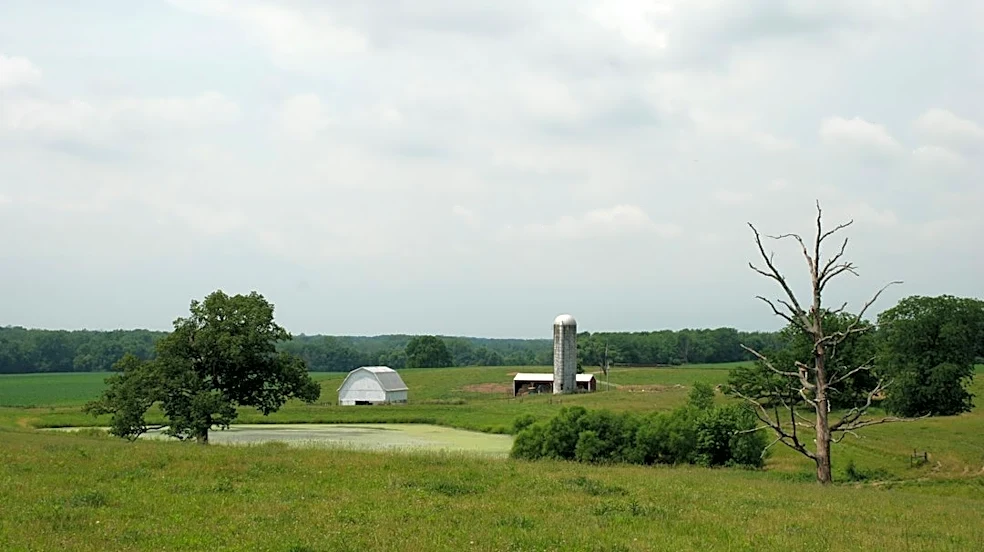
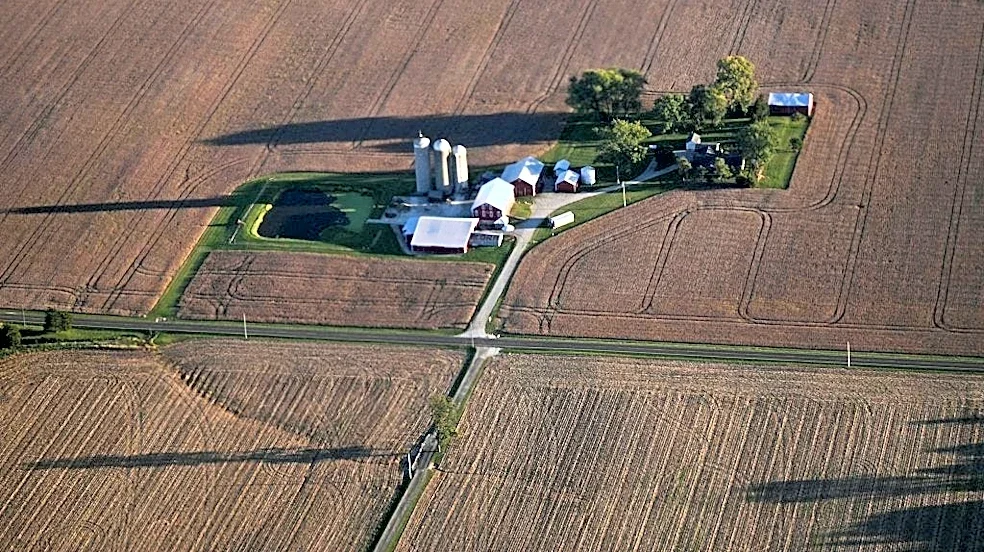
Ohio has lostnearly a million acres of farmland in the last 20 years. That's more than the combined square mileage of Franklin and Licking counties. That's farmland that can no longer feed, fuel and clothe us. And if some groups prevail, it will be even easier to take land fromprivate landowners.
Private property owners are free to make the choice to sell their land.
What property owners don’t get to choose, however, is when their land istaken from them by the government or a public utility through eminent domain. It’s not just the development that changes the character of the landscape;
it’s often all the things that come with or are needed by that development that further exacerbate the loss of farmland and unwillingly force a taking of private property.
It’s the pipeline that cuts through the middle of a cornfield, reducing productivity and fertility for decades to come. It’s the transmission line that now hangs over your backyard. It’s the subsurface drainage that gets destroyed and results in flooded fields, yards and roadways with no path to resolution.
Even more disruptive is the straineminent domain puts on these landowners. People who have paid a mortgage and taxes year after year are now spending thousands on lawyers just to make sure they keep as much of their own land as possible and ensure they get paid fairly for it.
Our eminent domain process in Ohio is trying for landowners, but it is ultimately important that there is a process.
When the government or a utility wants to take your land, they are going to go before a judge and prove they absolutely need that land to serve the public.
Only after that proof is provided and a jury of citizens determines how much that landowner should be paid can that land be transferred away. Those are standards and a process that we as a society can agree on and respect – even if we don’t like the loss of land. But now, those entities want to take property without any process or judicial approval.
Ohio law allows that process to be bypassed in certain circumstances called “quick take,” including in times of war, public emergency and the making and repair of free public roadways. In those circumstances, the property can be taken immediately upon a deposit without going through the process first.
It’s easy to see why the Ohio Constitution created this very limited situation – if there is true peril, we want the government to be able to take property as needed to protect people and our nation, and there is generally little doubt that public roadways are for a public use.

Even though the Constitution has limited this quick-take process, there are groups that want to expand it beyond these limits, making it easier and quicker to take property without the full judicial process and without a landowner getting their day in court. They use words like “streamline” or “efficiency,” but the truth is they want to take private property without any process. These groups are frustrated that landowners have held them to the constitutional standards of necessity and public use, so now they want to change the game and eliminate the process altogether.
They alone want to decide what they should get to take from landowners.
Ohio Farm Bureau has spent years advocating for private property owners’ rights and fair treatment in the eminent domain process.
While farmers are our core members, the protections that have been secured through this advocacy protect all Ohioans – from row-crop farmers to homeowners to businesses. While progress is important, it cannot come at the expense of reducing Ohioans’ private property rights through an expansion of the quick-take power or reduction of eminent domain protections.
We at Ohio Farm Bureau will continue to represent not just the concerns of our members, but all property owners in this state to ensure they will be able to keep the land and homes they hold dear.

Adam Sharp has served as executive vice president of Ohio Farm Bureau since 2016 and is a fourth-generation farmer who farms alongside his brothers in Fairfield County. In his role, Sharp leads the statewide organization in its mission to work together for Ohio farmers to advance agriculture and strengthen our communities.
This article originally appeared on The Columbus Dispatch: Ohio must not make it easier to seize your property for data centers, other projects | Opinion