





The National Transportation Safety Board announced Sept. 16 that a fatal August 2024 crash that left two people dead and three people injured at an Ohio Turnpike toll plaza in northeast Ohio could have been avoided if the state operated its toll booths differently.
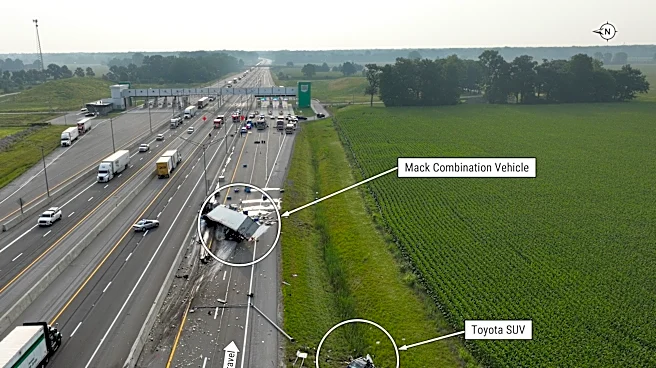
The crash occurred Aug. 15, 2024, when an SUV in the left lane of the high-speed toll lanes in the Swanton Township Toll Plaza suddenly slowed and moved across the path of a tractor-trailer to reach the plaza's low-speed manual toll lanes. The tractor-trailer hit the back of the SUV and overturned. The crash killed two SUV passengers, and seriously injured the SUV driver, another SUV passenger and the tractor-trailer driver, according to an NTSB press release.

Currently, Ohio Turnpike
toll plazas allow drivers with an E-ZPass transponder to drive through the tolling area, while other drivers can stop at toll booths in low-speed lanes to purchase tickets. The driver of the SUV later told the NTSB that she switched lanes when she realized she needed to access the low-speed tolls.
The NTSB recommended the Ohio Turnpike and Infrastructure Commission (OTIC), which operates the turnpike, permanently close its low-speed toll lanes and switch to fully electronic tolling.
"This crash shows the deadly safety consequences of mixing high-speed electronic tolling with low-speed manual tolling lanes,” NTSB Chairwoman Jennifer Homendy said in a prepared statement.
In a written statement provided to The Dispatch, the Ohio Turnpike and Infrastructure Commission thanked the NTSB for its "thorough and professional investigation" and said it would "carefully review its recommendations."
“We are committed to protecting every traveler who uses the Ohio Turnpike. Our safety record demonstrates the Ohio Turnpike remains one of the safest roads in the nation with a fatal crash rate of 0.4 crashes per 100 million vehicle miles traveled (VMT) in 2025, compared to 1.1 fatal crashes per 100 VMT nationally, as reported by the National Highway Traffic Safety Administration," the commission said.
NTSB investigators found that the design of the Swanton Township Toll Plaza increased the risk of a severe crash with its mix of 70 mph electronic tolling lanes and 10 mph manual lanes, which create conditions that encourage last-minute sudden lane changes and large speed differences between vehicles. Video of the toll plaza taken over three weeks showed an average of 52 last-minute lane changes per day, according to the NTSB.
The turnpike's lack of signs letting drivers know they can pay missed tolls online contributed to the SUV driver's decision to change lanes, according to the NTSB investigation.
Investigators also found that some first responders had "inadequate access" to the turnpike to respond to the crash. As a result, the NTSB recommended the OTIC and Springfield Township speed up construction of a new turnpike access point in Swanton, and that the OTIC determine if more access points on the turnpike as a whole are needed. The NTSB also recommended that the OTIC build new access points if it determines it needs more for emergency responders.
Several of the people involved in the crash were not wearing seatbelts, including one of the people who died. The NTSB reiterated its standing recommendation to the state of Ohio that it enact legislation to make seat belt use a primary offense, meaning law enforcement officers can pull drivers over solely for not wearing their seat belt. Currently, not wearing a seat belt is a secondary offense, meaning officers can only issue seat belt citations when they pull a vehicle over for a different primary offense like speeding or running a red light.
Reporter Nathan Hart can be reached at NHart@dispatch.com, @NathanRHart on X and nathanhart.dispatch.com on Bluesky.
This article originally appeared on The Columbus Dispatch: NTSB says fatal Ohio Turnpike crash was avoidable with tolling changes