



As Ohioans face soaring utility costs, candidates for U.S. Senate are jockeying over who's to blame − and Democrats hope to turn voters' attention to the biggest corruption scandal in state history.
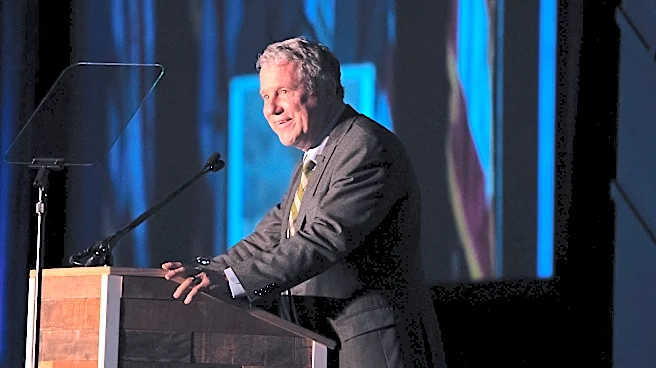
Former Sen. Sherrod Brown is seeking a political comeback against GOP Sen. Jon Husted in the Nov. 3 election. The race for Vice President JD Vance's old Senate seat has attracted a deluge of ads, with polls showing a tight contest between Brown and Husted.
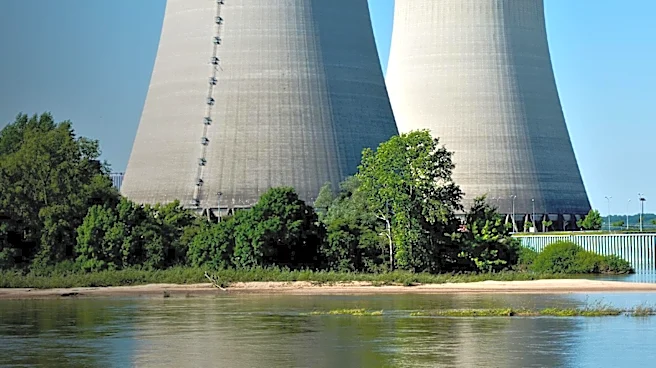
Husted was a key ally for Akron-based FirstEnergy, which spent more than $60 million to aid former House Speaker Larry Householder in exchange for a nuclear bailout known as House Bill 6. The pay-to-pay scandal upended state government and sent Householder and former Ohio Republican Party chair Matt
Borges to prison.
Husted has never been charged with a crime and says he supported House Bill 6 as Ohio's lieutenant governor to keep two nuclear plants in business. Still, Brown and other Democrats are eager to highlight the ordeal, including Husted's recent testimony in the trial of two former FirstEnergy executives accused of bribery.
But an expert witness in Householder's trial said in an interview the biggest culprit is a surge in generation costs that stems from data center demand − not a law that's largely been tossed out.
"I don’t think any candidate really wants to address the elephant in the room, and that’s really our generation costs," said Noah Dormady, an energy policy professor at Ohio State University.
Husted's ties to FirstEnergy
Husted has a decades-long history with FirstEnergy.
Husted backed pro-utility policies during his tenure as Ohio House speaker. When he ran for governor in 2017, FirstEnergy gave $1 million through a dark money group to support his bid. The utility spent another $2.5 million to help the DeWine campaign after Husted dropped out and became DeWine's running mate.
Once Husted became lieutenant governor, he lobbied for House Bill 6 and urged lawmakers to pass a bigger bailout. Text messages made public in 2022 showed Husted had a direct line to FirstEnergy and was "fighting to the end" for the bailout.
In an interview with the statehouse bureau, Husted emphasized that he didn't have a vote in the Legislature and didn't sign House Bill 6 into law. The bill passed with bipartisan support, but it also had opponents on both sides of the aisle.
"I was advocating for saving the two nuclear power plants," Husted said. "If those two power plants had closed, energy prices in Ohio would be unbelievably expensive because we already had lost so much generation."
Husted's relationship with FirstEnergy got renewed attention earlier this year when he testified in the trial of former CEO Chuck Jones and ex-lobbyist Michael Dowling.
The former executives are accused of bribing Ohio's former top utility regulator, Sam Randazzo. A Summit County jury couldn't reach a verdict during their first trial, but Jones and Dowling were indicted again and face another trial in January 2027.
During a March hearing, Husted fielded questions about DeWine's decision to appoint Randazzo and a December 2018 dinner he attended with DeWine, Jones and Dowling. Prosecutors contend Jones and Dowling urged DeWine to pick Randazzo during that meeting and paid Randazzo a $4.3 million bribe shortly after. Husted said he couldn't recall specifics.
"Jon Husted was at the center of this," Brown told the statehouse bureau. "Of course he’ll make excuses."

Blame game for high utility prices
The attacks against Husted typically don't get into the weeds of the House Bill 6 case. Instead, they focus on high utility costs − one piece of the affordability issue that Democrats are hammering this election cycle.
House Bill 6 imposed monthly fees on utility customers to raise money for FirstEnergy's nuclear plants, along with solar projects and coal plants in Ohio and Indiana. It also slashed renewable energy mandates and energy efficiency incentives.
But much of the law is no longer in place. A judge blocked the nuclear subsidies from taking effect, and state lawmakers repealed them in 2021. Just last year, DeWine signed legislation to eliminate the coal and solar fees.
Ratepayers spent nearly $679 million to support the coal plants from 2016 to 2024, according to the Public Utilities Commission of Ohio. House Bill 6 capped the monthly charge for residential customers at $1.50.
"It would be absurd to make the argument that something that doesn’t exist is the cause of a present problem," Husted said.
Ohioans paid an average of $188.84 for electricity in July, according to PUCO, up from $168.98 the year prior. That amount was $114.90 in July 2019, months before House Bill 6 took effect. The biggest jump occurred between 2022 and 2023, when electric bills spiked 30%.
So, what's behind the increase today? Experts say demand is outpacing supply, largely from an influx of data centers that require a lot of power. Ohio allows counties to ban wind and solar projects and saw the closure of several coal plants, which Husted pins on Democratic-backed green energy policies.
Husted's critics say he's also to blame for data centers in Ohio, something he championed as lieutenant governor. Husted recently introduced legislation that aims to ensure companies pay for their electricity.
Regardless of who voters deem at fault, energy could play a role in November's election − especially if the Iran war continues to drive up gas prices. A March poll from the Ohio Environmental Council found energy costs are a top concern for 94% of voters.
"Right now in Ohio, we’re seeing a lot of anger toward two groups," said Nolan Rutschilling, the council's managing director of energy policy. "We’re seeing anger toward the utilities, and we’re seeing anger toward data centers."
State government reporter Jessie Balmert contributed to this report.
State government reporter Haley BeMiller can be reached at hbemiller@usatodayco.com or @haleybemiller on X.
This article originally appeared on The Columbus Dispatch: As energy prices soar, Ohio utility scandal gets new life on campaign trail