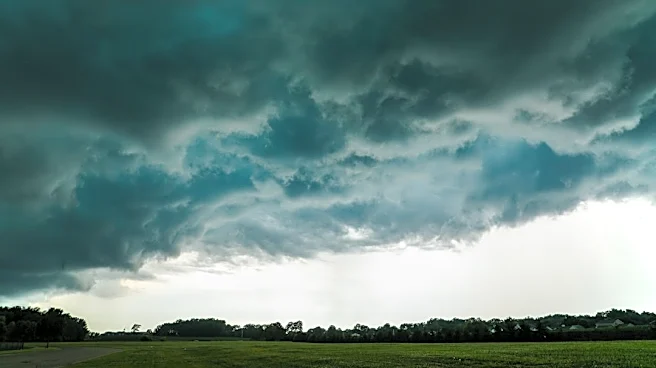

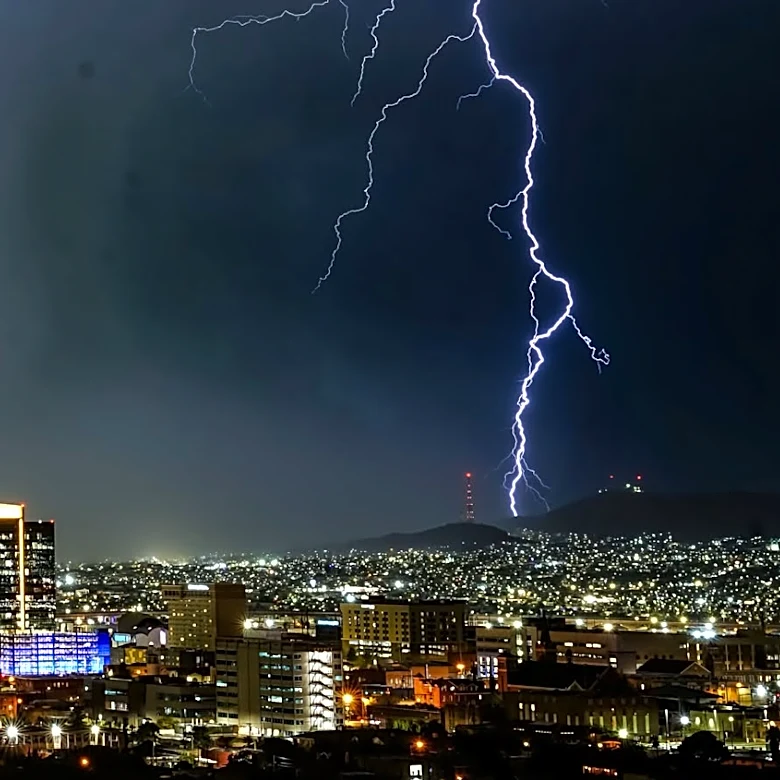


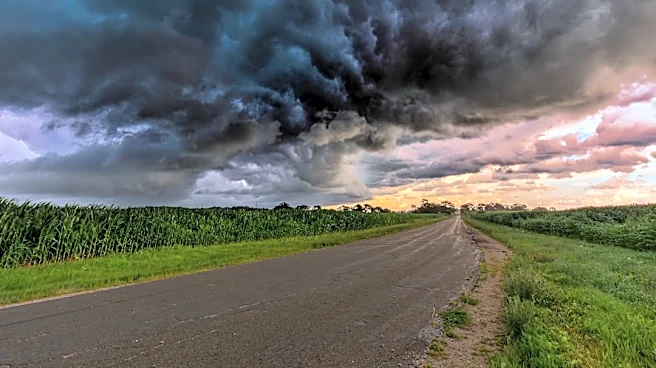
Intense thunderstorms swept through central Ohio in late August, causing dangerous and damaging flash flooding, power outages, structural damage and downed trees for thousands of residents.
Some farmers took the full force of those storms, losing their crop and cattle in the process.
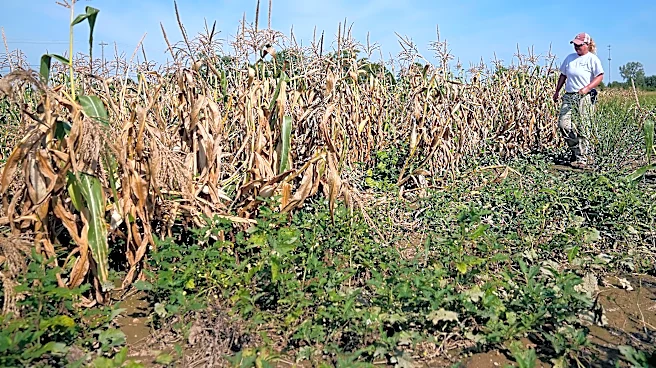
Between Aug. 16 and 30, about 5% of Ohio's corn crop was damaged, and the state saw about 3% of its soybean crop damaged either partially or in full, according to data from the USDA. There still isn't a full report on how the damage may impact production.
Jordan Hoewischer, the director of water quality and research at the Ohio Farm Bureau, said up until August, the season had been very good. Then came the storms.
"If you get a couple − 2, 3, 4 inches of rain in August,
you're going to end the season really well," Hoewischer said. "That's a really crucial time to get that water. But then when you get 10 inches, like central Ohio did, or maybe 15 inches like Perry County did in a 10-day period, then that's troublesome. That can definitely set the crops back a little bit."

The bulk of the damage from the storms was in Perry County, where New Lexington and Crooksville found themselves underwater in some areas from flash flooding, and many went days without power.
Hoewischer said too much rain can throw off the oxygen balance in the soil, preventing plants from bringing the proper nutrients up through their roots and stunting their growth, even when they're very close to maturity. He said in the last few years, farmers have had the opposite problem, often finding their crops failing in August due to lack of rain.
"When you're in business with Mother Nature, you have to understand what's going to happen," Hoewischer said.
Some apple orchards and pumpkin patches were flooded
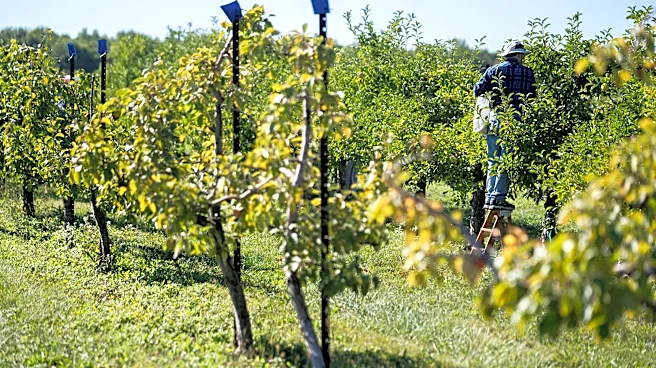
Apple orchards and pumpkin patches across the state are getting ready for the fall picking season, which usually starts in the first half of September. Some of them experienced heavy winds and rains, plus some crop loss.
Sam's Pumpkin Patch in Pickerington, 443 Hill Rd. S., lost about 50% of its pumpkin crop from flooding, said Terry Dunlap, the owner and manager of the property for the last seven years. The only thing the 20-acre farm grows is pumpkins and gords, plus some other smaller fall decorative items, so the loss of crop is causing a significant reduction in profit.
Dunlap said he's never seen a storm damage this much of his crop. To avoid having to close for the rest of the season, he's contacted other growers who have enough to share.
Gretchen Hann, the owner of Hann Farms Market in Columbus, 4600 Lockbourne Rd., said she lost a significant portion of her crop from the heavy rains in August.
In total, the property stretches 300 acres and is also farmed in part by her father. He handles row crops like corn, beans and wheat, while she handles produce items like strawberries, sweet corn, tomatoes, peppers and watermelon, most of which are available for customers to pick from the fields themselves.
Hann, a fifth-generation farmer, found her tomatoes with cracked skin, her sweet corn almost entirely underwater and her beans waterlogged. She's still allowing customers to pick what is left behind but said she warns the options are slim. In total, she lost 6 of the approximately 25 acres she dedicates annually to produce.
Other farms in the northern area of central Ohio said the storms were less impactful. Shelly Lehner, the owner of Lehner's Pumpkin Farm, 2920 OH-203 in Radnor, said they got more rain than she had ever seen before, but the winds skipped their area, so their crop was safe.
Two cows were fatally struck by lightning
John Lindsey is an agriculture teacher and has a farm just north of New Lexington. He raises mostly corn and soybeans but also has beef cattle.
Two of his cattle − who were both pregnant − were fatally struck by lightning. Both were Angus Base, which gave them extra value. Lindsey said they were "about as valuable as a commercial cow can get," going for about $5,000 each. Their calves were expected in September.
"We keep some trees in the pasture just for shade and they were both right underneath of a tree," Lindsey said. "It obviously struck a tree and then branched out to those two."
Lindsey said even now on the tree you can see the line where the lighting traveled down the trunk to the cows.
Other than the loss of some of his cattle, Lindsey said some of his soybean crop was waterlogged, but he expected it to make a good recovery with drier weather. There were also some downed trees on his property from the winds, and he had some flooding in the basement of his house, but the structural damage on his property was very minimal.
Steven Huffman, 76, is responsible for 42 acres of a 100-acre corn and soybean farm that he operates with his neighbor. The two began the collaborative system in 1990 so they could combine their equipment and cut down on some costs. His property sits about 2 miles north of New Lexington.

The storms caused flooding on Huffman's land when they passed through. Farmers often use a system of culverts − which are tunnel-like systems similar to those found near roads − to drain water efficiently. He always makes sure the 5-foot culverts are clear before it rains, but a culvert on Huffman's property was clogged with debris multiple times by the severe weather, causing four acres of his soybeans to go underwater.
"Both of those culverts were clear, but the first storm saturated the ground, and the second storm just didn't have anywhere to go but over the top," Huffman said.
He estimates the damage will cost him a bit over $2,000, which is about an eighth of his annual soybean profit. Depending on the weather through the end of the season, some of the soybeans could dry out and still be saved, but there is no way to know for sure. Up until the storms, this season had been ideal for him, with just the right amount of rain and sun.
"We have never seen water that high, that deep and that went that far," Huffman said. "It left marks clear down below us, up on a power pole that had never been close to water. It was the most water I've ever seen coming down."

Input costs are rising, and some small farms aren't insured
Crop insurance, whether paid for through the federal government's program or through a private provider, is designed to protect farmers from revenue and production costs resulting from severe crop loss. According to the USDA, 89% of the nation's major crops are federally insured.
Huffman said many small farmers don't have crop insurance because it is too expensive to rationalize, and the costs are continuing to increase annually.
Seungki Lee, an assistant professor in the Department of Agriculture, Environmental and Development Economics at Ohio State University, said the decision to have insurance is highly personal, and changes depending on the farmer.
Lee said even when damage is reported to insurance, there can be up to a year of lag time between the report and the payout, putting additional financial burdens on the farmers. He also said that as input costs like fertilizer and fuel continue to rise, the profit farmers have the chance to make is decreasing.
Huffman said with how expensive farming equipment and other input costs can be, there is a significant financial hurdle that new farmers have to get over. He inherited his property from his parents, who raised cattle and horses as well as corn and hay before they died.
"It would be really tough for somebody new to just start in doing it because even if you have the equipment and everything, you're looking at a massive amount of money for fertilizer and seed," Huffman said.
Even with insurance coverage, storm damage can be tricky for farmers to navigate financially, Hoewischer said.
"There's not a lot of profit there for the farmers altogether," Hoewischer said. "If their crop is diminished by a certain amount, and maybe it doesn't hit the threshold to get some coverage by insurance, it can hurt their bottom line, which for some of them is negative already."
Dispatch reporter Lilli Malone can be reached at lmalone@dispatch.com or on Instagram at @lillimwrites.
This article originally appeared on The Columbus Dispatch: Ohio farmers are facing profit loss after losing crop to August storms