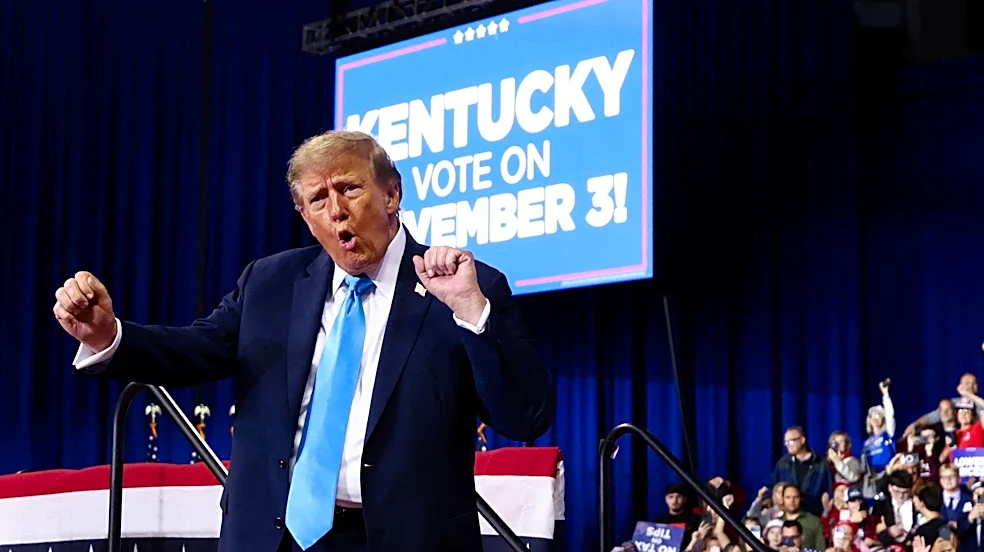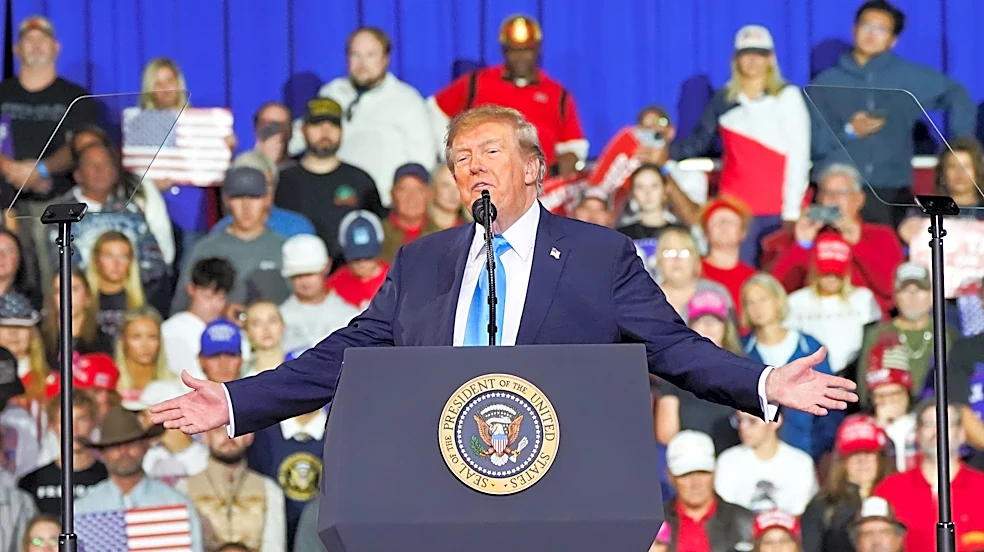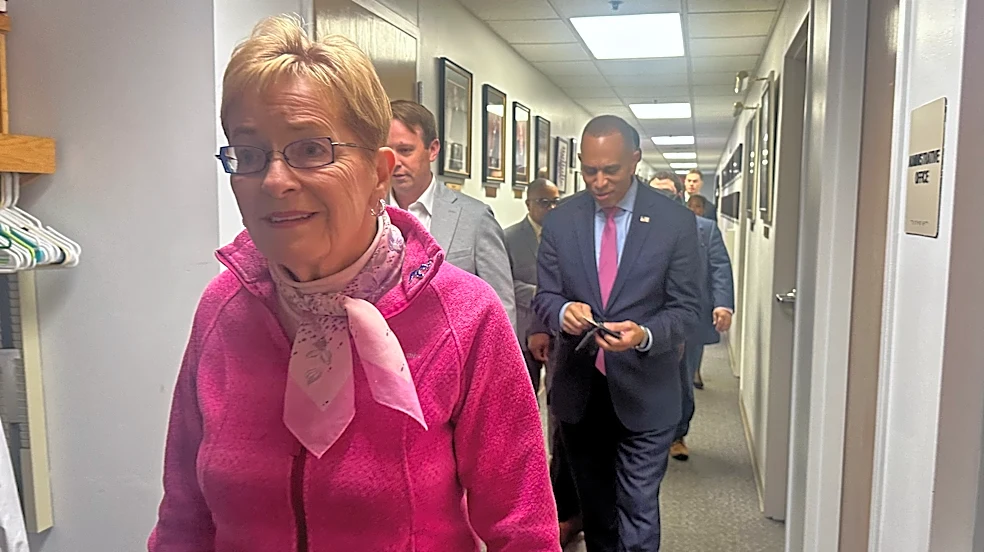


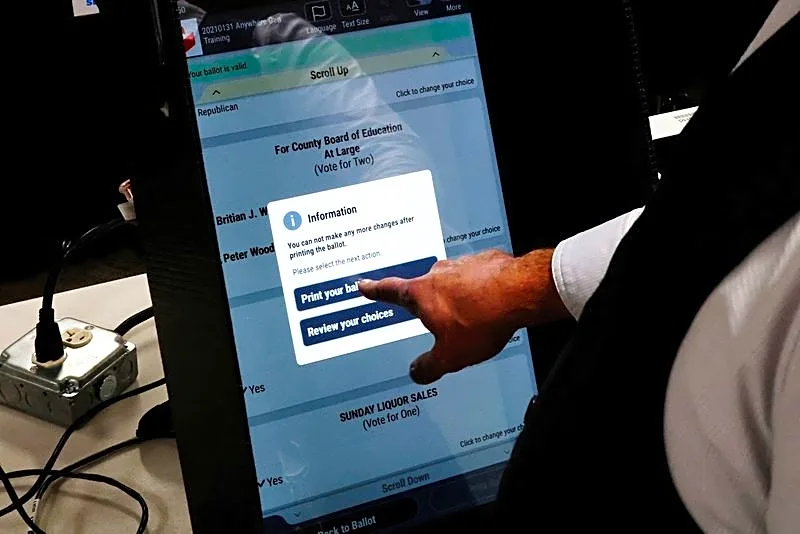



The money flowing into Ohio elections isn't just for campaign ads.
People are betting millions of dollars on the Nov. 3 election through prediction markets. Ohio's marquee races for governor and U.S. Senate have attracted more than $10 million combined on Kalshi alone.
Prediction markets aren't new. Websites such as Kalshi and cryptocurrency-based Polymarket allow users to predict the outcomes of events, from elections and foreign policy to weather and Ohio State games. But interest in election trading soared after 2024, when the markets predicted a Donald Trump win despite many polls showing a close race.
"Elections are something that are very salient," said Koleman Strumpf, an economist at Wake Forest University. "We see a lot about them. People
who trade in them can vote on them and see what's going on in the election. There's a lot of diversity in opinion on who people think is going to win. I view it as the perfect storm."

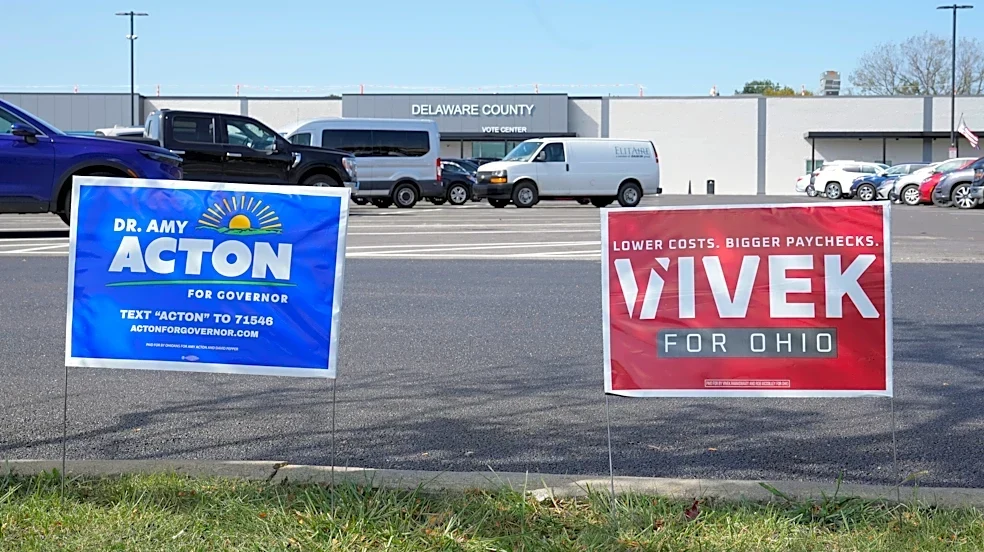
Ohio's Senate race between Sen. Jon Husted and former Sen. Sherrod Brown is among the most-traded political events on Kalshi's Midterms Hub, with more than $7.3 million wagered as of Oct. 16. The governor's race between Vivek Ramaswamy and Amy Acton has surpassed $2.7 million.
And those aren't the only options for people looking to do some election prognostication.
Polymarket and Kalshi have markets for down-ballot races, county-specific results, margins of victory and whether voters will approve a constitutional amendment requiring photo ID at the polls. Kalshi's head of research, Nicole Kagan, said the company provides an outlet for people already thinking about politics and elections.
"Politics is really important, and I think engagement in politics is important," Kagan said. "Because people do have skin in the game, they also care more."
Do prediction markets get elections right?
Brown and Acton are currently favored to win on Kalshi and Polymarket as Republicans contend with backlash over the economy and high gas prices. That means traders could earn more by backing Husted or Ramaswamy if either wins in November.
But are prediction markets reliable? It depends who you ask.
Markets missed the mark on U.S. House races in 2024 despite predicting Trump's victory, said Rajiv Sethi, an economist at Barnard College and Columbia University. The markets heavily favored a Wisconsin gubernatorial candidate who lost the Democratic primary in August. At the same time, a Washington Post analysis found that most 2026 primary candidates with 70% to 80% odds won their races.
Proponents contend prediction markets draw on the wisdom of crowds who have a financial incentive to get it right. Polls, on the other hand, represent a snapshot in time and don't aim to predict the outcome of an election − even if pundits use them to do so.
But critics question if these markets can be trusted and whether they contribute to election skepticism, particularly amid concerns about insider trading. Earlier this year, Kalshi suspended three congressional candidates for betting on their own races, Reuters reported.
State Sen. Bill DeMora, D-Columbus, recently introduced legislation to ban election betting. Another bill would prohibit public officials and state employees from using prediction markets altogether. But it's unclear if either proposal will move forward, even as Ohio fights to regulate prediction markets under its sports betting law.
"Politics is not meant to be a spectator sport," said David Jackson, a political scientist and pollster at Bowling Green State University. "Government is not meant to be something that we watch. It's supposed to be something we participate in and control."
State government reporter Haley BeMiller can be reached at hbemiller@usatodayco.com or @haleybemiller on X.
This article originally appeared on The Columbus Dispatch: People are betting on Ohio elections. Do the odds mean anything?