






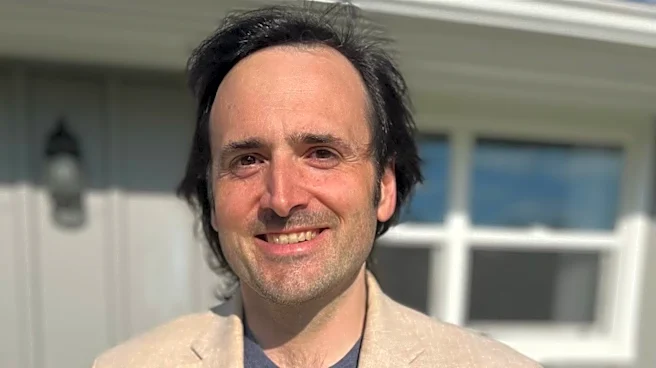
Ray Marcano is a Columbus Dispatch contributing columnist.
What should I say?
That’s the question that perplexes me during a time of grief. It’s not that I don’t want to say anything; I fear that anything I say will come across as trite.
I began asking myself, “What do I say?” because my sister-in-law recently died of the rare cancer glioblastoma. It’s the type of cancer that eats away at your brain until there’s nothing left.
My brother-in-law watched her fight for 18 months and, in her last moments, held her hand as she drifted into the wisp of the wind.
We’ll have a memorial in Ohio since that’s where most of my brother-in-law’s family lives. When he’s here, he’ll have, for a brief time anyway, a group of people who can hold him when he wants
or listen to what he needs. But any interaction comes with that nagging question: “What do I say?”
The standard go-to, “I’m sorry for your loss,” seems trite. Sure, I’m sorry because she was a wonderful woman I already miss, but I’m not nearly as sorry as he is.
“How are you doing?” is equally bad. I asked that once of an acquaintance who had lost her husband. As soon as those words left my mouth, I said out loud, “That was awfully stupid.” She smiled and agreed. How do you expect someone to be after losing her best friend and partner?
Don’t get me started on, “I know how you feel.” I have no idea what my brother-in-law goes through when he wakes up in the middle of the night, instinctively reaches for his wife and then realizes she’s not there. Trying to relate with that phrase is tone-deaf and insensitive.
There are a few more phrases, like, “She’s in a better place.” How callous. Her best place was here with the husband, children and grandchildren who made her their center.
Last December, my son-in-law, Russell Young, died after a long battle with a rare genetic liver condition. He was 47 and left my daughter a widow at 36.

I watched as Russell’s brother listened to the clichés, like, “He’s in a better place” (which he’s not; just ask my daughter). He quietly said, “Thank you,” and offered a weak smile that didn’t hide his anguish. When it was my turn, we hugged and, with his head buried in my shoulder, I said, “There are no words.”
He heaved, sniffled and said, “No. There aren’t.”
Someone grieving could read “There are no words” as disinterest in their plight, an effortless attempt to comfort someone who needs it.
When I see my brother-in-law, and we have that hug that’s a staple of sorrow, I don’t know what I’ll say.
I wish there were an easy answer.

Ray Marcano is a Columbus Dispatch contributing columnist. The longtime journalist is the former national president of the Society of Professional Journalists, a two-time Pulitzer juror, and a Fulbright fellow.
This article originally appeared on The Columbus Dispatch: 'I’m sorry for your loss.' The kind things we say when someone dies are tone-deaf | Opinion