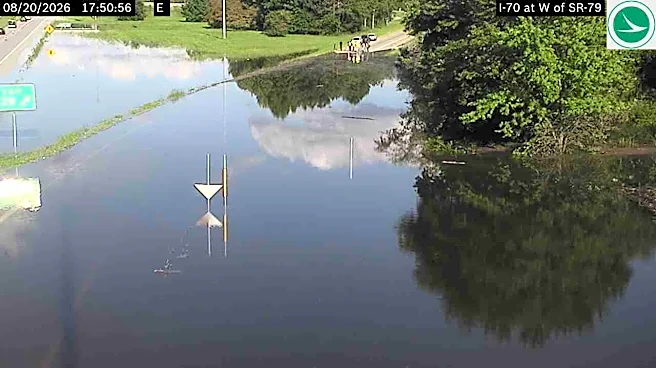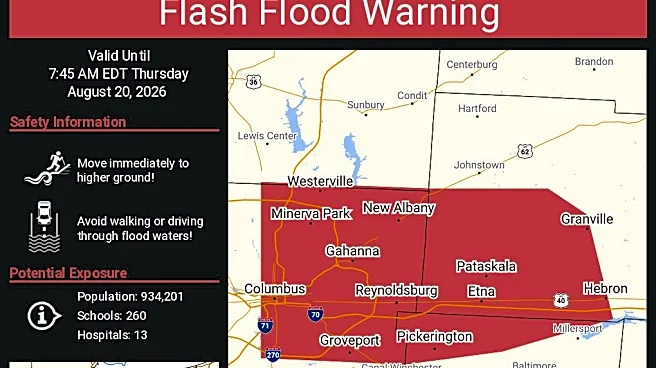



At 4:45 a.m. the morning of Aug. 20, residents of Columbus, eastern Franklin, southwest Licking and northwest Fairfield counties received a flash flood warning.
These alerts are registered as wireless emergency notifications, but not everyone receives them the same way − and some have complained that they didn't receive the alert at all.
The notifications are meant to pop up on your phone screen with either sound or vibration in the event of a significant weather warning, in a similar manner as an AMBER alert would. But your phone's settings dictate whether you'll be woken by a blaring phone siren or a soft rumble.
The Dispatch spoke to a National Weather Service meteorologist and the deputy director of the Franklin County Emergency Management
& Homeland Security to learn more about how and when weather alerts are pushed out, and how residents can make sure they have the proper notifications enabled to receive said alerts.

NWS pushes wireless alerts for considerable flash flooding
When it comes to flash flooding, not all warnings will necessarily be sent as an alert to the public's mobile phones, said Logan Clark, a meteorologist at the NWS Wilmington office.
However, those alerts can be upgraded to different categories. For example, Clark said, a "base" flash flooding warning can be upgraded to a "considerable" flash flooding warning. Once that update occurs, it triggers a wireless emergency alert for cell phones. Beyond a "considerable" warning, there is also the level of "catastrophic."
Anyone who was within the polygon that defined the flash flood area should have received alerts on their cell phones, Clark said. It is possible some residents have their alerts deactivated. Those who were outside the alert's coverage areas would also likely not receive it.
How to make sure alerts are received
Smart phone settings allow users to toggle wireless emergency alerts on or off, with weather as a specific category, Clark said.
In the iPhone settings,users can navigate to the notifications tab and toggle government alerts, including AMBER alerts, emergency alerts, public safety alerts and test alerts. Emergency alerts have a toggle to always play sounds even if an iPhone is in silent mode.

Under the notifications tab, there is a toggle for enhanced safety alerts, including earthquake alerts and imminent threat alerts.
It is unclear if an alarm will sound if an iPhone is set to Do Not Disturb, or if the setting only triggers a vibration. The Dispatch reached out to Apple for comment.
For Android users, emergency alerts can be managed by tapping the gear icon on your home screen, navigating to "safety and emergency" and then to "wireless emergency alerts." From there, toggles can be used to adjust wireless emergency settings.
People can also get alerts by way of the NOAA weather radio, Clark said. Alerts from the weather radio can be customized.
Franklin County has an additional alert notification system outside of the NWS, Thomas Page Jr., deputy director of the county's Emergency Management & Homeland Security, told the Dispatch.
Alert Franklin County is a mass notification and warning system to warn residents about emergencies, weather events and community news in jurisdictions throughout Franklin County, according to its website. Notification types and hours can be customized.
Delivery options include phone calls, text messages and emails, Page Jr. said.
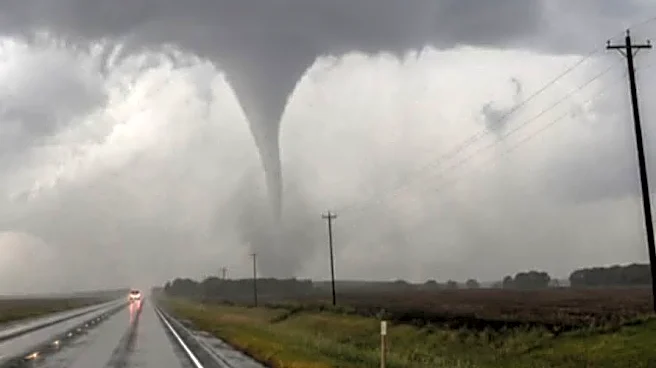
This notification system amplifies urgent NWS alerts, like the flash flood warning from the early morning of Aug. 20, Page Jr. said. EMA's alert system notified Franklin County of a tornado warning late on Aug. 15.
Alert Franklin County can also push alerts for weather events that are not categorized as an imminent threat.
Dispatch Reporter Nora Igelnik can be reached at nigelnik@dispatch.com.
This article originally appeared on The Columbus Dispatch: How to ensure you receive emergency weather alerts during floods, tornadoes