


Two charter amendments that could reshape Columbus City Council are headed to city voters this November after the council decided to advance its own proposal alongside one led by citizens.
The grassroots Our City, Our Say coalition's amendment seeks to establish district-only council elections in Columbus for the first time in over a century, something activists have pursued unsuccessfully for decades. City Council's proposal, like the Our City, Our Say amendment, would install nine district-elected members but expand the council to 13 members with four at-large council seats elected citywide. The citizen-led issue uses the existing district boundaries, which were never drawn for this system, so the council proposal would also address redrawing
the map.
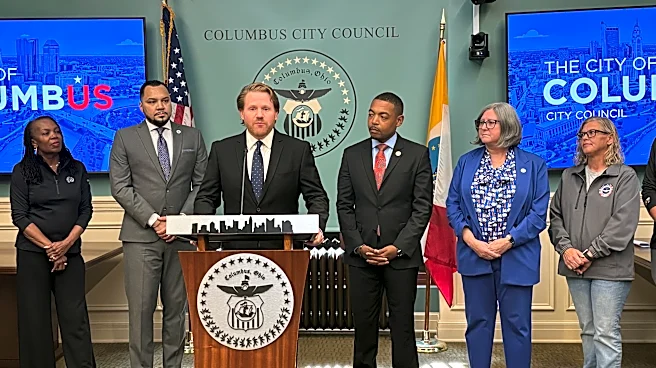
In a procedural vote at its Aug. 24 meeting, City Council signed off 8-0 on placing the Our City, Our Say amendment, Proposed Amendment No. 1, on the ballot. Then council also voted 8-0 to place its own amendment, Proposed Amendment No. 2, on the ballot. The prospect of council intervening was criticized by some activists at a hearing last week, but the move was lauded by labor leaders, some civil rights leaders and some members of the Our City, Our Say coalition.
Council President Pro Tempore Rob Dorans, who introduced amendment No. 2, said he worked hard with the City Attorney's office to make sure council's amendment does not conflict with the Our City, Our Say amendment, and rather is complementary. Some leaders from the coalition, including former council candidate Jesse Vogel, had worked toward a compromise with Dorans and council but ran out of time.

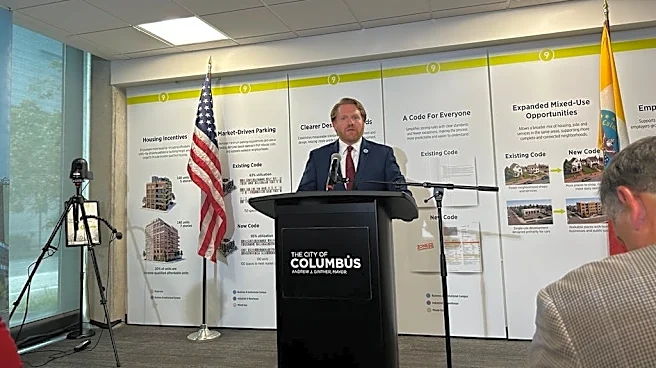
Dorans said council's measure would preserve some seats focused on citywide concerns, including housing construction, while also addressing concerns about the district map.
"We've heard from leaders in the African American community and labor leaders that these seats are important for racial representation and to have elected leaders that are focused on policy that know no neighborhood boundary," Dorans said.
Under Columbus' current system, the nine city council members must live in their respective residential districts but are elected in citywide votes. The system was approved by voters in 2018 and implemented in 2023, but critics say it's confusing and unfair. Columbus remains the most populous city in the U.S. that elects all its councilmembers by citywide vote.
Maitland Neff, a lead signature gatherer with Our City, Our Say, said the coalition does not view council's measure as standing in direct contradiction.
Vogel said the current council system doesn't make sense to voters and sows distrust, but expressed openness to the council's ballot measure.
"The concerns shared by some union leaders, faith leaders and Black community leaders we have heard throughout these discussions are genuine concerns," Vogel said. "And I believe this body's effort to incorporate those concerns is in good faith."
Council President Shannon Hardin, who supported the current system when it was conceived as a compromise, said he always saw it as an interim reform. He and multiple council members said they will encourage voters to support both amendments on the ballot.
The current district map was never drawn to be a voting map, and some Black activists have raised concerns about whether they'll be disenfranchised if the map isn't addressed. The council-led proposal would establish a citizen commission to redraw the district boundaries in 2028 and give the commission greater flexibility in balancing district populations. Dorans said it is not feasible to redraw the map ahead of the 2027 council election, when some seats will be up.
If voters pass Proposed Amendment No. 2, the additional at-large seats would be phased in two at a time in 2027 and 2029.
In a nod to its negotiations with the Our City, Our Say coalition, the council's amendment would also slightly lower the threshold to get on the ballot as a district candidate from 250 signatures to 150 signatures. This was at the coalition's request.
Councilmember Melissa Green was not present at the meeting to vote, but she indicated in an Instagram post last week that she would also support placing two complementary amendments on the ballot.
In addition to these council reforms headed to the ballot, Dorans announced he will introduce campaign finance reform legislation at the next council meeting on Aug. 31, with a vote expected in September. Dorans is seeking to tie Columbus' campaign contribution limit to half of the state's limit and cap in-kind contribution limits at twice the state level.
Government and politics reporter Jordan Laird can be reached at jlaird@dispatch.com. Follow her on Instagram and Bluesky at @LairdWrites.
This article originally appeared on The Columbus Dispatch: Two charter amendments overhauling Columbus City Council head to voters