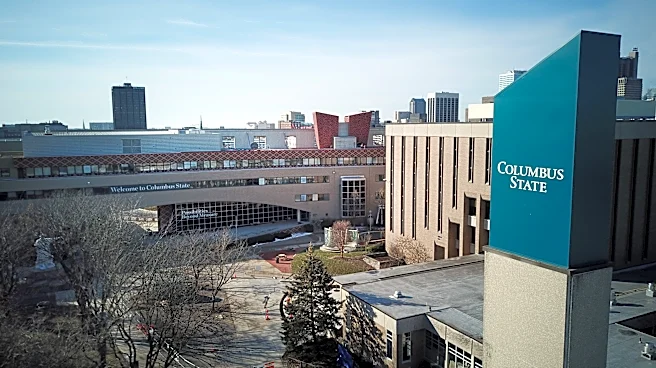

Columbus State Community College is expected to vote July 23 on a $95 million levy to provide free tuition to all Franklin County high school graduates.
The Dispatch reported on July 16 that Columbus State
is proposing a 10-year, 1.9-mill levy that would generate $95 million annually. It would cost homeowners an estimated $67 per $100,000 of home value, based on unofficial estimates. Columbus State is the largest community college in Ohio with more than 41,000 students a year, about two-thirds of whom are Franklin County residents.
The Columbus State board of trustees is expected to vote on the proposal at their 6 p.m. July 23 board meeting in order to place it on the November ballot, according to the meeting agenda.
Columbus State's proposed tuition-free program would cover six semesters and is designed to be widely available, with few requirements other than enrolling at Columbus State within a year of high school graduation and filing a Free Application for Federal Student Aid.
The levy would also fund tuition discounts for all other Franklin County residents wanting to attend Columbus State. A full-time student taking 30 credit hours could save $1,000 per academic year. Students with more or fewer credit hours would save at proportional rates.
The program is modeled off the Columbus Promise, which launched in 2022 as a college access program for Columbus City Schools students. The program – led by the school district, the City of Columbus, Columbus State Community College and the college access program I Know I Can – allows any Columbus City Schools graduate to attend Columbus State tuition-free for six semesters. Like the Columbus Promise, Columbus State's new program would be available to students regardless of high school or family income.
Columbus State does not currently receive operating support from a local levy. The Ohio General Assembly paved the way for the state's community colleges to seek funding for permanent improvements from voters at the ballot in 2019, and it changed state law last year to enable community colleges to seek a ballot issue for operating funding.
Other levy funds would go toward expanding instruction, tutoring, student support and programs that connect students to work experiences, particularly in academic programs tied to high-wage and high-growth careers and upgrading classrooms and laboratories.
Opinions differ among local leaders on levy
Columbus Mayor Andrew Ginther said in a statement that the ballot initiative would help build the future of central Ohio's workforce.
"It's not right to tell our youth that the time to invest in them is later," Ginther said in a statement. "While removing the financial barrier to education doesn't guarantee success, it does guarantee every student has the opportunity to succeed, and that is an investment in the future of our entire region."
On July 21, former Columbus mayor Michael Coleman told The Dispatch that Columbus State "should put the brakes on" the proposal, saying there wasn't enough community engagement for such a large levy.
"There's a tradition of public dialogue to help shape whatever the proposal ended up to be," Coleman said. "This has skipped all that."
Columbus City Council President Shannon Hardin said July 23 he thinks if it were on the ballot, he would vote for it, but that he has been hearing community concerns around timing. Hardin previously said on social media that he disagreed with Coleman and said that he was "here for any conversation about sustaining and expanding the Columbus Promise"
"Not if, but when," Hardin said. "I think that the (Columbus State) board and Dr. Harrison are taking all those things in conversation. I think (Coleman's) main point is that more community conversation is never a bad thing – and I agree with that."
Hardin spearheaded the launch of the Columbus Promise and has championed its two-fold mission of increasing college-going among Columbus City Schools graduates and meeting the region's growing need for a skilled workforce.
Columbus Promise, which is funded through the city and private philanthropy, has been extended through the high school graduating class of 2027 but does not have continuing funding for future classes. City leaders launched a campaign last February to fund the next phase of the Columbus Promise.
In a statement, Columbus City Schools spokesperson Mike Brown said that the Columbus promise "is a program that clearly working" and that "CCS is happy to be a part of any future public conversations"
"Future funding decisions that go to the ballot must be carefully discussed to ensure balanced sustainability, impacts on K-12 funding, and many other local human service needs," Brown said in a statement.
Franklin County Commissioner Kevin Boyce said that "whenever you are proposing a levy or tax there should be the fullest extent of conversation in a public way" that will help what the ballot proposal will actually be. He said Columbus State doesn't "have a proposal on the table, they have a concept on the table," and that until he saw ballot language, he's "going to be skeptical of a levy or tax on anyone."
“They're going to have some work to do to educate the public – at that point you're educating them what the proposal is, not giving them space to give a lot of feedback,” Boyce said.
Dispatch reporter Jordan Laird contributed to this report.
Cole Behrens covers K-12 education and school districts in central Ohio. Have a tip? Contact Cole at cbehrens@dispatch.com or connect with him on X at @Colebehr_report.
This article originally appeared on The Columbus Dispatch: Columbus State set to vote on free tuition levy on November ballot