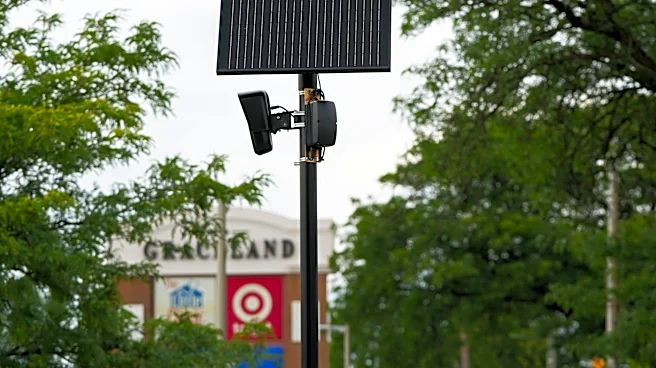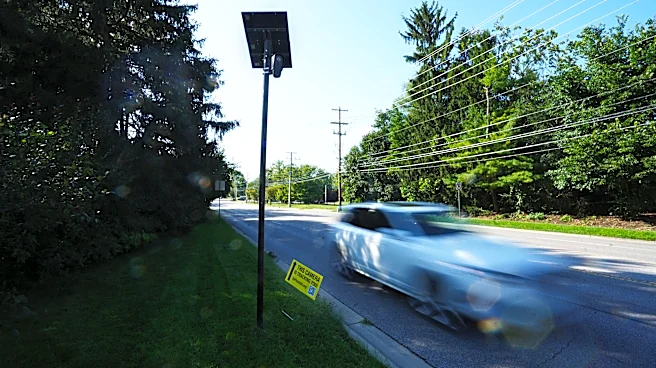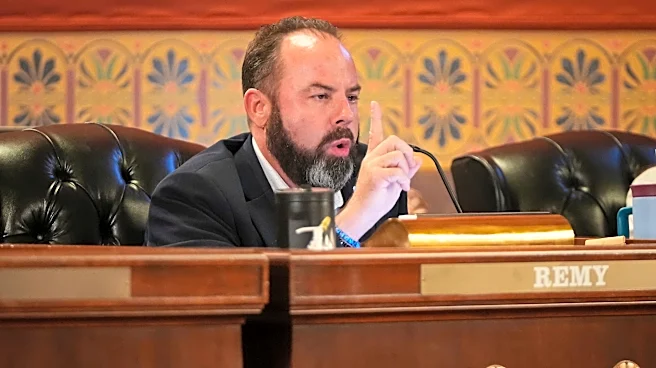










The chair of Columbus City Council's Public Safety Committee said he is still taking the temperature of community leaders but will bring forward legislation on the city's use of Flock Safety automated license plate cameras by the end of September.
Councilmember Emmanuel Remy shared his timeline for taking action on the controversial surveillance technology at the council's meeting on Aug. 31. Seven other council members, a majority of the nine-member body, told The Dispatch less than a week ago that they are inclined to end the city's contract with Flock Safety for license plate cameras before it's up in December. But several members also said they are deferring to Remy as public safety chair to bring forward legislation for them to consider.
"It is my commitment to responsibly steward this public conversation and make sure we have any information and options necessary to move forward," Remy said during the meeting. "I believe some of my colleagues may wish to move away from this technology altogether. Some may wish to move away from the current vendor. Others would be open to the technology under the right circumstances and with the right safeguards."
Remy said he can't speak for his colleagues, but he wants the public to understand the options on the table. He said it's his goal for the council to take action in September.
Remy praised Mayor Andrew Ginther for acting quickly on Aug. 28 to implement new safeguards on the city's Flock camera network. Remy said this came a few hours after he and Public Safety Committee Vice Chair Tiara Ross met with Ginther and Police Chief Elaine Bryant to go over legislation Remy's office has drafted.
Remy said he welcomes the Ginther administration proactively taking these steps, but he still plans to codify restrictions into law.
"Regardless of how we ultimately move forward with Flock, I intend to introduce legislation establishing safeguards on government surveillance more broadly," Remy said.

Councilmember Lourdes Barroso de Padilla said she still has questions about the technology, but she thanked Remy and public safety leaders for moving these safeguards forward.
"While I'm not 100% there, I want to acknowledge the work and say thank you," Barroso de Padilla said.
When he announced new safeguards on the city's Flock camera network, Ginther said the city should not have to choose between protecting civil liberties and protecting people from violent crime. Columbus police leaders have said Flock's automated license plate reading cameras are a powerful tool for solving homicides and other crimes and finding missing people.
Council President Shannon Hardin told The Dispatch ahead of the Aug. 31 council meeting that Flock Safety has lost the public's trust. Hardin is challenging Ginther for mayor in 2027.
"Flock is a flawed company that has misguided a lot of us, and I think has lost the trust and lost the faith of the public," Hardin told The Dispatch. "I would strongly advise the administration to look for other companies and tools that could provide a similar service that don't have this type of track record."
Remy told The Dispatch there is still more work to do on the proposals he's working to draft, and he wants to meet with community leaders, including in the immigrant community, to hear from them again now that more safeguards are in place.
One of the concerns residents and council members have around Flock license plate cameras are concerns the data will be used for immigration enforcement. A city audit found more than 15,000 possibly immigration related searches of city data.
At a hearing on Aug. 10, a majority of residents and activists who spoke testified in support of taking down Flock cameras, although a few supported keeping the cameras, saying they help reduce crime.
Later in the council meeting on Aug. 31, Barroso de Padilla and Councilmember Melissa Green, the members who have taken the hardest line on Flock cameras, voted against a contract for a different police tool. However, City Council voted 7-2 to approve a $140,000 contract renewal with Pen-Link Ltd.
The company provides a software investigative tool to Columbus police that compiles data, including from cell phones, obtained via a warrant, Deputy Chief Robert Sagle told council. Barroso de Padilla and Green said they still had too many questions about how the technology works.
Government and politics reporter Jordan Laird can be reached at jlaird@dispatch.com. Follow her on X, Instagram and Bluesky at @LairdWrites.
This article originally appeared on The Columbus Dispatch: Flock camera legislation to be presented to Columbus City Council