









Interesting things get discovered while looking for other things.
Case in point: What started as a quest for historical background on the state of Lake Erie fishing morphed into a hunt for how the smallest, but reputedly most productive of the Great Lakes, ranks currently as an angling destination.
One finding was particularly unanticipated.
THE GREAT OUTDOORS: More on Ohio hunting and fishing
The website FishingBooker.com recently posted 2026 lake rankings of U.S. fishing destinations by the number of charter trips booked through the site, and among all lakes within the continental United States, Lake Erie surprisingly came in a mere second, behind Lake Michigan (a personal favorite).
FishingBooker maintained that its top two booking destinations
easily bested those that ranked lower, which – in descending order – included Table Rock Lake in Missouri, Lake Texoma in Oklahoma and Texas, Lake Ontario, Lake Huron, Lake Superior, Lake Pontchartrain in Louisiana, Lake Tohopekaliga in Florida and Lake St. Clair in Michigan.
Lake Erie, the site averred, has no parallel when it comes to walleye abundance.
Still, in terms of charter traffic, Lake Michigan has advantages in variety of fish species and number of large population centers, including Chicago, Milwaukee and Green Bay, along with a strong peppering of vacation destinations on the shores of west Michigan.
Notably, six of the 10 busiest destinations were either Great Lakes or, in the case of Lake St. Clair, a connector between two of them.

What prompted the search was a recent report in The Guardian, an England-based newspaper with a strong web presence in the United States, about efforts to maintain dwindling whitefish numbers in the Great Lakes.
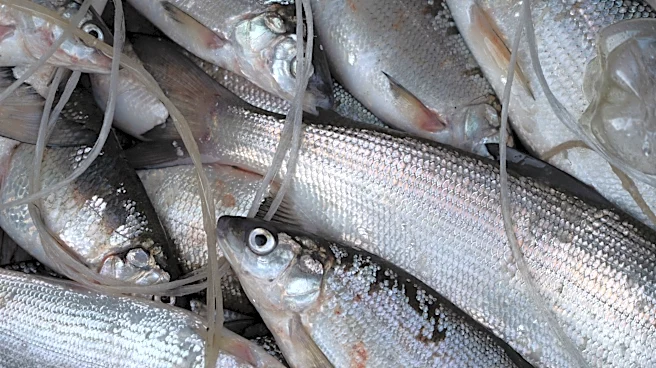
In the upper, colder lakes, the presence of invasive mussels is apparently harming whitefish reproduction, and that is no small matter. Whitefish are a preferred menu item and have been for a long time.
A good chunk of the whitefish article discusses the situation in Lake Erie, where the species has been scarce for decades, long before quagga and zebra mussels arrived. Overfishing and water degradation did them in.
“It’s amazing that any cold-water fish – whitefish, burbot – made it through the pollution of the 1950s and 1960s,” said Travis Hartman, fish biologist and Lake Erie fisheries program administrator for the Ohio Division of Wildlife.
Lake Erie’s commercial whitefish catch peaked at 1.6 million pounds in 1948 and reached 0 from 1971 through 1986. The whitefish didn’t wholly disappear, however, and an inexplicable hatch in 2003 led to a temporary swelling in the commercial catch far below peak years.
FOR BETTER SEARCHES: Prefer The Dispatch on Google
Since then, whitefish numbers have slipped to negligible, though unlike another once abundant relative, cisco, whitefish hang on. The commercial take of ciscos, another cold-water food fish, peaked in the Ohio waters of Lake Erie at 13.4 million pounds in 1917 and plunged to 0 in 1966.
No known reproduction of ciscos takes place in Lake Erie. The occasional ciscos that turn up have been traceable to the upper Great Lakes, Hartman said.
Lake Erie held two types of ciscos commonly caught and eaten. One of the two, a so-called shallow-water variety, was discovered in a Pennsylvania reservoir. They were descendants of hatchlings from Lake Erie released decades ago.
Attempts are being made to restore the descendants of those fish to the eastern part of the lake where the water is deeper, cooler and holds oxygen all year.
Whether or not legendary blue pike existed as a species distinct from walleye, it was an important food/recreational fish found only in Lake Erie that’s now gone.
This article originally appeared on The Columbus Dispatch: Lake Erie, other Great Lakes rank among top fishing destinations