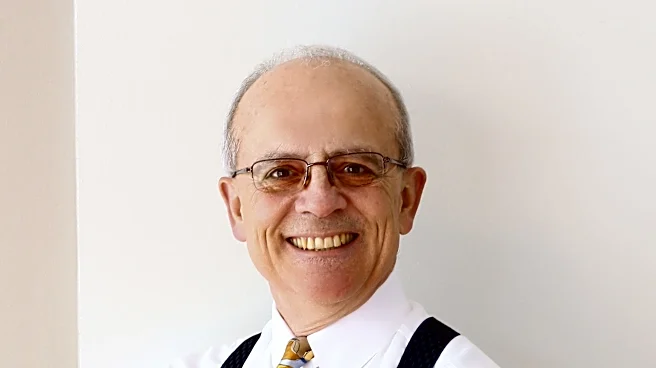



Jack D’Aurora is a retired business lawyer and regular contributor to The Dispatch.
Vivek Ramaswamy is intelligent, articulate, and able to create wealth, but it's clear he’s out of touch with what so many Ohioans need in education and healthcare.
His interview last December with NBC4's Colleen Marshall was revealing. When discussing academic excellence, Ramaswamy said, “we have to go further in the direction of school choice” and we “have to improve public schools.”
Regarding school choice, in 2025 Ohio’s five voucher programs cost over $1 billion. The EdChoice Expansion Scholarship Program accounted for approximately 45% of that amount and benefitted 100,941 students.
But what about the kids, Marshall asked, in the 11 counties that have no private
schools?
Vouchers do nothing for them. Ramaswamy believes new private schools will somehow be spontaneously created – “once you actually have universal school choice, that actually increases the creation of those private alternatives.” Really?
Tell me how that works.
Ramaswamy's arithmetic problem
As for public schools, Ramaswamy proposes on his website, among other things, to raise teachers’ pay and academic standards, and promote healthy meals and daily physical education. All good ideas, but what's the plan for funding these improvements for Ohio’s 1.5 million public school students?
Ramaswamy doesn’t tells us, nor does he address the legislature’s failure in the 2026-2027 budget to fund education in accordance with the Fair School Funding Plan, passed in 2021. Based on the plan, funding for K-12 public schools should have been increased by $3.04 billion. The actual increase was $281.9 million, meaning the statehouse missed its own mandate by $2.75 billion.
All we know from Ramaswamy’s website is that he wants to “slash property taxes immediately.”
Escalating property taxes are a huge problem, but if Ramaswamy wants to slash property taxes- by the way, state government doesn’t control property taxes− and doesn’t increase state funding, where does the money come from to improve public education? His plan is akin to alchemy.
Ramaswamy's problem with America's great safety net
Ramaswamy’s disparaging view of Medicaid, Medicare, etc. – created as part of President Lyndon Johnson’s Great Society – was revealed during a 2024 interview with Ezra Klein of the New York Times.
Referring to these safety net programs, Ramaswamy said: “I think if you go back to Lyndon Johnson’s Great Society, this is a kind of modern original sin in American politics of the creation of a nanny state.”
When asked, “Were Medicare and Medicaid mistakes?” he was blunt. “I believe they were.”
Three million Ohioans – 25% of the state’s population – receive Medicaid. It’s estimated that the work requirement in last year’s “One Big Beautiful Bill Act” will cause 356,00 Ohioans to lose their health care coverage. This is in addition to at least 113,000 Ohioans who lost health coverage this year after the same bill allowed tax credits in the Affordable Care Act marketplaces to expire.
When visiting Ross County last December – 32% of the population was on Medicaid – Ramaswamy was asked what he plans to do about healthcare and the Supplemental Nutrition Assistance Program for low-income Ohioans. His response: “Make sure the low-income part of the state isn’t low income.”
A beautiful idea, but exactly how does this happen? Curing poverty that has existed for generations isn’t remedied overnight.
Ramaswamy has the privilege to be out of touch
Ramaswamy is luckier than most. You might say he enjoyed a privileged life growing up.
His parents were married and professionals. He attended a Catholic high school, then Harvard University and Yale Law School. After graduating from Yale, he worked for a hedge fund firm, then founded his own biotechnology firm and is a billionaire.
But many Ohioans are in a different lot.
According to Policy Matters Ohio, in 2025 eight of the 10 most common occupations in Ohio paid their median worker less than what’s required to afford the basic cost-of-living for a family of three. We’re talking about 931,910 Ohioans or 16.8% of the total workforce.
How Ramaswamy sees education and healthcare is necessarily influenced by his own station in life. He is an accomplished individual, and I would like to think he’s capable of empathy and adopting a broader perspective, but his statements to date do not provide evidence that he understands what many Ohioans need.

Jack D’Aurora is retired business lawyer and regular contributor to the Dispatch and produces the podcast, JUSTUS with Jack & Gonzo.
This article originally appeared on The Columbus Dispatch: Ultra-privileged Ramaswamy's policies are out of touch with our needs | Opinion