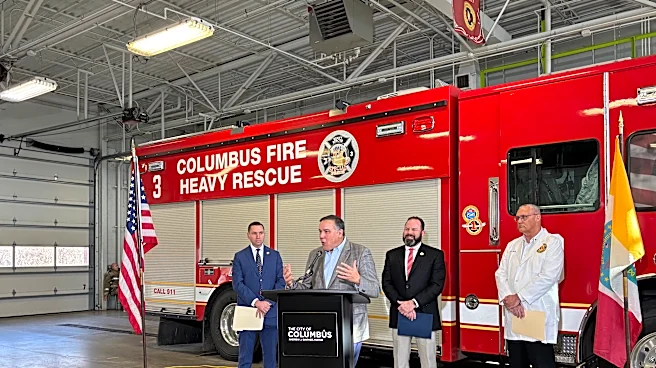

Columbus officially launched its Nurse Health Care Navigation Line on Aug. 31, an extension of the city's emergency call centers designed to more efficiently provide appropriate care to callers who may not need the help of an ambulance or a trip to an emergency department.
Previously, 911 dispatch operators were trained to assume that every situation called for an ambulance. When residents call 911, operators now have the option to transfer nonemergency calls to the nurse line, where they can discuss care options for their specific needs, according to Mayor Andrew J. Ginther, who first announced the plans in January. This new method reduces costs for the patient and frees up resources for emergency responders.
"They will continue to use established
medical protocols to determine what kind of response you need," Ginther said. "If it's an emergency, we'll send emergency medical help, but if your situation meets specific clinical criteria, you may now be connected directly with a nurse. That nurse can talk with you about what's going on, assess your needs and help connect you with the care that makes the most sense for you."
In 2024, 65% of the total 145,000 emergency calls resulted in emergency providers giving medical care. Of those that received care, 55% of them were transported to the hospital for further medical attention. In the rest of them, emergency services were dispatched, but not needed for the situation.
"Those calls are important," Ginther said. "Those residents still need help, but we have an opportunity to provide some of them with a different kind of help. That's where the Nurse Health Care Navigation Line comes in."

The program soft-launched in July, and in its first 31 days of operation, 131 total calls for help were transferred to the nurse line, according to Lowe. More than 50% of those callers had their medical needs addressed over the phone without a trip to the doctor or ED.
Lowe said in its first call, the nurse line helped a woman who had a spider bite, allowing an ambulance to aid instead a 70-year-old man who had passed out.
"You will hear us repeatedly say our goal is to match appropriate resources to the patients in the time frame they are needed," Lowe said. "The nurse referral line is our latest tool in that ability to provide the right care to each of our patients when they call."
In the first 24 hours after you end a call with the Nurse Health Care Navigation Line, a nurse will call you again to follow up on your condition and make sure the issue has been resolved, providing further assistance where needed.
Dr. Robert Lowe, medical director for the Columbus Division of Fire. said they've received overwhelmingly positive feedback from users so far.
The company Columbus is partnering with, Crosswalk Health, has already launched similar programs in cities like Louisville and Indianapolis with successful results. The health care professionals who operate the Nurse Health Care Navigation Line are not centrally located. They have, however, been trained on the best areas in Columbus for patients to access medical care depending on their needs.
Jon Collins, CEO of Crosswalk Health, said the company works hard to localize its response to callers' medical needs, even when they aren't initially familiar with the area.
"A lot of it has to do with partnering with [first responders], taking their lead," Collins said. "They live in Columbus. They know Columbus. They have a relationship with the community, so they also come in as part of our implementation process to really identify what the resources are that patients maybe don't know."
Ginther emphasized that anyone experiencing an emergency should still call 911. The only thing that has changed is how calls are handled − not how accessible resources are to the public.
"When we safely connect someone with appropriate care without sending an ambulance, we help keep our firefighters, paramedics and emergency vehicles available to respond to heart attacks, strokes, serious crashes, fires and other emergencies where every second matters," Ginther said.
Once they have been moved to the nurse line, callers can also opt to be transferred back to the main line if they think it would better suit their situation. Users don't front any of the costs from getting medical attention through calling.
Dispatch reporter Lilli Malone can be reached at lmalone@dispatch.com or on Instagram at @lillimwrites.
This article originally appeared on The Columbus Dispatch: Columbus launches nurse line to handle nonemergency 911 medical calls