







The $21.5 million earmarked for new fire apparatuses in Columbus Mayor Andrew Ginther’s 2027 capital budget will replace some needed emergency vehicles, but the division will need ongoing funding in coming years to replace its aging fleet.
City administration is proposing $18 million a year in funding for vehicles going forward. Fleet management and the fire division estimate the city needs $18 million to $25 million each year to fund a continued replacement schedule for the aging fleet, division spokesperson Brian Barnhart said.
Steve Stein president of Columbus Fire Fighters Union Local 67 of the International Association of Fire Fighters, called the proposed 2027 funding “proof positive that advocacy works.”
“There’s broad support in the community
for Columbus firefighters,” Stein said. “This is obviously a large commitment, and we’re appreciative, but I think we also recognize that this commitment is coming from us raising our voices and being heard.”
Stein said the Division of Fire's challenges with equipment and facilities have largely come from a failure to properly fund repairs, maintenance and new vehicles. Additionally, vehicle costs has risen over the years, and Columbus and other cities have faced trouble with long wait times to receive orders.
“The money might be appropriated last week, but the lead time actually takes two and a half to three years,” Stein said. “It’s not like a car, where you can just drive it off the lot.”
The Division of Fire declined to provide anyone for an interview about staffing and equipment issues. Instead, spokesperson Barnhart provided written responses to questions from The Dispatch.
The division again disputed criticism alleging that staffing and equipment shortages have significantly affected response times.
“Fire has ensured all citizens have responsive crews/apparatus available for their emergencies,” Barnhart said in the written response.
Barnhart said Ginther and the finance department are working on securing more funding in addition to the $21.5 million.
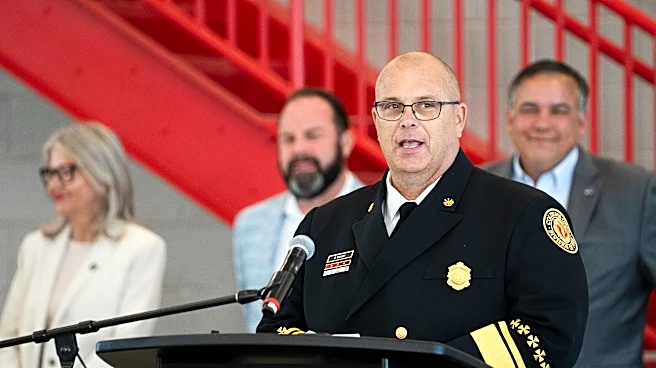
The $21.5 million next year will fund eight engines, two ladder trucks and more than 10 medic vehicles, interim Chief David Baugh said in remarks to the media shortly after the new capital budget was announced.

Additionally, $3.5 million will go toward renovating division buildings. Barnhart said the fire and finance departments will collaborate on projects involving roofs, paving, windows and building security. The city will review the projects to determine which to prioritize, and the timelines will depend on the bidding process and the schedules of contractors once the city selects them.
The division started construction this month on the roof of Station 18 at 1630 Cleveland Ave. in South Linden, which collapsed in early May. Over the summer, the roof of the station was covered with a blue tarp.
A contractor was set to fix the roof before it collapsed, Barnhart said previously. Firefighters continued to work out of the station with that section of the building cordoned off.
The fire division and fleet management are working to increase their parts inventory so that fire vehicles can be repaired faster with less down time.
The budget doesn’t address issues with staffing within the division. Firefighter overtime has become a point of contention in the budget process, with Council President Shannon Hardin introducing two pieces of legislation aimed at restricting how Ginther’s office budgets.

Ginther’s 2026 budget sharply scaled back overtime budgets for the fire and police divisions. Columbus budgeted $9.5 million for the fire division, and as of Oct. 16, it had spent nearly $17 million. The city is projected to go over budget on police and fire overtime by at least $23 million this year.
After a groundbreaking ceremony for a new Columbus police substation at Easton Town Center on Oct. 19, Ginther said he did not believe the overtime budget set the fire division up to fail.
"I think we had some very aggressive goals, and we are learning from those," Ginther said.
Hardin’s legislation would call for the city auditor to estimate police and fire overtime costs ahead of time to inform the 2027 operating budget.
Stein said many firefighters enjoy overtime opportunities, but they generally do not want to be called in to work on holidays or days they expected to have time with their families due to low staffing. That happens more for paramedics, which are in high demand, and firefighters on specialized teams, he said.
Stein said he would like to see more than one fire academy class next year to serve the growing city and to replace retiring firefighters. After the Oct. 19 groundbreaking ceremony, Ginther also said he would like to see more firefighter classes and called it a priority for next year's budget.
Stein said staffing levels in the fire division are better than they once were.
“You go back to COVID, 2020-2021, I think our staffing is in a better place today than it was then,” Stein said. “If we don’t continue to hire as aggressively as we did in ’23 and ’24, then we’re going to be right back there very quickly because people are retiring every year.”
Public safety and breaking news reporter Bailey Gallion can be reached at bagallion@dispatch.com.
This article originally appeared on The Columbus Dispatch: Columbus earmarks $21.5M for fire trucks, but aging fleet needs more