




David J. Jackson is a professor of political science at Bowling Green State University.
The medical backgrounds of both of Ohio’s major party candidates for governor are playing a significant role in the race to become Ohio’s next chief executive.
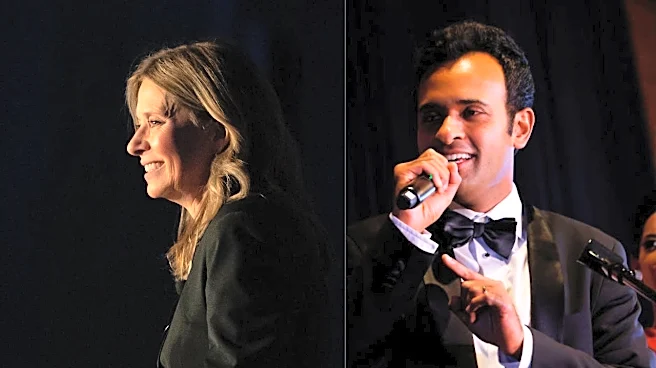
It was probably inevitable when Ohio Democrats nominated Dr. Amy Acton as their candidate for governor that the campaign would include a re-litigation of the state’s response to the COVID-19 pandemic.
After all, Acton was director of the Ohio Department of Health during the pandemic, and Republican nominee Vivek Ramaswamy’s campaign has made attacking her for that a major part of their campaign.
For their part, Acton’s supporters are swinging back regarding Ramaswamy’s pharmaceutical industry ties.
New
data from the BGSU Poll sheds some light on the potential role of COVID-19 and being involved in the pharmaceutical business in this year’s race for Ohio governor.
The poll is a web-based survey of 1,000 likely Ohio voters conducted from Sept. 1 to Sept. 10. The poll has a margin of error of plus or minus 4.0 percentage points.
We asked voters if Acton’s service during COVID-19 would make them more or less likely to support her and found that 40% said it would make them less likely, while 33% said it would make them more likely.
An additional 22% said it would not influence their vote either way, and 4% said they did not know enough to have an opinion. This suggests that Dr. Acton’s service during the pandemic is hurting her electoral prospects, but not doing so by very much.
The effect of political party on responses to this question is also quite telling. Fully 74% of Republicans said it would make them less likely to vote for her. It seems unlikely she was going to win many of those voters anyway, as only 5% of Republicans said they plan to vote for Acton, which is the same percentage who said they plan to vote for the Libertarian candidate for governor, Don Kissick.
On the other hand, 39% of independents said Acton’s service during COVID-19 would make them less likely to vote for her, while only 24% said it would make them more likely. This could be a problem for her among these important potential swing voters.
Ohioans have moved past COVID
We also asked voters to rate the performance of Ohio’s government leaders in responding to the COVID-19 pandemic. Fully 44% said it was good or excellent and only 22% said poor. Interestingly, 11% said that they just do not want to think about the COVID-19 pandemic anymore.
Clearly, the majority of Ohio likely voters either think Ohio did a good job with COVID-19 or just do not want to think about the pandemic anymore. This is good news for the Acton campaign, in that too much focus on COVID-19 from the Ramaswamy campaign may create a backlash.
On the other hand, Vivek Ramaswamy’s background as an entrepreneur and investor, including in the pharmaceutical business, does not appear to be doing him much good either. Just 32% of respondents said this background would make it more likely they would support him, while 40% said it would make it less likely. Acton’s backers have accused Ramaswamy of selling a drug he knew did not work to Alzheimer’s patients. However, according to WKRC-TV, while Ramaswamy promoted the drug’s possible usefulness on national television, research on it later stopped and the drug never reached the market.
Karl Rove, who helped George W. Bush win the presidency twice, famously argues that the best way to defeat your opponent is not to go after them for their apparent weaknesses, but instead to attack them for their perceived strengths.
Both Acton and Ramaswamy appear to be following this plan in Ohio in 2026, with Ramaswamy attacking Acton’s medical credentials and Acton going after Ramaswamy’s allegedly shady pharmaceutical business practices.
It is impossible to predict how all of this will turn out, but it is worth noting that medical professionals hold the second-highest net favorability ratings of any person or entity we polled (+47%), while opinions of billionaires polled the worst (-41%). Will that be enough to turn red Ohio blue in 2026? That is for the voters to decide.

David J. Jackson is a professor of political science at Bowling Green State University. His primary research interest concerns the interactive relationship between politics and popular culture.
This article originally appeared on The Columbus Dispatch: Our poll shows Vivek Ramaswamy is barking up wrong tree when it comes to COVID | Opinion