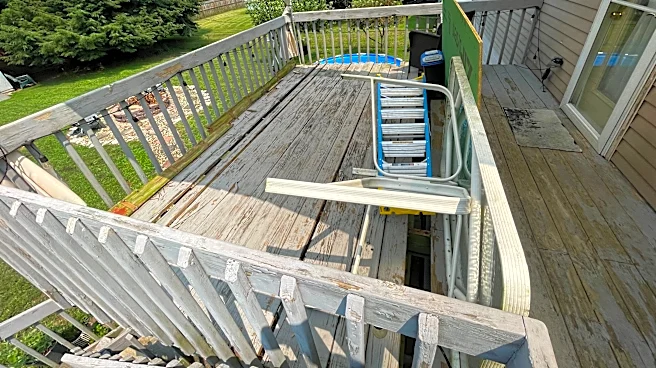







On the hottest, most humid day of the summer, when smoke from Canadian wildfires was thickest in central Ohio, Daughter No. 3 and I were ripping up deck floorboards.
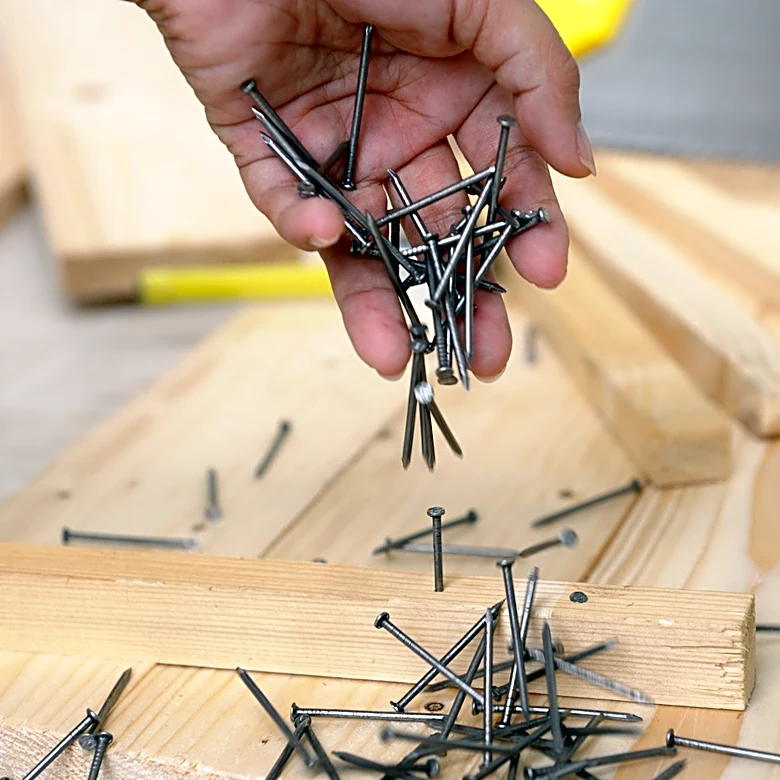
Wearing long pants and gloves to protect against splinters and rusty nails, we also wore hats and sunscreen to protect against the blistering sun, as well as safety glasses and hearing protection because we were swinging hammers against steel pry bars to pull up the boards.
It was challenging, humbling work in extreme conditions, and it renewed my immense appreciation for the hard-working laborers who do such jobs every day. I call it humbling because I left the job site each day exhausted and with aching knees and sore muscles. They became constant reminders of how grateful I am that
other people are willing and able to do it daily.
Our youngest daughter and I have worked on and off since that day in July to rebuild the second-story deck attached to the 40-year-old home of Daughter No. 1. And when I say that “we” did this, I mean that our youngest daughter was the supervisor and lead builder.
I was the “hired” help – paid primarily in baked goods – and gopher, which allowed the supervisor to focus on designing the addition of some joists and posts that would increase the structural integrity and allow us to replace aging treated lumber with composite decking boards.
We also were seeking ways to provide more privacy and reduce the intense impact of the sun on this unshaded, west-facing deck. More than a decade ago, when our oldest daughter bought the house, she soon realized that relaxing on the deck in mid to late afternoon was nearly impossible because of the direct hit from the sun.

She found a “sail” made of a sturdy mesh to serve as a canopy over the deck, and we built a long curtain rod from old-fashioned galvanized water pipe and bolted it to the west side of the deck so that she could hang outdoor curtains on the west side.
While tearing up the floorboards in July, I realized that the sun also sneaks in from the south and, because it’s a second-floor deck, anyone on the deck is virtually on display for neighbors enjoying their backyards. So I suggested that we consider a way to install curtains on the west, south and north sides.
Daughter No. 1 loved the idea, so while we had the floor open, Daughter No. 3 and I bolted 7-foot posts to the four corners of the deck and strung wire cables between them to serve as the new curtain rods. She also could string decorative lights between them.

When it came to ordering and installing the new composite deck boards, Daughter No. 3 took charge. She had used similar boards to replace the front-porch floor at her house. One of the beauties of these boards – beyond the fact that they never need to be painted or stained – is that you can order them at almost any length. And that means that if you measure and order correctly, you have no butt joints across the length of the floor.
She also learned during her porch project that the treated lumber used for porch and deck joists lasts much longer if it isn’t constantly exposed to the rain and melting snow that drips through the gaps between floorboards. And to preserve them, she applied waterproof joist tape to the tops of each joist to keep the wood dry.
While she was measuring and cutting floorboards, I was making one trip after another to the nearest hardware store for lumber, screws, nuts, bolts, saw blades and paint.

Why did we need paint for a deck we were attempting to make paint-free? Because Daughter No. 3 came up with an inspired way to replace the old, wooden spindles between the deck and railing. While researching spindles on the internet, she found some creative alternatives.
One of them is using hog fencing. As the name implies, its original purpose is to keep hogs from running wild from a barnyard. It’s a heavy, galvanized wire mesh with gaps that become narrower toward the bottom. It’s designed so that little piglets can’t escape the farm – or in our case, so that our daughter’s two little dogs can’t fall through a hole in the fence.
We found 16-foot sections of hog fencing at Tractor Supply. We painted them black so that they would virtually disappear when looking from the deck out across the backyard. And we cut the fencing to size using bolt cutters.
After a few weeks off in late July, we finished the deck in late August. Next in this multiphase project is to rebuild the staircase from the deck to the backyard.
Alan D. Miller is a former Dispatch editor who teaches journalism at Denison University and writes about old house repair and historic preservation based on personal experiences and questions from readers.
youroldhouse1@gmail.com
@youroldhouse
This article originally appeared on The Columbus Dispatch: Hog fencing provides simple upgrade to your deck