



There are plenty of understandable reasons why Dr. Amy Acton might not want to stand on a debate stage with Vivek Ramaswamy.
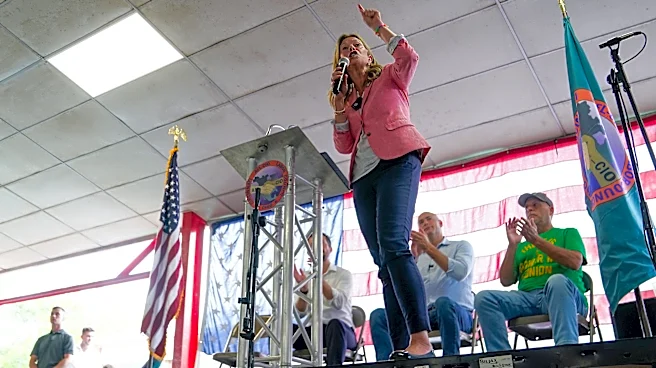
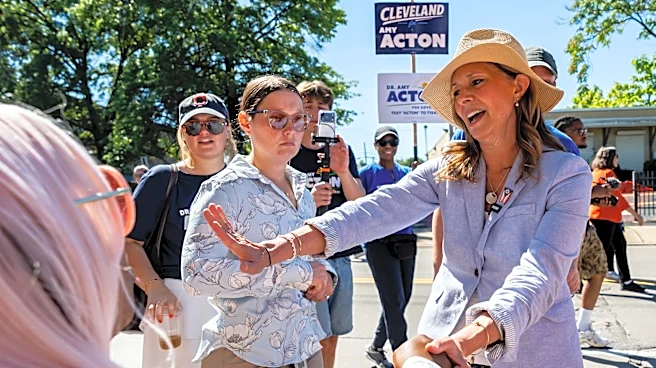
Tensions are extremely high. In an alarming Sept. 6 incident, an armed man was arrested after lunging at Acton and knocking over and injuring fairgoers at the Canfield Fair in Mahoning County.
This Ohio governor’s race also has been exceptionally ugly, personal and awash in accusations. Ads against Acton have portrayed her as unstable and as having problems with alcohol and prescription drugs, something that has not been supported by reporting. Her campaign has accused Ramaswamy and his allies of spreading deeply personal falsehoods about Acton and her family.
So when Ramaswamy announced Sept. 2 that he had accepted invitations
to debate Acton on CNN and Cincinnati’s WLWT-TV, Acton’s campaign wasn’t interested.
Campaign manager Phil Stein called Ramaswamy a “scam artist” and accused him and his allies of spending more than $50 million on inaccurate attack advertising. Acton’s campaign said her focus was on talking with Ohioans rather than sharing a debate stage with someone it accuses of repeatedly lying about her.
You can understand the anger without concluding that Ohio should go without a gubernatorial debate.
CNN and WLWT don’t have to be the venues. The campaigns could negotiate another network, another moderator, another format or another location.
But the two candidates seeking to become Ohio’s next governor should appear together before voters at least once.
Debates can’t matter only when they’re politically convenient
There is a bipartisan problem developing in American politics: Candidates increasingly seem to view debates not as an obligation of seeking public office, but as a campaign tactic to be embraced when advantageous and discarded when inconvenient. Ohio has seen this before.
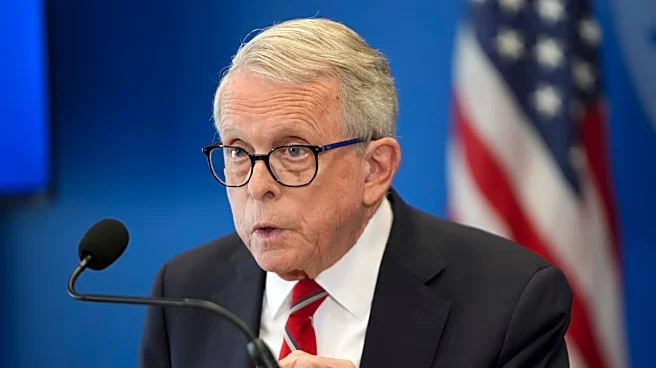
In 2022, Republican Gov. Mike DeWine declined to debate Democratic challenger Nan Whaley. It was only the second Ohio gubernatorial election since 1978 without a debate. At the time, our boards argued that DeWine was denying voters a historic opportunity to scrutinize an incumbent governor alongside the first woman ever nominated for Ohio governor.
The partisan identities are reversed now. The principle isn’t.
And voters have previously made their preference clear. A 2022 USA TODAY Network Ohio/Suffolk University poll found 84% of likely Ohio voters believed candidates for governor and congressional offices should debate. That is about as close to a political consensus as we get these days.
Candidates understandably approach debates strategically. Campaigns are designed to win elections, and a candidate leading comfortably may see little advantage in giving an opponent a high-profile opportunity to change the race. But that calculus belongs to the campaign. Voters have a different interest.

A debate is the political equivalent of a job interview − except millions of Ohioans are doing the hiring. They get to watch candidates answer the same questions in real time. They can compare knowledge, temperament and leadership styles. They can see whether someone can defend a position when challenged, respond to criticism without a prepared script and explain what he or she would actually do as governor.
Those things matter. And they matter especially in this race.
Recent polling underscores why. Wedgewood Polls had Acton ahead 47%-46% among likely voters in August. Fox News had Ramaswamy ahead 50%-48% among registered voters. Siena earlier found a 47%-47% tie. In other words, the public polling has consistently portrayed a highly competitive contest rather than one in which Ohioans have already rendered a clear verdict.
Ohio isn’t hiring a spokesperson. It’s hiring a governor

There is another reason this debate matters.
Neither candidate comes to the race with a lengthy record running a state government. This would be the first time newcomers to the governor's office haven't debated.
Acton served as director of the Ohio Department of Health and became one of the most recognizable people in Ohio during the COVID-19 pandemic. Ramaswamy built businesses, ran for president and later entered the national political arena. Those experiences give voters plenty to examine, but neither candidate has served as governor.
Ohioans, therefore, have legitimate questions about how each would handle the enormous responsibilities of the office. We learned during COVID exactly how consequential those responsibilities can become.
Think back to those daily briefings when DeWine and Acton appeared in Ohioans’ living rooms. Decisions coming out of the governor’s office affected schools, businesses, hospitals, nursing homes and virtually every family in the state. In an emergency, a governor doesn’t get to wait for consultants to test the wording or for staff to polish the answer.
Sometimes leadership means making extraordinarily consequential decisions with incomplete information and then explaining those decisions to millions of people. That’s why an unscripted encounter between candidates has value.
Campaign rallies are scripted. Television commercials are scripted. Social-media videos can be edited, reshot and polished. Candidate forums frequently allow politicians to deliver versions of answers they have already given dozens of times.
A debate creates something different: friction.
The opponent challenges your numbers. A moderator follows up. An answer produces another question. Candidates have to listen, process and respond.
When Democratic Gov. Ted Strickland and Republican John Kasich debated in 2010, they clashed directly over Ohio’s economy, taxes, government spending, manufacturing losses and Kasich’s Wall Street background. Strickland attacked Kasich’s support for NAFTA; Kasich countered Strickland’s argument about where Ohio had lost jobs. Those exchanges allowed voters to see fundamentally different explanations for the state’s economic problems presented side by side.
Four years earlier, Strickland and Republican Ken Blackwell agreed to four gubernatorial debates. During their Cincinnati encounter, an exchange that began with the economy quickly turned into pointed challenges about experience and political records − exactly the sort of unscripted back-and-forth that a campaign commercial cannot reproduce.
Debates aren’t perfect. They’re still valuable.

Critics argue debates can reward performance over substance. Candidates memorize statistics and one-liners. Campaign staffs spend days rehearsing anticipated attacks. A clever comeback can dominate coverage while a detailed policy discussion disappears. And after years of increasing political polarization, many voters have already made up their minds before the candidates ever walk onto the stage.
All true.
But those are arguments against treating debates as the only measure of a candidate. They aren’t persuasive arguments for eliminating them.
Read the policy papers. Examine the candidates’ records. Attend their events. Study their proposals. Watch their interviews. And then put them in the same room.
In an era of AI-generated content, misinformation, selective video clips and tens of millions of dollars in advertising designed to define candidates before they can define themselves, there is arguably additional value in allowing voters to watch two people answer questions and challenge each other’s assertions in real time.
Acton’s campaign says Ramaswamy has misrepresented her record and spread falsehoods about her. A debate would give her an opportunity to challenge those assertions directly.
Ramaswamy says Ohioans deserve a substantive debate. If he becomes governor and seeks reelection four years from now, Ohioans could reasonably expect him to remember that position even if the political calculation changes.
The standard should not depend on which party is ahead, which candidate believes a debate helps, or whether an incumbent thinks there is little to gain. It should apply to everybody. And not just candidates for governor.
Ohio voters would also benefit from seeing Democratic U.S. Senate candidate Sherrod Brown and Republican Sen. Jon Husted debate. The same principle applies to competitive congressional races, including Democrat Greg Landsman and Republican Eric Conroy in Ohio’s 1st Congressional District.
Candidates don’t have to like each other. They don’t have to trust each other. They certainly don’t have to agree with each other. That's exactly the point.
Election Day asks Ohioans to make enormously consequential decisions about people who will wield considerable power in their names. Voters should get opportunities to see those candidates challenged, questioned and placed alongside the person seeking the same job.
One debate isn’t too much to ask. Find the network. Find the moderators. Negotiate the rules.
Then show up.
This editorial was written by Cincinnati Enquirer Opinion Editor Kevin S. Aldridge on behalf of USA TODAY Ohio Network newspapers. It is signed by all of the editorial boards of the USA TODAY Network Ohio, which includes The Columbus Dispatch, Cincinnati Enquirer, Akron Beacon Journal, Canton Repository and 17 other affiliated news organizations across Ohio. Editorials are our boards' fact-based assessments of issues of importance to the communities we serve. These are not the opinions of our reporting staff members, who strive for neutrality in their reporting
This article originally appeared on Cincinnati Enquirer: Ohio's governor race is nasty. Amy Acton should still agree to debate | Our view