






Franklin County's conservation agency is nearing a decision on plans for a controversial road through a protected ravine that would connect the Ohio State School for the Blind and Ohio School for the Deaf campuses.
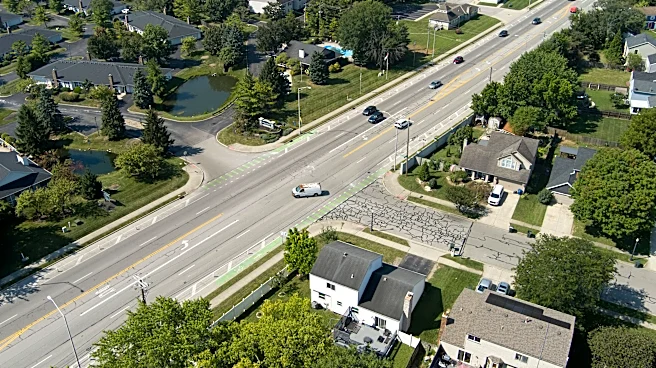
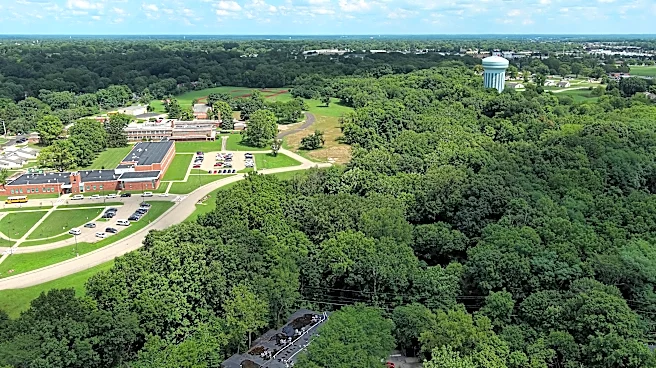
The schools are seeking permission to build a two-lane roadway and multi-use pedestrian pathway through a 73-acre conservation easement north of Morse Road between North High Street and Indianola Avenue in Columbus' Clintonville neighborhood. The land, known as Bill Moose Run, has been protected since 1999 by a "perpetual conservation easement," which is a deed restriction that indefinitely limits certain development and land uses.
Though the state owns the land and has designated it for the schools' use, the easement is controlled
by the Franklin Soil and Water Conservation District, or FSWCD, meaning any changes require its approval. After nearly two hours of discussion and comments at its Sept. 14 meeting, FSWCD's Board of Supervisors agreed to vote on the request at its October meeting.
The five-member board has the final say, but FSWCD assistant director Kyle Wilson said the district's staff will issue a recommendation to the board ahead of its vote. Though he emphasized nothing is yet set in stone, Wilson indicated at the board meeting that a potential mitigation plan to add a 13-to-16 acre plot of land on the northeast corner of the site in exchange for approving the bridge might be "the conservation win" for the ravine and its surrounding area.
"There's some day, whether that's 10, 50, 100 years from now, that this school could be redeveloped for private development. We don't dictate any of that," Wilson said. "Our only way to dictate any other land use decision on this property, as a board and as a district, is through requesting mitigation at a certain level."

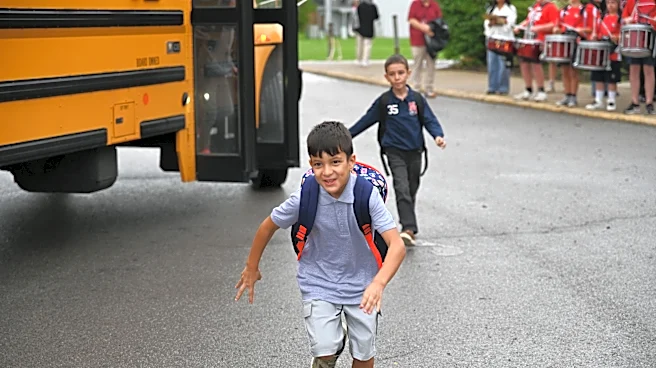
The Ohio State School for the Blind sits northwest of the easement, while the Ohio School for the Deaf sits just southeast. Ohio Deaf and Blind Education Services Superintendent Lou Maynus has cited safety as the driving force behind the requested bridge, saying it would eliminate the need for students and staff who routinely travel between the two campuses to navigate the busy and, at times, dangerous roadways that border the area.
"Our deaf and blind students have faced significant safety incidents while traveling off campus in the past several years," Maynus said in an email. "We’ve been working with the Franklin Soil and Water Conservation District throughout this process to find a solution that keeps our students' safety at the forefront, but also addresses community and conservation concerns."
But many nearby residents are pushing back. Some say the bridge would cut through the heart of the protected natural area, setting a precedent for overriding other perpetual conservation easements. Some say the schools have not been transparent or acting in good faith throughout the process, referencing an incident in fall 2025 when residents noticed machinery on the site without project approval.
Wilson confirmed the schools did environmental sampling and soil-boring work they weren't supposed to, but said at the meeting he doesn't believe it was ill-intentioned, just the result of confusion surrounding procedural requirements.
Though only about a dozen people attended the Sept. 14 meeting, nearly 80 came to a Sept. 2 open house with the FSWCD and Ohio Deaf and Blind Education Services representatives. Between in-person and online platforms, 57 people left comments, 36 of which expressed some degree of opposition and 21 of which expressed some degree of support.
"Words have meaning. 'Permanent easement' means we do not break the Earth when things get complicated," said Melanie Boyd, one of four people who spoke against the project at the Sept. 14 meeting. "If that word 'permanent' can be so easily negotiated away, then no easement held by [FSWCD] is safe, and the word loses meaning."

FSWCD to decide whether approval or denial is the real 'conservation win'
Much of the FSWCD board's discussion centered on whether the ravine area would be better protected in the long run by rejecting the schools' ask and leaving the easement untouched, or by approving the bridge in exchange for substantial mitigation.
The leading proposal would have the schools place 13 to 16 acres of unused land on the site's northeast corner under the easement and reforest it to offset trees removed to build the bridge. Wilson described it as a rare chance to protect highly developable land that FSWCD couldn't otherwise afford to buy.
"I fear that if, for lack of a better term, we don't make compromise and go through with controlling an impact by allowing a crossing, there's nothing we'd have to protect that open space," Wilson said at the meeting.
Wilson also told the board that if it declines the schools' request, the state could always pursue eminent domain, or convert the private property into public use if it's deemed to be for the public good. Though Wilson said he'd gotten no indication the state would take that route, roughly $13.6 million in state budget dollars have already been appropriated to the project.
"We've got a pretty real threat of that 13.2 acres being developed," Wilson said at the meeting. "And we've got an opportunity that was created quite frankly from the school kind of getting the cart before the horse with some of this – they have funding, they weren't aware of the need for approval and things like that – that has actually created leverage."
Maynus said in the email that the schools look forward to continuing conversations with FSWCD, "but also hope to move forward as quickly as possible toward this important goal."
The board is preparing to take a formal vote on the proposal at its next meeting, scheduled for Oct. 12 at 6 p.m.
Reporter Emma Wozniak can be reached at ewozniak@dispatch.com or @emma_wozniak_ on X.
This article originally appeared on The Columbus Dispatch: Will school road plan save Clintonville ravine or 'break the Earth?' Board to decide