


Martin Gottlieb is a retired editorial writer and columnist for the Dayton Daily News.
As the midterm election nears, perhaps it is worthwhile to confront President Donald Trump's delusion that the Republicans' problem is that he is not on the ballot. Anybody who follows political news hears the delusion articulated frequently.
It is sometimes reported in the media as fact. And it is relentlessly promoted by Trump.
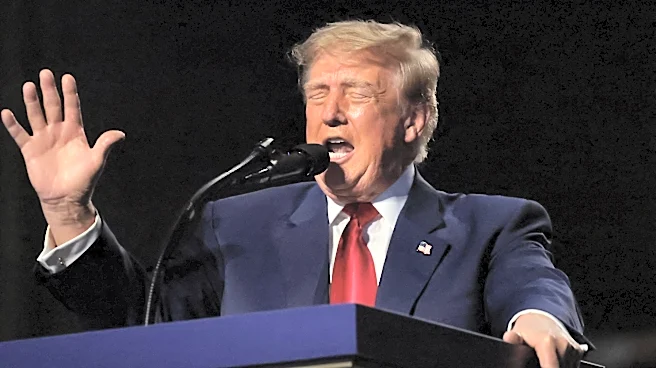
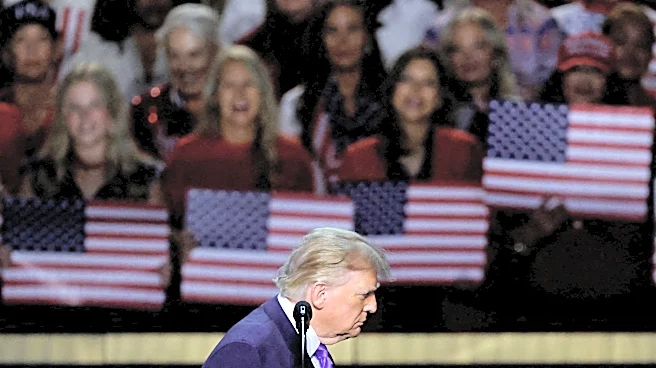
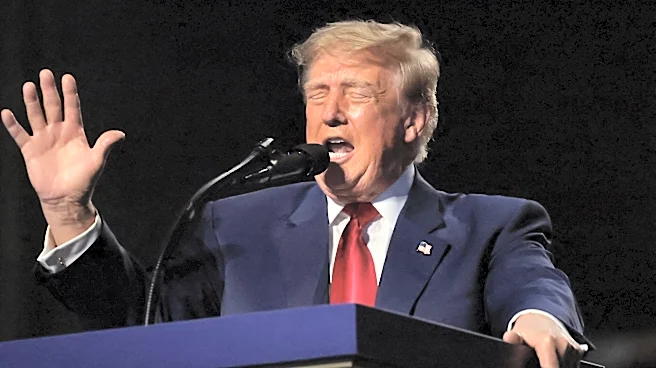
He has been going around the country urging Republican voters to “Please pretend I am on the ballot.” His first speech at his recent convention in Dallaswas built around that theme.
He seems to find comfort in the thought that he is political magic. He has said this year, when confronted with bad polls, that the voters aren't mad at him,
but at the Republicans in Congress.
That would be odd, given that those Republicans mainly devote their professional lives to supporting him. And when, in his first term, he suffered a very bad midterm, he said the problem was that he wasn't on the ballot. He will say it again if he has another bad midterm.
That's for sure.
How much does Trump's name on the ballot actually matter?
Now, it's true that when he has told audiences recently to pretend he is on the ballot, he has been talking to Republican audiences. It's fair enough, of course, for a party to try to turn out its voters. But Trump makes the wrong case.
There is no evidence that his being on the ballot matters in determining general-election outcomes.
Trump himself has never been any better than average at getting votes in general elections. He has never won a majority of the popular vote in three tries. He has won a plurality only once, and that was by about 1.5%, no matter how many times he calls the 2024 election a landslide. (The term is arguably defensible – though a stretch – if we're talking about the Electoral College.)
Every president in recent decades has won at least one election by more than Trump ever has in the popular vote.
Barack Obama did so twice. Joe Biden did once. Bill Clinton did twice in terms of margin over the other party. (Both his elections saw a substantial third candidate, so nobody got a majority.)
Even George W. Bush got a majority of the popular vote in 2004 and won by a 2.5-point margin. His father won his only victory in almost a blowout. Even Hillary Clinton, when she lost the Electoral College in 2016, won the popular vote by more than Trump did in 2024, that is, by more than Trump ever has.
Why people think Trump has the Midas touch
This year, Trump is, judging by the polls, less popular than ever.
It's ironic to see him promoting himself as the key to Republican victory in a year when many Republican politicians really believe he is the problem, not the solution.
The main reason that some honest people believe the Republicans do better with Trump on the ballot is the midterms. The Republicans did very badly in the 2018 midterm and are looking bad in the polls this time, too. Therefore, some surmise, the problem is that too few Republicans vote when he's not on the ballot.
No.
Republican turnout is lower when the presidency is not on the ballot, no matter who the president is. But that's true about the Democrats, too.
Turnout is just lower across the board in midterms.
Over the last 20 years, almost half again as many people voted in presidential electionsas inmidterms: about 60% to 40%. So this is not a Trump phenomenon.
Barack Obama was also confused on this score. He had two very bad midterms. His conclusion was that the problem was low Democratic turnout in midterms. He said many times, “When we vote, we win.”
Wrong. All the Democrats needed to win a midterm was a Republican president. As soon as Obama was out of office, and Trump was in, the Democrats had a big midterm, low turnout or not.
Trump will go to his grave insisting his problem in midterms was that he was not on the ballot.
Nothing can be done about that. There are Republican politicos who know perfectly well that he's got this all wrong. But there are not many who would be willing to tell him so. And it wouldn't matter if there were. He believes what he wants to believe.
But for history and for open-minded people trying to understand the electorate, it is worth knowing that this guy is not and has never been political magic.
Magic would entail beating the historical patterns. So far, not even close.

Martin Gottlieb is a retired editorial writer and columnist for the Dayton Daily News.
This article originally appeared on The Columbus Dispatch: I've done the math, Trump's name on the ballot isn't 'political magic' for GOP | Opinion