






The start of a new semester at Ohio State University brings the opportunity for fresh political statements.
On Aug. 26, the statement about a controversial university policy change came from a state senator.
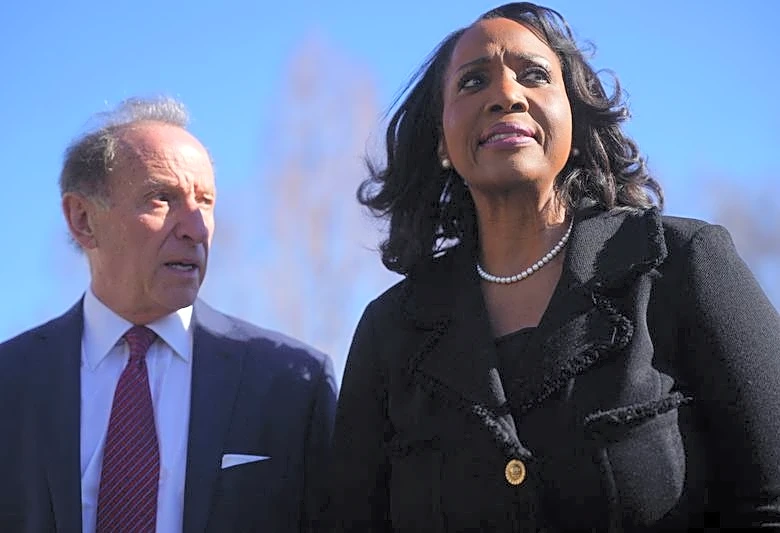
Ohio Sen. Bill DeMora, D-Columbus, stopped by the Ohio Union on the second day of classes to test Ohio State officials on the subject of chalking, the now-banned practice in which students write announcements, political statements and more in chalk on sidewalks around Ohio State's campus. Ohio State banned chalking in 2025.
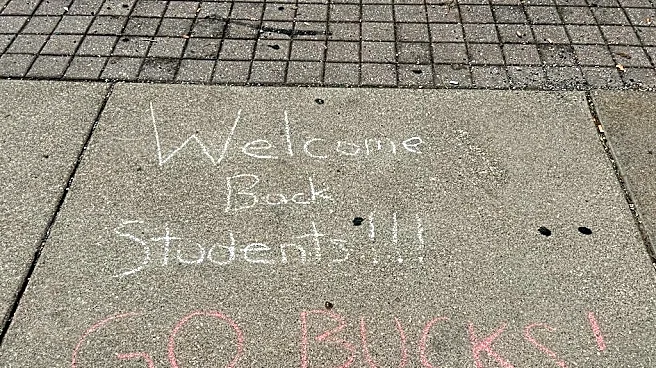
DeMora wrote a message on the sidewalk in front of the High Street side of the Ohio Union just before 2 p.m.:
"Welcome Back Students!!! GO BUCKS!"
What DeMora was really seeking to determine is how Ohio State would react to chalking
on campus. Around 3 p.m., his message remained, untouched.

"The point I'm trying to make is that Ohio State students have been denied their First Amendment rights by former President Ted Carter, who's no longer here, but who overreacted to some things on campus last year and decided he's going to take away the rights of all students to lawfully express their First Amendment rights," DeMora told the Dispatch.
Ohio State is committed to protecting free speech and expression, university spokesperson Ben Johnson said in a text message.
"We support the right of students, faculty, staff and visitors to speak about issues that are important to them," Johnson said.
Chalking has remained banned for a year
Chalking was banned under Ohio State's University Signage Standards, which were last revised Aug. 14, 2025.
"Chalking is not permitted on campus and will be removed by Facilities Operations and Development, which reserves the right to charge for the cost of any repairs required due to removal," the standards state. "In addition, any students found to be responsible would be subject to potential conduct referral."
Regarding the new policy, Johnson said in August 2025, "In light of continued complaints regarding chalking on campus and the significant amount of administrative time spent evaluating chalking, we have revised the university signage standards."
Prior iterations of the University Signage Standards allowed chalking by "recognized student organizations, Ohio State departments, faculty members, staff members and any Ohio State registered student," according to a policy published in 2016. Chalking was previously permitted only in "open areas that can be directly washed by rain" and on horizontal surfaces not covered by an overhang.
The ban on chalking came at a time when Ohio State was rushing to comply with the stipulations of Senate Bill 1, which officially went into effect June 27, 2025.
Universities hustled to implement the massive higher education overhaul that, among other things, bans diversity, equity and inclusion (DEI) programs on campus, bans faculty strikes, limits the power of tenure among university educators and prevents higher education institutions from taking positions on “controversial beliefs or policies."
Many did not let SB 1 go by without some noise. Protests and demonstrations were held, and the ACLU of Ohio got involved.
The civil rights organization sent a letter to Ohio State President Ravi Bellamkonda July 30 urging the university to immediately revoke its 2025 ban on campus chalking, saying it violates the First Amendment by suppressing speech. The ACLU also reported learning through a series of public records requests that the ban was enacted "specifically to suppress a particular viewpoint: pro-Palestine or anti-Zionist speech."
The ACLU of Ohio stated that it will pursue legal action if Ohio State fails to rescind the chalking ban.

"They're going to lose the lawsuit," DeMora said about the university's chances of winning against the ACLU of Ohio. "I mean, I don't care what they do, they're going to lose the lawsuit. It's clear. It's documented. It's already been decided in several court cases that this is a form of free speech."
DeMora calls chalking policy "wrong"
DeMora pointed to a statute in the Ohio Revised Code - Section 3345.0212 - which states, "No state institution of higher education, or any of its administrators acting in their official capacity, shall prohibit any individual from engaging in noncommercial expressive activity on campus, so long as the individual's conduct is lawful and does not materially and substantially disrupt the functioning of the institution."
If someone writes something racist or antisemitic, DeMora said he wouldn't stand for it, but valuing free speech extends beyond what one is comfortable with.
Bellamkonda told reporters Aug. 23 that the university is "very committed to free speech."
"On the issue of chalking, our policy is content neutral," Bellamkonda said. "There's nothing to do with one kind of speech or another kind of speech."
A few weeks after Bellamkonda was named president, DeMora said he met with the university leader and said he had issues with the university's chalking policy.
"You can't stop anybody from coming on university property and doing something that's free speech," DeMora told the Dispatch. "So, they're wrong, and I've made it clear to everybody that listened to me at Ohio State – and I've met with several people – that it's wrong, and that I am going to do everything I can to stop the policy because I think it's harmful to students and it doesn't let them express their constitutional rights."
Higher Education Reporter Sheridan Hendrix contributed to this report.
Dispatch Reporter Nora Igelnik can be reached at nigelnik@dispatch.com.
This article originally appeared on The Columbus Dispatch: Ohio senator tests OSU chalking ban with sidewalk message